
Related videos:
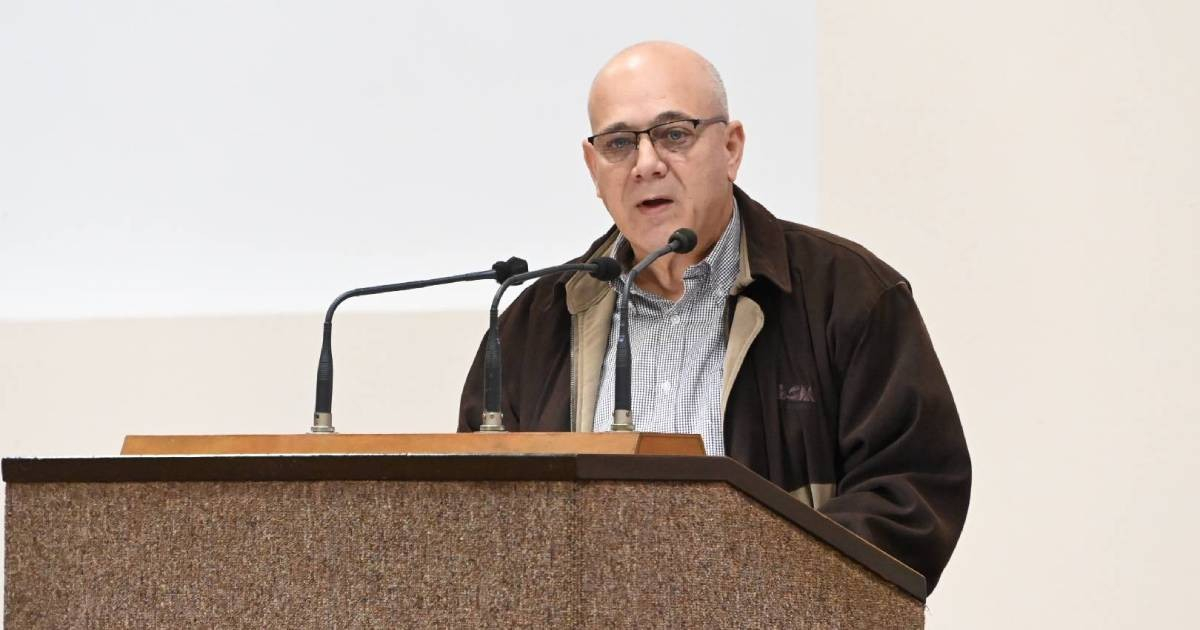
Roberto Morales Ojeda, one of the most powerful figures in the Communist Party of Cuba (PCC), boasted on social media about the "transparency" of the revolutionary government following the meeting held in Havana between the CIA director, John Ratcliffe, and representatives of the Cuban Ministry of the Interior (MININT).
"With the transparency that characterizes the revolutionary government, we inform about the meeting today with a delegation from the United States government, a space where the solid arguments that support us and Cuba's seriousness in discussing vital issues for both countries have been made clear," wrote Morales Ojeda on his account @DrRobertoMOjeda, concluding the message with the hashtag #CubaEstáFirme.
The irony of the message did not go unnoticed: the regime described a meeting that was secret until the Cuban government itself confirmed it through an official statement published on the PCC site as "transparent."
According to that statement, it was the U.S. government that requested the meeting and "the Direction of the Revolution" that approved it. The meeting, one of the highest-level encounters between Washington and Havana in decades, revolved around the list of State Sponsors of Terrorism, to which the Trump administration reinstated Cuba on January 20, 2025, just hours after assuming its second term.
El comunicado del PCC afirmó que los intercambios «permitieron demostrar categóricamente que Cuba no constituye una amenaza para la seguridad nacional de EE.UU., ni existen razones legítimas para incluirla en la lista de países que, supuestamente, patrocinan el terrorismo».
The regime also explicitly denied the existence of "foreign military or intelligence bases" on its territory, a statement that directly contrasts with available data. The Center for Strategic and International Studies (CSIS) has identified at least 12 Chinese signal intelligence facilities in Cuba, with four main sites in Bejucal, El Wajay, Calabazar, and El Salao.
Defense Secretary Pete Hegseth confirmed before Congress that Russian warships, including the submarine Kazán, have repeatedly used Cuban ports.
Morales Ojeda's tweet also represents a striking rhetorical shift in his own discourse. The Secretary of Organization of the Central Committee of the PCC had described the armed intervention in January as an "imminent risk" and stated that "surrender is not an option"; on May 7th, he invoked Raúl Castro to emphasize that "the unity of the people is our primary weapon" against the American threat.
The visit of Ratcliffe took place during a week of intense diplomatic activity. On May 12, Trump posted on Truth Social: "Cuba asks for help, and we're going to talk!" On May 13, Díaz-Canel stated he was "always open to dialogue." And that same Thursday, Foreign Minister Bruno Rodríguez Parrilla reversed his stance on the offer of 100 million dollars in humanitarian aid proposed by Washington, indicating that Cuba is "willing to listen to the details of the offer," just five days after having labeled it a "tale" and a "lie."
The immediate precursor to the visit was the secret meeting on April 10, when a delegation from the State Department made the first landing of an official U.S. aircraft in Cuba since 2016, discussing topics such as the release of political prisoners, the expansion of internet access through Starlink, and the presence of foreign groups on the island.
Secretary of State Marco Rubio had warned on April 28 that "we will not allow any foreign military, intelligence, or security apparatus to operate with impunity just 90 miles from the shores of the United States," referring directly to the Chinese and Russian installations in Cuba.
Filed under: