
Related videos:
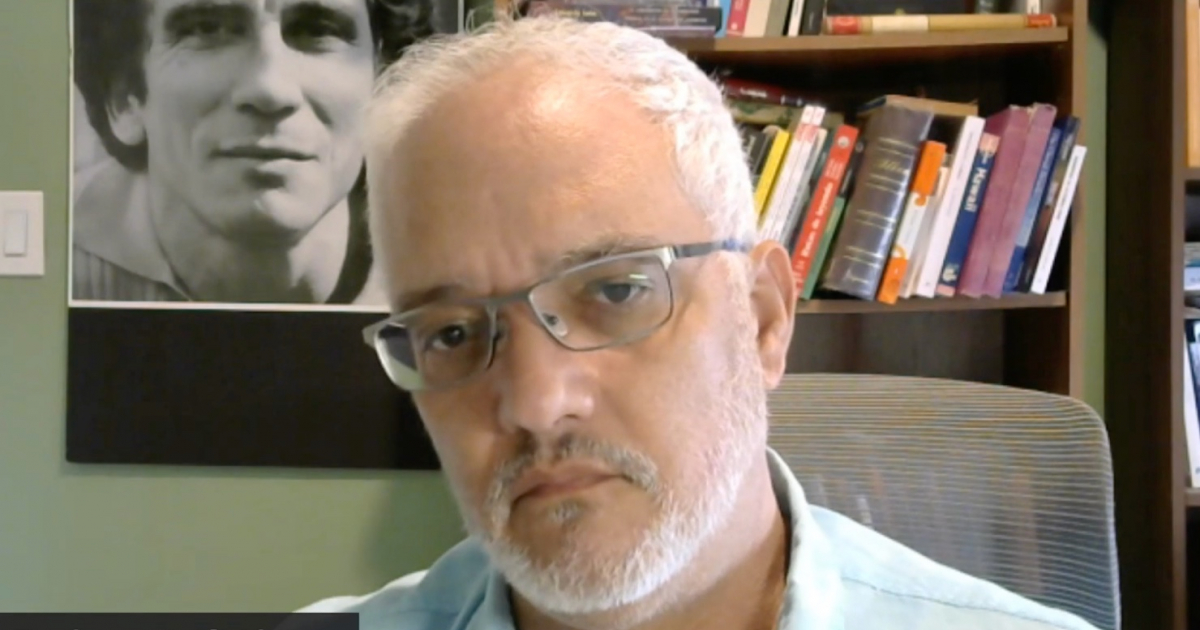
The Cuban essayist and narrator Enrique del Risco published this week in the digital magazine In-cubadora the essay "I Want to See You Sleep", which is part of the collective dossier "Cuba and Its Futures." This text analyzes with ironic clarity the current situation of the island, the historical cycles of hope and frustration, and outlines a map of warnings for a potential democratic transition.
The political trigger for the essay is the capture of the Venezuelan dictator Nicolás Maduro on January 3, 2026, an operation in which 32 Cuban bodyguards were killed, an event that Del Risco describes as a "sudden display of strength" that reignited the old system of speculations about Cuba's future.
This trigger was exacerbated by statements from President Donald Trump, which Del Risco cited with irony: "A new dawn for Cuba will arrive very soon. We are going to take care of it"; "It would be a great honor for me to take Cuba... We have Cuba, and we are going to take Cuba. We will do it after Iran."
But the essayist urges caution: the experiences of previous cycles —Perestroika, the fall of the Berlin Wall, the Special Period, Obama's "thaw"— suggest that one should not harbor illusions about real change on the Island, although he acknowledges that "there has never been more hope or more urgency" than now.
To describe today's Cuba, Del Risco refers to data that speaks for itself: the post-11J exodus exceeds one million people, a figure that dwarfs the 125,000 from the Mariel in 1980 and the 35,000 during the rafters' crisis in 1994, which reduced the Cuban population from eleven million to less than nine, leaving behind an older and impoverished society.
Meanwhile, the military conglomerate GAESA holds assets exceeding 18 billion dollars, and the regime invests the majority of the budget in semi-empty hotels while health, education, and culture together do not exceed 3% of public spending.
The essay supports its arguments with the survey conducted by El Toque, which closed on May 1 with over 42,000 responses, of which 58% came from people residing in Cuba with severe connectivity constraints.
The results are clear: 94% of Cubans are "very dissatisfied" with the government system, 96% consider a political change urgent, 80.1% want to transition to a liberal market democracy, and 82.2% identify the lack of civil and political liberties as the main issue, while only 4.7% attribute the difficulties to the U.S. embargo.
Even more revealing: 60.9% support a direct military intervention by the United States and 64.9% support the overthrow of the government "by any means necessary, including armed action."
Del Risco interprets those numbers not as a sign of hope, but of despair: a survey that reflects the situation of "a country condemned to death —in the present— by its political regime."
The essayist also warns that the Cuban people risk being "pushed aside" while their oppressors come to an agreement with their would-be liberators, as happened in 1898 with the Treaty of Paris or in 1961 with the Bay of Pigs invasion.
In response to those who propose to illegalize the Communist Party as the first act of future democracy, Del Risco argues that it would be "understandable and at the same time clumsy and counterproductive" in a society where 10% of the adult population belonged to the party: "to assume that the illegalization of a party will permanently eradicate that possibility of evil is akin to believing that we can abolish cancerous tumors through presidential decrees."
His recommendations for the Cuba of tomorrow are, for the most part, negative: do not aspire to ideological purity, avoid radical methods, be wary of charismatic messiahs, protect minorities and individuals, and recognize the role of the diaspora in reconstruction without that relationship leading to abuse.
The essay concludes with the image of musician Raúl Ciro and his song "Villa de París," in which the artist wishes for the country to find rest after decades of historical tumult: "I want to see you sleep, Cuba." Del Risco adopts this phrase as a conclusion: "That is what it’s all about first and foremost, ensuring that poor island a moment of respite."
Filed under: