
Related videos:
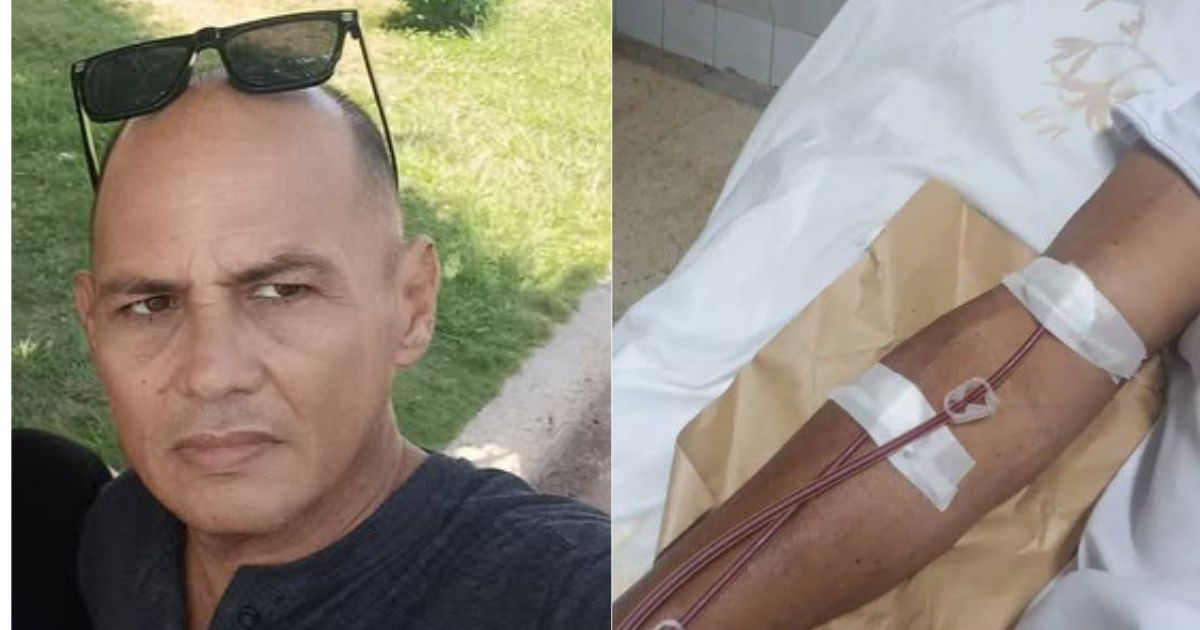
The writer Alexander Aguilar López, a dialysis patient in the province of Granma, reported the critical conditions he faces while undergoing treatment, due to a lack of state transportation to get there and the risk involved in being hospitalized.
Resident in Guisa, Aguilar López described in a post published on Facebook the harsh circumstance of having to travel three times a week, on his own, to the Carlos Manuel de Céspedes hospital in Bayamo, with the significant risk this entails, particularly due to the complications that patients may face after undergoing the procedure.
"Patients who are not from Bayamo must live in the hospital [...], which already significantly restricts the health and the partially normal life that anyone with stable conditions could have while undergoing this treatment, since they will be subjected to poor nutrition, biological risks, neglect of their needs…,” lamented the renowned poet.
In his case, he specified that he no longer even has the transportation for the outgoing trip on Monday and the return on Friday that the State used to guarantee for those in need of this process, and he must undertake all three transfers in both directions at his own risk, quite literally.
"I can think of nothing else but moral degradation, insensitivity, and disrespect," he said. He added that it is impossible to "blame the blockade or Trump, because the leaders' cars continue to circulate, because the Cuban state sells fuel to foreigners."
The two-time Cucalambé National Prize winner in décima emphasized that “it is not the government of the United States that decides to abandon a patient in need of hemodialysis treatment.” In his opinion, under the current situation, “anyone could be dying tomorrow, not necessarily from a state-of-the-art missile. There are much older missiles with the same capacity to kill.”
In his testimony, he also made an ironic remark about the official media coverage on the issue, noting that whenever a report that "moves" people is published regarding hemodialysis in other provinces, "everything seems different in Granma."
The report sparked multiple reactions of support and concern on social media, where users described the situation as "terrible" and "shameful," highlighted the insensitivity of the system, and raised alarms about the impact this crisis has on vulnerable patients.
Some comments added details about the transportation cost, which can reach 500 pesos per trip, to cover the distance of about 20 kilometers between Guisa and Bayamo, further worsening the situation for those who depend on this treatment to survive.
The case arises in the context of a growing deterioration of the Cuban healthcare system, which has been described as “deeply concerning” by the World Health Organization, while the government maintains a narrative focused on technological advancements of health institutions and attributes the difficulties to external factors, in contrast to recurring complaints about structural shortages and failures in medical care on the Island.
Dependents on donations of medicines or purchasing them at astronomical prices on the black market; waiting for surgeries or procedures for long periods; suffering alarming conditions of unsanitary conditions in hospitals, among many other hardships, the inhabitants of the country are increasingly calling for a change in the order of things that at least restores minimal dignity to public health.
Filed under: