
Related videos:
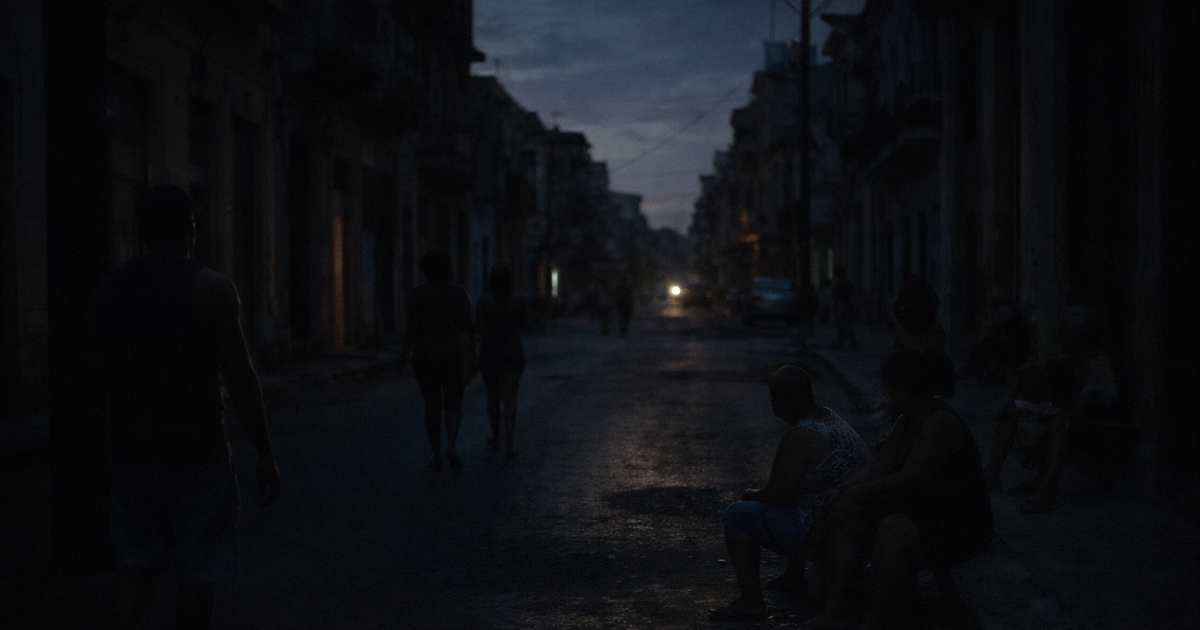
The municipality of Songo-La Maya, in the province of Santiago de Cuba, had accumulated more than 50 consecutive hours without electricity as of Thursday, according to a report published on social media by the page “Songo - La Maya thinks…” which has gathered the collective frustration of a population at its breaking point.
The comments from internet users vividly depict a reality that goes far beyond darkness. “Without electricity...without water...without hope...without answers...without a future...with hands blackened from coal but still with a clear soul...with a desire for light in life...with a desire to walk and live,” wrote one of the residents of the municipality.
Another neighbor specified the magnitude of the problem: "50 hours without electricity, and that doesn't even count the time we've been without the most valued resource: water. This municipality is insane."
The connection between blackouts and water scarcity is structural in Cuba: 84% of pumping equipment relies on electricity, according to the UN. When the power goes out, so does the water. The organization estimates that nearly 1 million Cubans now depend on tanker trucks to supply themselves with drinking water.
What is happening in Songo-La Maya is not an isolated phenomenon. Comments on the post reveal that municipalities across the island are experiencing similar or worse situations. A resident of Matanzas recounted: "Here in Matanzas, we haven't had power for five days, and we only had it for about two hours before it was cut off again. Now we have to go without it, mercy, for God's sake." Another internet user warned: "You're not alone; here in Ciego de Avila, in the municipality of Morón, we've lost count of the hours we've been without electricity." In San Antonio de los Baños, the situation was equally dire: 25 hours without electricity and barely two hours of service.
Communication blackouts exacerbate suffering, especially in rural areas. "Sir, how long will this situation last, with one unable to communicate with family [...], this is a crime," wrote an internet user. Another added: "My God. In rural areas, there's no internet. Too much time without news from family."
Discontent with the regime is expressed bluntly in the comments: "There is no more ruthless government," wrote one user. Another was more direct: "This is very true, it's inhumane: FREEDOM."
The blackout in Songo-La Maya occurs at the worst energy moment of the year for Cuba. On May 14, the electricity crisis broke annual records when the Electric Union (UNE) reported a generation deficit of 2,113 MW, with only 1,230 MW available against a demand of 3,250 MW, leaving about 70% of the Cuban population without electricity. The partial collapse of the National Electric System was triggered after the Antonio Guiteras power plant went offline due to a boiler leak.
The Minister of Energy and Mines, Vicente de la O Levy, admitted to power outages lasting from 20 to 22 hours daily in some circuits of Havana and described the situation as a "special case," a characterization that contrasts with the frustration expressed by Cubans on social media.
Songo-La Maya has a direct history of severe electrical crises. In April, the town of Baltony had been without power for over two weeks due to the theft of dielectric oil from transformers. On April 11, a man died and another was injured when a transformer exploded during what was believed to be an attempted theft of that component, highlighting the extent of desperation among the population.
The crisis has also spilled out into the streets. The Cuban Conflict Observatory recorded protests featuring pot banging, bonfires, and street blockades across multiple municipalities in Havana between May 13 and May 15. In San Miguel del Padrón, residents gathered in front of the municipal government headquarters with the slogan "Electricity and food!". The regime, meanwhile, is not providing any responses.
Filed under: