
Related videos:
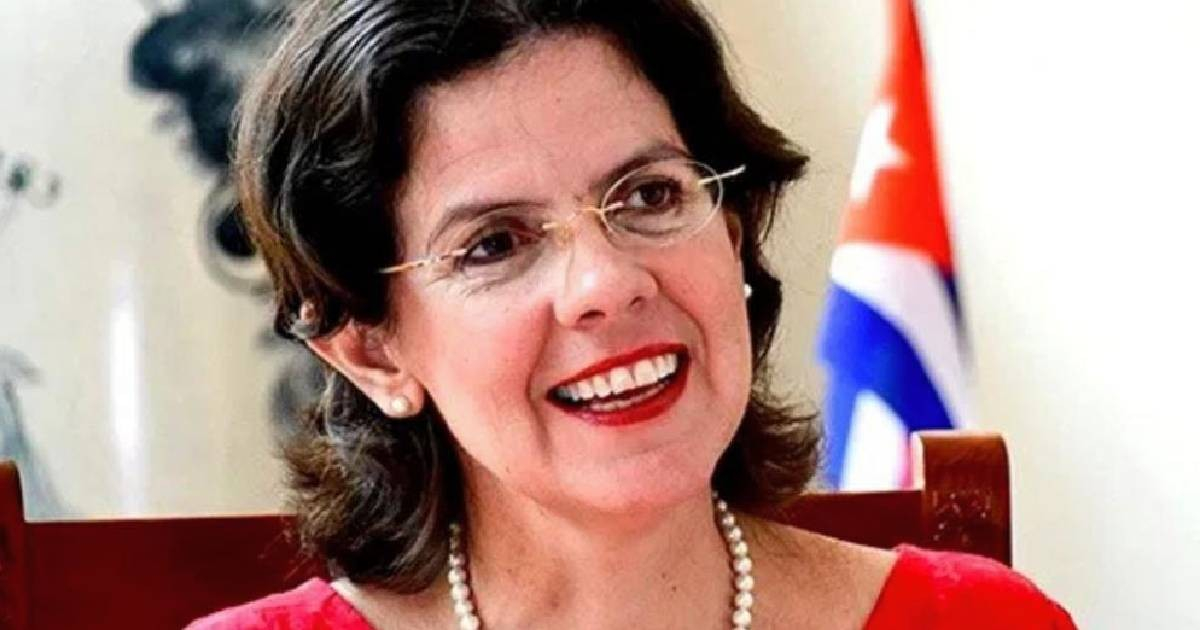
The main diplomat of the Cuban regime in the United States, Lianys Torres Rivera, acknowledged that Cubans have reasons to protest the power outages, but warned that this should not be interpreted as a sign of weakness in the face of a potential U.S. invasion.
"When they endure 20 hours of blackouts, they have complaints and they express them," said Torres Rivera to The Hill from the Cuban embassy in Washington, but he immediately added that Washington should not mistake that for a sign that "the Cuban people will not defend their homeland against an invasion."
The interview took place during the worst economic crisis on the Island, after the Minister of Energy, Vicente de la O Levy, publicly acknowledged that the country "absolutely has no fuel, no diesel, only associated gas," which sparked mass protests with pots and pans in at least 10 municipalities in Havana, featuring bonfires and street blockades.
The protesters chanted slogans such as "Down with the dictatorship!" and "Electricity and food!", while the regime responded with internet restrictions in the most conflictive areas.
Far from acknowledging the government's responsibility for the energy collapse, Torres Rivera merely warned against a "misinterpretation" of the protests and went on to defend the military preparations.
"We are preparing for this. Now we are doing it more than ever. We cannot be naive," declared the diplomat, who added that the preparation "is not offensive," but that an invasion "could be a huge mistake, it could be a bloodbath."
The ambassador described the current moment as "one of the most difficult, if not the most difficult, in the bilateral relationship" and stated that the negotiations have seen "no progress."
His statements align with the bellicose rhetoric that the regime has maintained for weeks. Miguel Díaz-Canel stated in April before NBC News: "If the time comes, there will be a fight, we will defend ourselves, and if necessary, we will die," and he ordered to intensify civilian military exercises with rifles, drones, and anti-tank mines.
"We do not see the need for a war or any military action by the United States against Cuba, simply because we do not pose any threat to the United States," he stated.
"We do not pose a threat to the United States, so there is no reason for the United States to invade Cuba or take any military action against it," he emphasized.
The context in which the interview took place could not have been more tense.
The CIA director, John Ratcliffe, visited Cuba on Thursday and met with officials from the Ministry of the Interior, including Raúl Guillermo Rodríguez Castro, grandson of Raúl Castro.
The agency warned that the window for negotiations "will not remain open indefinitely" and that "Cubans should not delude themselves into thinking that the president will not enforce the red lines."
That same night, it was revealed that the Department of Justice is preparing a criminal charge against former president Raúl Castro, 94 years old, for his responsibility in the downing of two planes from Brothers to the Rescue in 1996.
The Secretary of State Marco Rubio was straightforward about Washington's demands: "The current model they have is broken. It doesn't work, and it will never change as long as the people who are in charge now continue to lead."
The energy crisis that Torres Rivera downplayed in front of The Hill has devastating figures: the Electric Union recorded a record deficit of 2,153 MW this past Thursday, with only 1,230 MW available against a demand of 3,250 MW.
The Cuban Observatory of Conflicts recorded 1,133 protests in April 2026 alone, a 29.5% increase compared to the same month the previous year.
Filed under: