
Related videos:
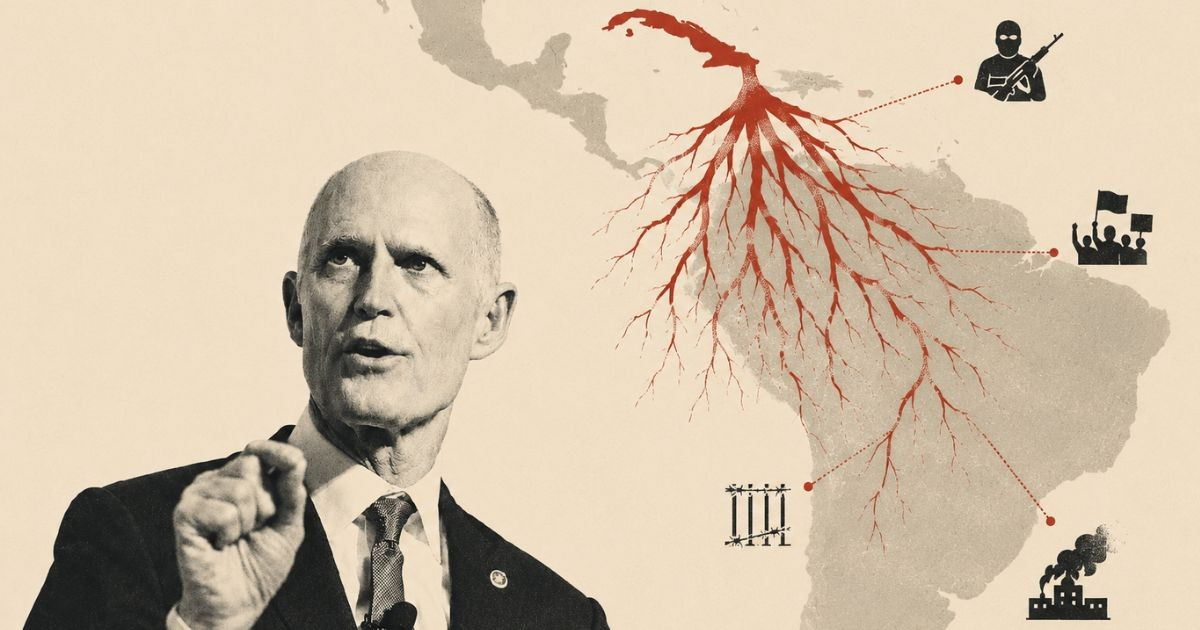
The Republican senator from Florida Rick Scott described the Cuban regime as "the root of instability in Latin America" and a direct threat to the national security of the United States, in an interview granted to VOZ News with journalist Karina Yapor.
The interview took place a day after the portal Axios revealed, citing U.S. intelligence reports, that the government of Miguel Díaz-Canel had acquired more than 300 military drones from Russia and Iran since 2023, with offensive, reconnaissance, and surveillance capabilities.
According to that report, Cuban officials allegedly discussed scenarios for using that arsenal against the naval base in Guantánamo, U.S. military ships, and even areas near Key West, Florida, although intelligence sources clarified that they do not consider an attack to be imminent.
When asked by Yapor about the magnitude of that threat—Cuba is only 90 miles from the continental United States—Scott was straightforward: "Cuba is the root of instability in Latin America; it is terrible for the national security of the United States. Thanks to President Trump for his stance against the Cuban regime."
It is important for me to fight for freedom and democracy in Cuba. Raúl Castro and Díaz-Canel need pressure from the United States. The struggle is important every day. Today there is no money, there is no oil for the Cuban regime. I will support all the people of Cuba in their fight for freedom and democracy.
The senator's statements are part of a sustained escalation of pressure from the Trump administration against Havana.
Since January 2026, the United States has imposed over 240 new sanctions against Cuba, reinstated the island to the list of State Sponsors of Terrorism, and issued Executive Order 14380, which declared a national emergency regarding Cuba.
On May 6, Washington sanctioned GAESA and its president, giving foreign companies until June 5 to cease operations with the Cuban military conglomerate.
Fuel imports to the island are estimated to have dropped by 80% to 90%, leading to blackouts of up to 25 hours a day in some areas of the country.
Congresswoman María Elvira Salazar also described the alleged purchase of drones as a "direct threat" to the national security of the United States, joining the Republican voices from Florida that are calling for a strong response.
During the interview, Scott also addressed the democratic crisis in Colombia, where two collaborators of the conservative candidate Abelardo de la Espriella's campaign were killed on May 15 in Cubarral, Meta.
The senator was emphatic about President Gustavo Petro: "He is a very bad person. He reminds me of the M-19. He is an associate of the cartels, a friend of Maduro."
Regarding Mexico, he warned that if Claudia Sheinbaum's government does not take action against the cartels, the United States will act unilaterally: "If the Mexican government is not going to do its job to prevent the cartels from killing Americans, we will have to do it ourselves."
Scott is one of the most active lawmakers in the lobbying agenda against Cuba.
In April 2026, he called on Trump to tighten sanctions against GAESA, claiming that the conglomerate controls over $18 billion in liquid assets. In February 2025, he reintroduced the DEMOCRACIA Act alongside Senator Tommy Tuberville to block assets and strengthen sanctions against the Cuban military and intelligence apparatus.
The deadline set by Washington for foreign companies to cease operations with GAESA expires on June 5th, a date that will mark the next point of tension in the Trump administration's maximum pressure policy against the Havana regime.
Filed under: