
Related videos:
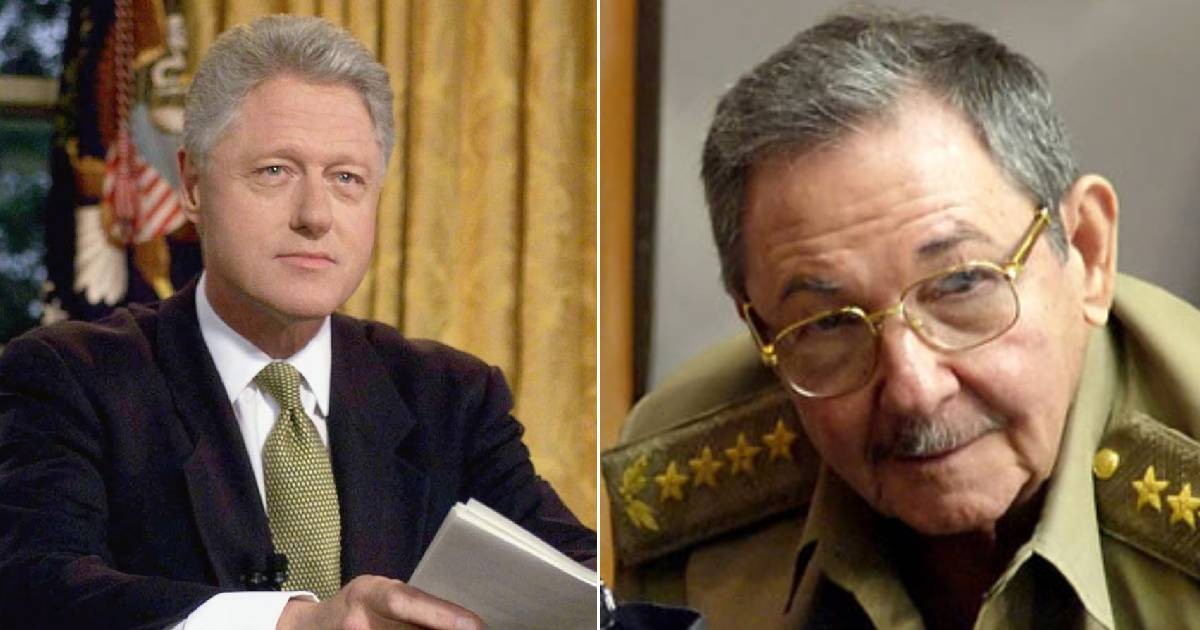
When Bill Clinton appeared before the press on February 26, 1996, to condemn the downing of two civilian planes from Hermanos al Rescate by Cuban military jets, his response was emphatic in words but deliberately limited in scope: collective sanctions against the Cuban state, no criminal charges against Raúl Castro, who was then the minister of the Revolutionary Armed Forces.
In that press conference at the White House, Clinton described the attack as "a flagrant violation of international law" and announced a series of measures.
Among these actions, she instructed Ambassador Madeleine Albright to convene an emergency session of the UN Security Council, indefinitely suspended charter flights between the United States and Cuba, tightened travel restrictions on Cuban officials on U.S. soil, and ordered the expansion of Radio Martí.
The attack had occurred two days earlier, on February 24, 1996, when MiG aircraft from the Cuban Revolutionary Air Force shot down two unarmed civilian Cessna planes over international waters in the Florida Strait, killing four Cuban Americans: Armando Alejandre Jr. (45 years old), Carlos Costa (30 years old), Mario de la Peña (24 years old), and Pablo Morales (30 years old). Their bodies were never recovered.
The International Civil Aviation Organization determined that the shooting down occurred between nine and ten nautical miles outside Cuban airspace, which made it an illegal act under international law.
Clinton also accelerated the approval of the Helms-Burton Act, which the House of Representatives approved on March 1 with 336 votes in favor and 86 against, and which was enacted on March 12, 1996. The law codified the economic embargo against Cuba and limited the ability of future presidents to unilaterally relax it.
However, the then-president did not initiate any individual criminal proceedings against Raúl Castro or any other Cuban leader.
Washington's strategy was to punish the Cuban state as an entity, rather than targeting its leaders personally.
In that context, prosecuting a minister of a sovereign state without an extradition treaty was legally unfeasible and politically unthinkable.
The evidence of Raúl Castro's direct responsibility would take years to come to light. In June 1996, four months after the attack, Castro was recorded describing the order he gave: "I said to try to shoot them down over the territory, but they entered Havana and left... Well, shoot them down at sea when they appear".
The audio, lasting 11 minutes and 32 seconds, was published in 2006 by El Nuevo Herald and verified by Alcibiades Hidalgo, Castro's former personal secretary.
Declassified FBI documents also mention the existence of an "Operation Venice," which allegedly planned the downing with premeditation, reinforcing the thesis that the attack was not an improvised decision.
Thirty years later, the Department of Justice is set to announce this Wednesday federal criminal charges against Raúl Castro, aged 94.
José Basulto, founder of Brothers to the Rescue and a survivor of the attack, summed up the feelings of the families: "I have wished for this for a long time. I have wished for justice, for justice to become a reality."
Filed under: