
Related videos:
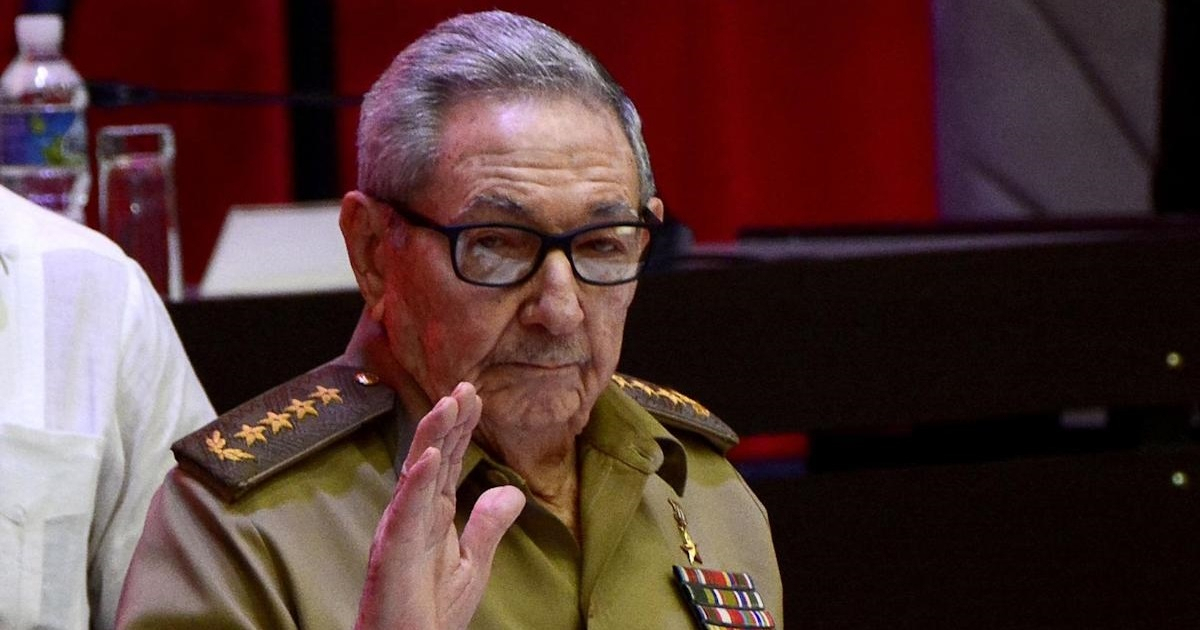
Raúl Castro became the latest name on a list of Latin American leaders and former heads of state prosecuted by the United States this Wednesday, after being charged in Miami for the death of four aviators in 1996, when he ordered the shootdown of two civilian aircraft from the organization Brothers to the Rescue over international waters.
The indictment, approved by a grand jury in the Southern District of Florida on April 23 and made public this Wednesday at the Freedom Tower in Miami, includes seven federal charges: conspiracy to murder U.S. citizens, four counts of homicide, and two counts of aircraft destruction.
According to the Prosecutor's Office, Castro ordered the shooting down in his capacity as Minister of Defense while the small planes were flying over international waters. The four victims were Armando Alejandre Jr., Carlos Costa, Mario de la Peña, and Pablo Morales, all Cuban-Americans.
Alongside the former Cuban president, aged 94 years, five military members were charged: Emilio José Palacio Blanco, José Fidel Gual Barzaga, Raúl Simanca Cárdenas, Luis Raúl González-Pardo Rodríguez, and Lorenzo Alberto Pérez-Pérez.
The International Civil Aviation Organization concluded in July 1996 that the aircraft were shot down between nine and ten nautical miles outside Cuban territorial airspace, meaning in international airspace. The incident was the direct trigger for the passage of the Helms-Burton Act, which intensified the U.S. embargo against Cuba.
With this accusation, Castro joins his close ally, the ousted Venezuelan president Nicolás Maduro, who was captured in a U.S. military operation in Caracas on January 3, 2026, and transported to New York, where he awaits trial in a federal prison in Brooklyn alongside his wife Cilia Flores, both charged with narcoterrorism, conspiracy to traffic cocaine, and possession of firearms.
Before them, the Panamanian dictator Manuel Noriega was captured by U.S. forces in January 1990 following Operation Just Cause, sentenced in 1992 to 40 years for drug trafficking, of which he served twenty.
In 2013, former Guatemalan president Alfonso Portillo became the first Latin American ex-leader extradited by his own country to the U.S., where he was sentenced to five years and ten months for money laundering.
The former Honduran president Rafael Callejas voluntarily surrendered in 2015 due to the FIFA corruption scandal and was sentenced in 2020 to time served.
His compatriot Juan Orlando Hernández received a 45-year sentence for drug trafficking in 2024, although President Donald Trump granted him a full pardon in December 2025, describing the case as a "witch hunt" by the Democratic administration.
Analysts point out that the indictment against Castro holds primarily symbolic value, given that there is no extradition treaty between Cuba and the U.S. and that the nonagenarian former president has never set foot on American soil.
The Cuban regime, through Miguel Díaz-Canel, rejected the charges and described Washington's actions as "immoral," "illegal," and "criminal," while also justifying the shooting down of the aircraft.
The accusation comes 30 years later and is part of the maximum pressure policy that the Trump administration maintains on Cuba and Venezuela.
Filed under: