
Related videos:
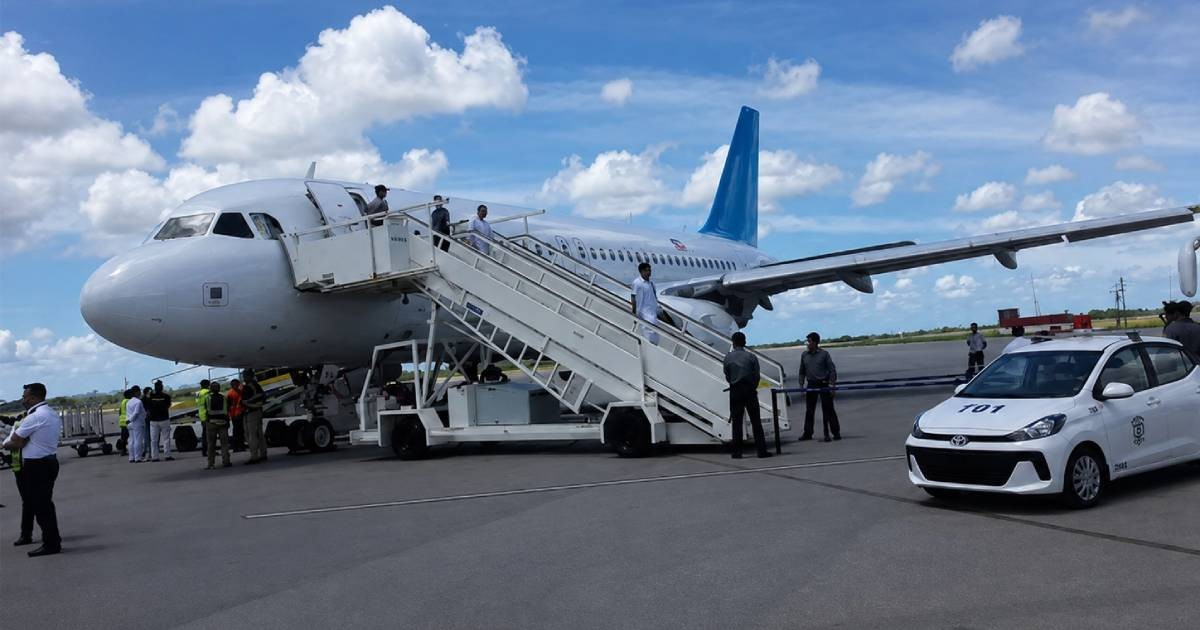
The United States deported 76 irregular Cuban migrants on Thursday—66 men and ten women—who arrived at José Martí International Airport in Havana on a flight from the United States.
The Ministry of the Interior (MININT) announced the operation on its social media, framing it as part of "the fulfillment of bilateral immigration agreements" between Cuba and the United States.
With this flight, the total number of Cubans returned to the island in the first five months of 2026 rises to 612 people, as part of 18 operations conducted from various countries in the region.
The pace of deportations has notably accelerated under the Trump administration. The first flight of the year arrived on February 9 with 170 Cubans —153 men and 17 women— and was the first in decades to include individuals convicted of serious crimes such as murder, kidnapping, and drug trafficking, something that the regime had historically refused to accept.
A second flight followed on February 19 with 116 deportees, raising the total to 286 people in two direct operations from U.S. soil.
The third flight on March 19 returned 117 Cuban migrants, while the fourth flight on April 16 transported 91 Cubans —76 men and 15 women— bringing the total to 530 across 14 operations.
On that flight in April, two of the returnees were taken directly to investigative authorities due to alleged criminal activities committed before leaving Cuba.
According to figures from DHS/MININT compiled by Café Fuerte, there are already 1,952 in Trump's second term and a total of 5,337 during his two terms. This surpasses his record as the U.S. president who has deported the most Cubans.
In early 2026, the immigration situation also generated a period of uncertainty when Cuban nationals detained by immigration authorities were sent to the Guantanamo Naval Base while their deportation was being resolved, remaining in a migratory limbo that lasted for weeks.
Deportations have also resulted in cases that highlight the consequences for those returning to the island. A Cuban deportee on the February flight reported torture at Villa Marista upon his arrival in Cuba, pointing out the treatment he received from the regime's authorities.
Another Cuban, mistakenly sent to the island, managed to return to the United States after more than a month following a federal judge's ruling that the government had violated a court order, in a case that highlighted the irregularities in the process.
The MININT systematically presents these operations as part of its "commitment to regular, safe, and orderly migration," and reiterates in each statement "the danger and risk to life posed by illegal departures from the country," a message that contrasts with the reality faced by those fleeing the economic and political crisis in Cuba.
In 2025, the United States deported a total of 1,370 Cubans on direct flights to Havana, a number that the current pace of 2026—612 returned in just five months—could surpass before the year ends.
Filed under: