
Related videos:
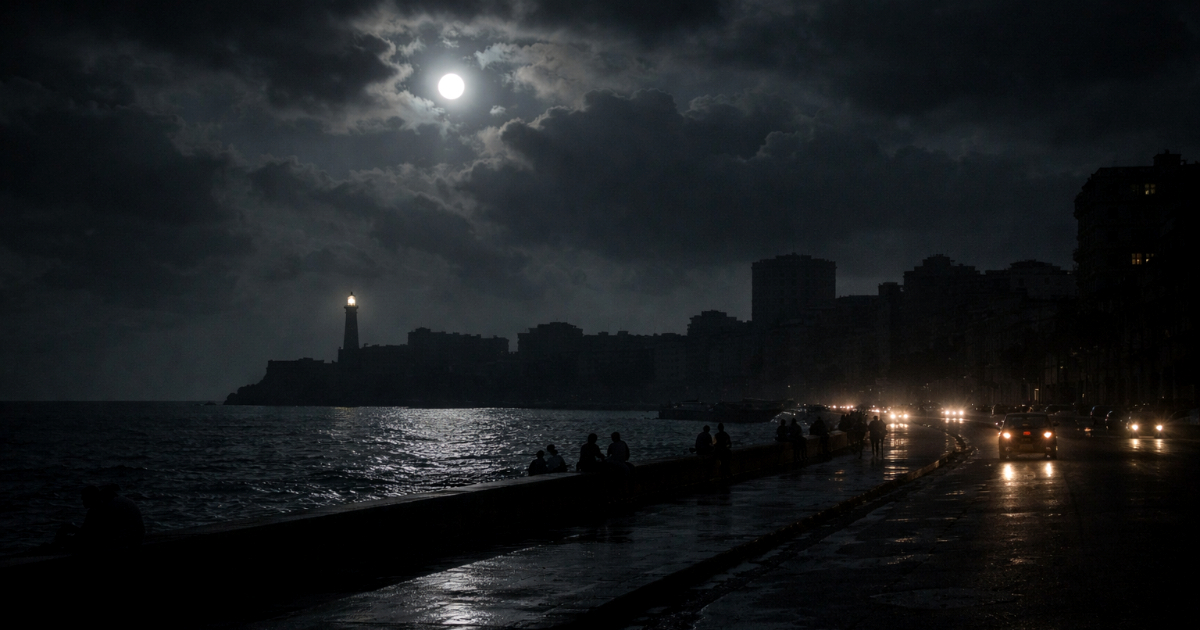
Cuba woke up this Friday to a new day of massive blackouts. According to the informative note from the Electric Union, at 6:00 AM the availability of the National Electric System was only 1,300 MW against a demand of 2,746 MW, leaving 1,454 MW uncovered.
The outlook for the nighttime peak hours is even more bleak. The Electric Union projects an availability of 1,360 MW against a maximum demand of 3,200 MW, resulting in a deficit of 1,840 MW and an estimated impact of 1,870 MW.
Thursday was no better. "The maximum impact due to generation capacity deficit yesterday was 1,910 MW at 9:30 PM," the official report notes. The outages extended throughout the 24 hours of the day, including all night long.
The immediate causes of the collapse are multiple. Three units are out of service: Unit 1 of the CTE Ernesto Guevara de la Serna, Unit 2 of the CTE Lidio Ramón Pérez, and Unit 5 of the CTE Antonio Maceo.
Three others remain under maintenance: Unit 5 of the Mariel Power Plant, Unit 6 of the Renté Power Plant, and Unit 5 of the Nuevitas Power Plant. In total, the limitations in thermal generation amount to 505 MW out of service.
The only addition planned for the peak is the entry of Unit 1 from the Energás Boca de Jaruco power plant with 30 MW and the completion of Unit 6 with another 30 MW, a marginal contribution in light of the structural deficit.
The 54 photovoltaic solar parks installed by the regime contributed 3,843 MWh with a maximum power output of 606 MW at noon, but this generation disappears precisely when it is most needed: during the peak nighttime hours.
This crisis is set against a backdrop of decline that reached its worst point just eight days ago. On May 14, the historical record for deficit was recorded at 2,174 MW, leaving approximately 70% of the Cuban population without electricity at the same time.
The structural cause is the chronic shortage of fuel. President Miguel Díaz-Canel himself admitted on May 2 that the oil donated by Russia "is running out these days" and that the government did not know when more fuel would arrive in the country.
That Russian shipment, totaling approximately 730,000 barrels, arrived at the port of Matanzas on March 31, after more than three months without significant external supply.
The humanitarian consequences are devastating. that the Cuban energy crisis has a "systemic and increasingly severe" impact on health, water, food, education, transportation, and telecommunications.
The exhaustion of the population is palpable. “We are reaching our limit”, summarized a Cuban consulted this week, in a phrase that captures the frustration of millions of people subjected to blackouts of up to 22 hours a day.
Filed under: