
Related videos:
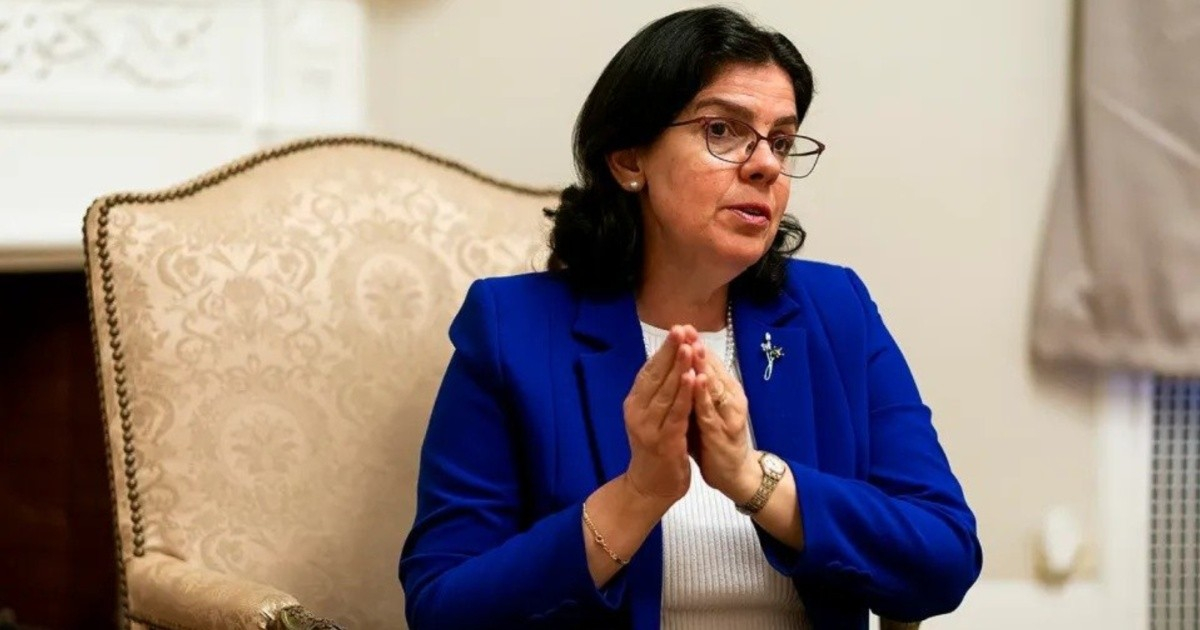
The Head of Mission of Cuba in the United States, Lianys Torres Rivera, stated this Saturday in an interview with NPR that the Cuban regime is willing to engage in dialogue with Washington on bilateral matters, but set limits that, as she said, will not be negotiable under any circumstances.
"We are willing to engage in conversations with the U.S. on bilateral issues. There are red lines regarding our independence, our sovereignty, our right to self-determination, a legal order, and a political system that will not be up for discussion. Just as we do not ask the U.S. to put its political system or legal system on the table, that is up to the American people," stated Torres Rivera on the program Weekend Edition Saturday.
The interview was broadcast by the official account of the Cuban Embassy in Washington and takes place three days after the U.S. Department of Justice declassified a formal accusation against Raúl Castro and five former Cuban military officials for the downing of two planes from the organization Brothers to the Rescue on February 24, 1996, which resulted in the deaths of four Cuban Americans.
The charges against the former dictator, aged 94 years, include conspiracy to kill U.S. nationals, destruction of aircraft, and four counts of homicide, with penalties that could lead to life imprisonment or the death penalty.
The regime has responded to the accusation with a defiant stance, labeling it as a political aggression. A Cuban official pointed out that the U.S. acted intentionally in presenting the charges, while Díaz-Canel justified the shooting down of the planes from Brothers to the Rescue.
Torres Rivera's statements are part of a discreet diplomatic contact process that has been ongoing for months. Cuban Deputy Foreign Minister Carlos Fernández de Cossío acknowledged in February that there were exchanges "at the highest levels," and Díaz-Canel himself stated in March that both he and Raúl Castro were involved in negotiations with Washington.
However, Deputy Foreign Minister Josefina Vidal warned AFP on April 8 that the conversations between Cuba and the United States were in a "very preliminary" phase and that "there is still no structured negotiation between the two governments."
The International Civil Aviation Organization concluded in July 1996 that the aircraft of Brothers to the Rescue were shot down between nine and ten nautical miles outside of Cuban airspace, that is, in international airspace.
Raúl Castro has never set foot on American soil, and there is no extradition treaty between Cuba and the United States, which limits the practical implications of the accusation, although the Department of Justice presented it as an act of justice for the families of the four victims: Armando Alejandre Jr., Carlos Costa, Mario de la Peña, and Pablo Morales.
Torres Rivera's interview on NPR represents the regime's most direct public response to date, seeking to keep the door open for dialogue while rejecting the accusation against Raúl Castro as an act of political aggression that, according to Havana, will not undermine its sovereign position.
Filed under: