
Related videos:
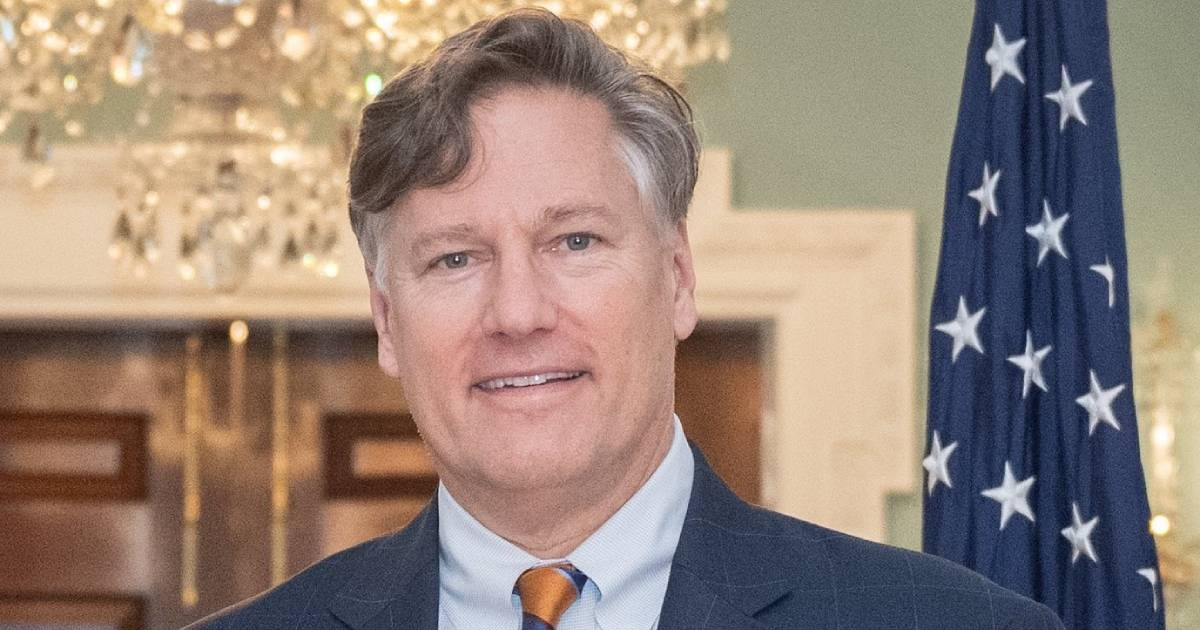
Christopher Landau, U.S. Deputy Secretary of State and second-in-command to Secretary Marco Rubio, responded harshly this Saturday to a statement issued by the Cuban embassy in Mexico in support of former Cuban President Raúl Castro, who has been formally charged by the U.S. Department of Justice for the downing of two civilian aircraft in 1996.
The statement in question was issued on May 20 by the Parliamentary Group of Morena and the so-called Mexico-Cuba Brotherhood Group in the Chamber of Deputies, and it rejected the charges filed against Castro and five other former Cuban military personnel for the downing of the small aircraft belonging to the organization Brothers to the Rescue over international waters in the Florida Straits, an incident that resulted in the deaths of four Cuban Americans.
What caught Landau's attention the most was that the document bore no signature from any particular legislator.
"What stands out to me is that not a single person's name appears to take personal responsibility for this statement and the support of an openly dictatorial regime that has not allowed free elections in 67 YEARS! and has destroyed the national economy to the point that sugar is imported and people are eating from the dumpsters," wrote the official on his X account.
Landau also questioned the rhetoric of the statement, which invoked Cuba's "self-determination" and "dignity."
"Since when does an absolute dictatorship—one that has lasted more than FOUR TIMES as long as Pinochet's regime in Chile and which has sustained itself solely as a parasite to other countries like the USSR and Venezuela—represent 'self-determination' and 'dignity'?" he asked.
The undersecretary closed his message with a direct criticism of the anonymity of the statement: "Everyone obviously has the right to their opinion, but it seems rather dishonorable to hide behind anonymity when disseminating statements like this."
In a follow-up response to a user, Landau went further and called on those responsible for the statement to "have the courage to identify themselves and face the consequences."
The statement from Morena described the U.S. accusation of "political coercion" against Cuba's sovereignty as unfounded, accused Washington of attempting to "revive a narrative based on lies and international manipulation," and asserted that "defending the airspace of one's homeland is not a crime."
Landau's reaction came amid a diplomatic escalation triggered by the announcement of charges against Castro, made public on May 20—Cuba's Independence Day—at the Freedom Tower in Miami.
Rubio had already described Raúl Castro as a "fugitive from U.S. justice" on May 21, without disclosing how he plans to bring him to court.
The charges against the former Cuban leader include conspiracy to assassinate American citizens, destruction of aircraft, and four counts of homicide for the deaths of Armando Alejandre Jr., Carlos Costa, Mario de la Peña, and Pablo Morales.
Mexican President Claudia Sheinbaum also reacted on May 22, questioning the rationale behind accusing someone for events that occurred 30 years ago, while Russia and China came to Cuba's defense, with Moscow stating that the accusation "borders on violence" and Beijing urging Washington to stop using the "judicial club."
If found guilty, Raúl Castro could face life imprisonment or the death penalty, although there is no extradition treaty between Cuba and the United States, which makes the accusation, for now, primarily a political and symbolic blow.
Filed under: