
Related videos:
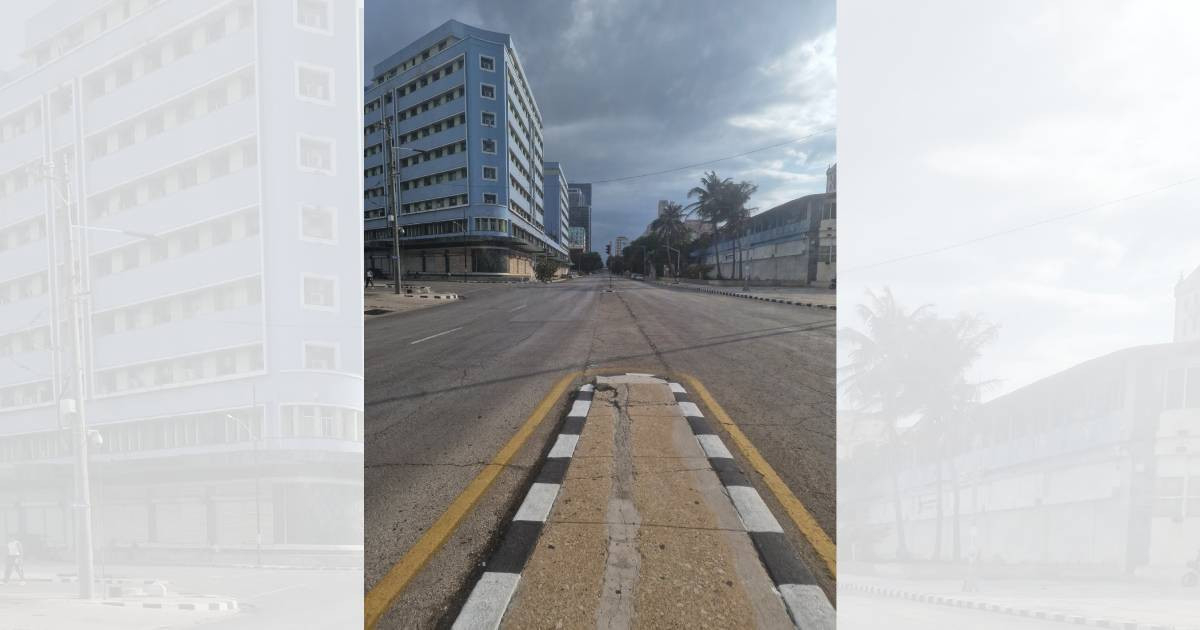
A photograph of 23rd Street in Vedado, historically one of the most bustling avenues in Havana, circulated on social media showing the avenue completely devoid of vehicles and pedestrians on Saturday afternoon, which generated hundreds of reactions of dismay among Cubans both on and off the island.
The image was posted by the user Alfredo Matute Rama in the Facebook group Photos of Havana, and it showcases a view of the Havana Rampa, the section of Calle 23 closest to the Malecón, at the end of the afternoon with a cloudy sky that enhances the sense of abandonment.
A resident who claims to live at that very corner confirmed that the scene is not unusual. "It looks like this every day after 3:00 PM, and on weekends, it's empty like this from dawn."
The comments on the post reflected a mix of pain and indignation. "My God, Havana was never this empty even during COVID," wrote Obayemi Castillo.
Leandro Daniel Carranza Leyet agreed. "Because one summer, the busiest avenue in the capital was like this, not even during the COVID lockdown."
Raydel Álvarez summarized it in three words: "It looks like a zombie apocalypse."
Others pointed directly to the causes. "A country without fuel doesn't function," noted Haifa Cerviño. Jorge Díaz was more straightforward: "The gasoline is in the tanks that are going to defend Raúl."
"Cuba is dead. They killed it out of whim," wrote Juan Alberto Bofill. However, Ketty Zurita, from within, nuanced that "it's not quite like that... we have more than six million Cubans here. Cuba is suffering, but with millions inside."
The scene took place on the same day that the Cubadisco 2026 festival, held since May 16 at the Pabellón Cuba, canceled the closing gala scheduled for Sunday at the Cobarrubias Hall of the National Theater.
The closing of the festival is set for this Sunday at 6:00 p.m. at the Pabellón Cuba, featuring a concert by Issac Delgado, winner of the Gran Premio Cubadisco 2026 for his album "Mira como vengo."
What happened on Calle 23 is not an isolated incident. In June 2025, that same avenue appeared empty on a Saturday at six in the evening. In February 2026, Old Havana looked deserted the night before Valentine's Day.
In March, the Havana tunnel appeared without vehicles on a Sunday at 10:00 a.m.; and on May 11, the streets of Trinidad looked empty on Mother's Day.
Behind the pattern, there are underlying structural causes that are accumulating, such as extreme fuel shortages, the collapse of public transportation, power outages of up to 20 hours, and an exodus that has driven around two million Cubans from the island since 2021.
According to data published by El País, in February each user could only purchase 40 liters of gasoline at state stations, with wait times ranging from 12 to 15 hours, while the informal market raised the price to about 1,000 Cuban pesos per liter.
Filed under: