
Related videos:
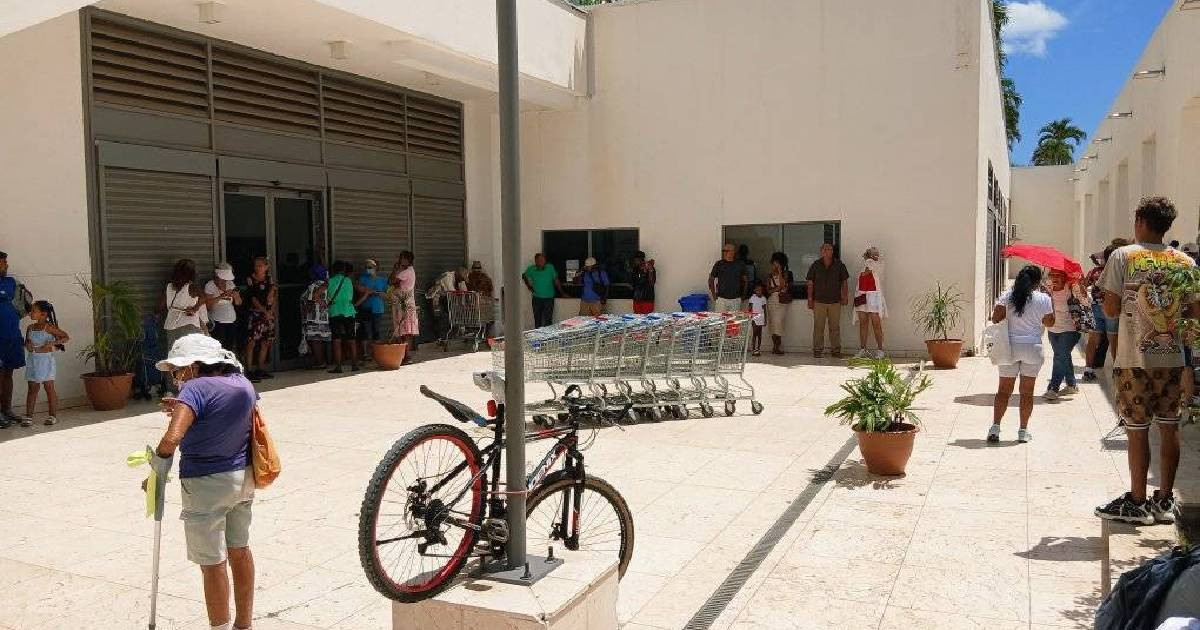
The supermarket located in the lower level of the luxurious Gran Muthu Habana hotel, at the corner of 3rd and 70 in the Playa municipality of the capital, remained closed at noon this Sunday due to a lack of fuel for its generator, which sparked outrage among Cubans on social media.
The complaint was published by Carlos Herrera Rodríguez on Facebook, who summarized the paradox with a phrase that circulated widely.
"The 70 Muthu market, which raises millions of dollars, has shut down due to a lack of fuel for the plant while thousands of liters of oil are being spent on other things that only generate costs," Herrera pointed out.
The contradiction highlighted by Cubans on social media summarizes the dysfunctionality of the regime's economic model, with a government that lacks the fuel to keep open a market that generates millions in foreign currency, yet allocates resources to activities that do not generate income, such as the numerous repetitive political events favored by the regime.
The Cuban regime has called for open forums across the country from this Saturday, May 23, until June 3, the date on which Raúl Castro turns 95 years old, as a response to the criminal charges filed by the U.S. Department of Justice against the former leader for the downing of planes belonging to Hermanos al Rescate in 1996.
The establishment at 3rd and 70, inaugurated in January 2025, operates exclusively in dollars, either in cash or via cards linked to foreign currency accounts, and is one of the few sales points in Cuba that generates foreign currency directly for the State.
Since its opening, the supermarket has been controversial, with prices that are unreachable for most Cubans, whose average salary is around 7,000 Cuban pesos, equivalent to about 13 dollars at the informal exchange rate.
The store also does not provide change in dollar coins, which are not in circulation in Cuba, and instead offers candies or cookies as change.
In its first weeks of operation, there were incidents of violence among customers in the lines, and its opening triggered a surge in the price of the dollar on the informal Cuban market.
The closure of the establishment occurs in the context of the worst energy crisis Cuba has experienced in decades, with severe blackouts. For the day, the Electric Union reported 1,670 MW affected since early morning, with a availability of only 1,100 MW against a demand of 2,750 MW.
For the nighttime peak, a deficit of 1,960 MW was projected, a figure that illustrates the magnitude of the collapse of the national electrical system.
May has been the darkest month of the year, with record levels of electrical shortages. The Minister of Energy and Mines, Vicente de la O Levy, publicly acknowledged that the situation is "so severe, critical" and that in Havana, power outages exceeded 20 to 22 hours daily.
The fuel crisis has also impacted tourism. Between January and April, Cuba received only 328,608 visitors, a drop of 55.8% compared to the same period in 2025, according to data from the National Statistics Office.
Hotels from the Gran Muthu chain, such as the Imperial Cayo Guillermo and Ensenada in Holguín, were included in lists of temporary closures due to the energy contingency at the beginning of the year.
Filed under: