
Related videos:
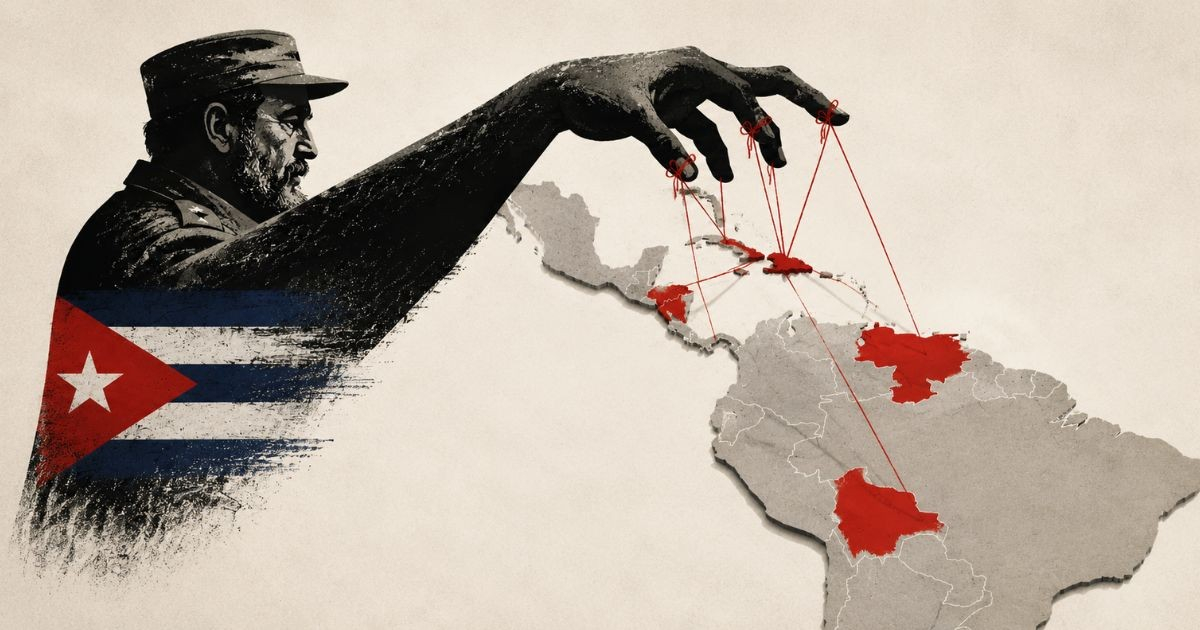
The Wall Street Journal (WSJ) recently published an extensive historical analysis explaining why certain sectors of the Trump administration continue to view Cuba as a threat to the United States, despite the fact that its armed forces are now, according to the newspaper itself, "a shadow of what they once were."
The central argument of the newspaper is that the memory of Cuban military and espionage adventures during the Cold War feeds Washington's view of the island, even when its current operational capacity is minimal.
The WSJ reviews a series of episodes that marked the projection of power of the Castro regime.
In 1961, Cuban forces defeated around 1,400 exiles trained by the CIA at the Bay of Pigs after three days of fighting, a victory that solidified the Castro family's control over the island.
In the Yom Kippur War of 1973, Cuba sent an armored brigade with Soviet T-62 tanks to Syria; about 180 Cubans died and 250 were injured in armored clashes against Israeli forces.
The African deployment was even more massive: over 400,000 Cuban military personnel and support staff served in Angola, Congo, Ethiopia, and Algeria during the 1970s and 1980s, one of the largest deployments by a developing nation throughout the Cold War.
In 1979, Havana played a crucial role in the overthrow of the Nicaraguan dictator Anastasio Somoza, providing training, intelligence, and military assistance to the Sandinista guerrillas.
Four years later, in 1983, Cuban and U.S. forces fought directly in Grenada: 25 Cubans died, 59 were injured, and 638 were captured, most of whom were armed construction workers building an airport that Washington viewed as a strategic threat.
The article also dedicates space to Cuban espionage on U.S. soil.
The WSJ notes that the spies recruited by Havana did not act for money, "but because they sympathized with the revolution."
The most emblematic cases are those of Ana Belén Montes, an analyst at the Defense Intelligence Agency for 16 years—nicknamed "Queen of Cuba" by her colleagues—and Manuel Rocha, the former U.S. ambassador to Bolivia who spied for Cuba for over 40 years from the State Department. Both were sentenced to federal prison.
The newspaper also highlights the Cuban ideological influence over Venezuela: Havana was "key in the development of Venezuela's security and intelligence apparatus" under Hugo Chávez, and provided inspiration and support to Nicolás Maduro's regime.
The WSJ identifies the most damaging blow to the Cuban regime as the U.S. military operation of January 2026 that captured Maduro in his headquarters in Caracas.
In that operation, 32 Cuban soldiers and intelligence agents who were part of his personal escort were killed.
The fall of the Venezuelan regime also brought an end to vital oil shipments to the island, exacerbating an already devastating energy crisis.
The analysis is published as the Trump administration keeps Cuba on the list of state sponsors of terrorism and exerts maximum pressure on the regime of Miguel Díaz-Canel.
In January 2026, Washington declared a national emergency linking the island to Russia, China, Iran, Hezbollah, and Hamas.
The FBI revealed in March that Cuba also recruited spies at Ivy League universities, reinforcing the narrative of an active intelligence threat.
The WSJ summarizes the paradox that defines Washington's policy toward Havana: "The island that has defied the United States for decades may be fighting its last battle, suffocated by poor economic management and increasing pressure from the Trump administration."
Filed under: