
Related videos:
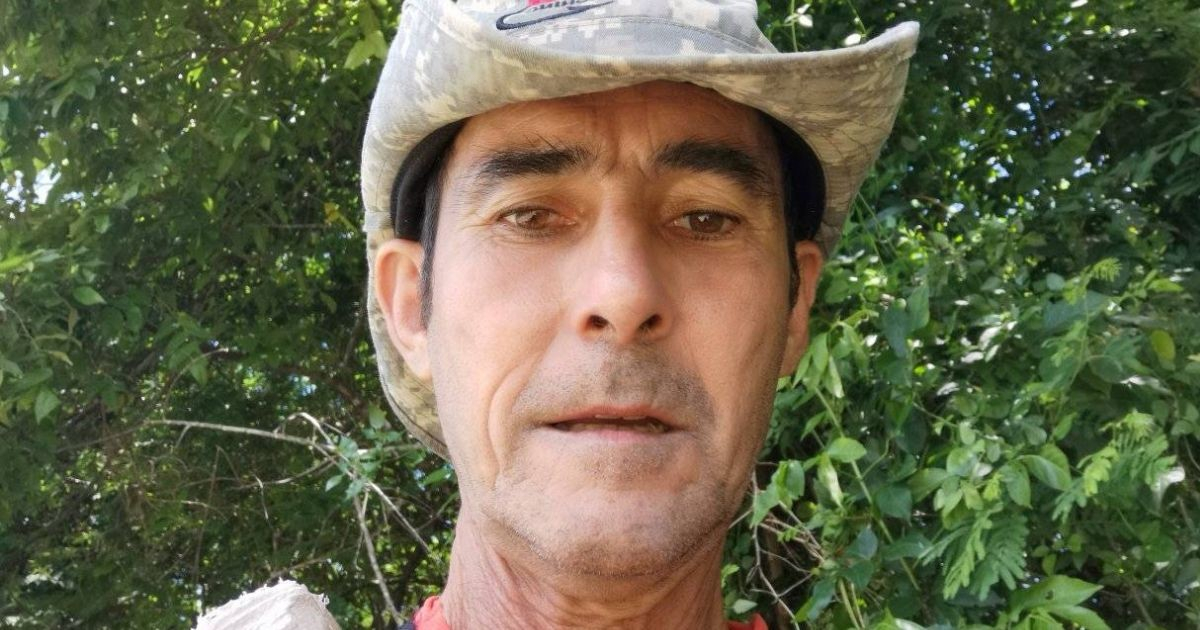
The Cuban poet Jorje Luis (Veleta) Mederos published a poem this Sunday on his Facebook profile titled "Four Simple Steps to Kill a Man", a lyrical piece of denunciation that —when viewed in light of Cuba in recent decades— could describe, with devastating irony, the mechanism by which the Cuban regime spiritually destroys its citizens: by showing them that the world has freedom, abundance, and beauty, only to then tell them that none of that belongs to them.
Veleta Mederos, a member of the literary group «El Club del Poste» in Santa Clara and the author of books such as Romanza del malo, El tonto de la chaqueta negra, and Otro nombre del mar, structures the poem as an instruction for existential torture divided into four steps.
The first points to awareness: "Teach him that the world exists, / and that in the world there are islands, / continents, skies, seas, / cities / where the bulls of freedom roar. / And then tell him that everything is bad."
The second step strikes directly at hunger: “Teach him that food exists, / that steaks roll like beasts / across the sacred tables of men; / that children exist / just like cereal, fresh milk, and malt ice cream. / Then take the man / and explain to him that he cannot, that he must not do that.”
The third evokes the beauty of the outside world that the Cuban cannot reach: "Show him how the bridges of Istanbul shine, / the towers of Manhattan, / the capricious fountains of Valencia / where the lights dance a minuet with life. / But then tell him / that light was not made for him."
The fourth and final step is the coup de grâce: "If that were not enough / to break his heart in one blow; / feel it before you, / look deep into his eyes / and tell him that he already lives / in the best / of all possible worlds."
The final phrase refers to the philosophy of Leibniz, who argued that God chose the best possible world among all conceivable ones, and that Voltaire satirized in Candide (1759) through the character Pangloss, who repeats that statement in the face of every catastrophe. In the Cuban context, the expression serves as a synthesis of the official discourse that presents decades of economic failure and repression as revolutionary achievements.
The verses about steaks and malt ice cream resonate with particular severity in light of the actual data. According to a survey from the Food Monitor Program released on May 6, 33.9% of Cuban households reported experiencing hunger in 2025, compared to 24.6% the previous year, and 96.91% of the population lacked adequate access to food in April 2026.
The image of the towers of Manhattan and the bridges of Istanbul shining for others resonates with the largest exodus in the history of the island: more than 860,000 Cubans arrived in the United States between 2021 and mid-2024.
This poem continues a series of deeply socially relevant pieces published in recent weeks by the author. On April 14, Veleta Mederos published "I Don't Want My Country to be Bombed," about the daily destruction of Cuba. On the 27th of that same month, he published "A Country Where Poets Escape", featuring the central verse: "A country where poets escape / is a country without a soul."
The three poems illustrate with poignant beauty the journey from material destruction to cultural hemorrhage, and from there to the psychological annihilation of the citizen whom the regime demands gratitude for their own misery. They raise an artistic voice of dignity against the usual postures of flattery towards the system and its leaders that the official UNEAC has upheld.
"Ask the poets why they die far away / and you will learn of the side where the country bleeds," wrote Veleta Mederos in April. The new poem responds with the depth of someone who refuses to call their cage freedom.
Filed under: