
Related videos:
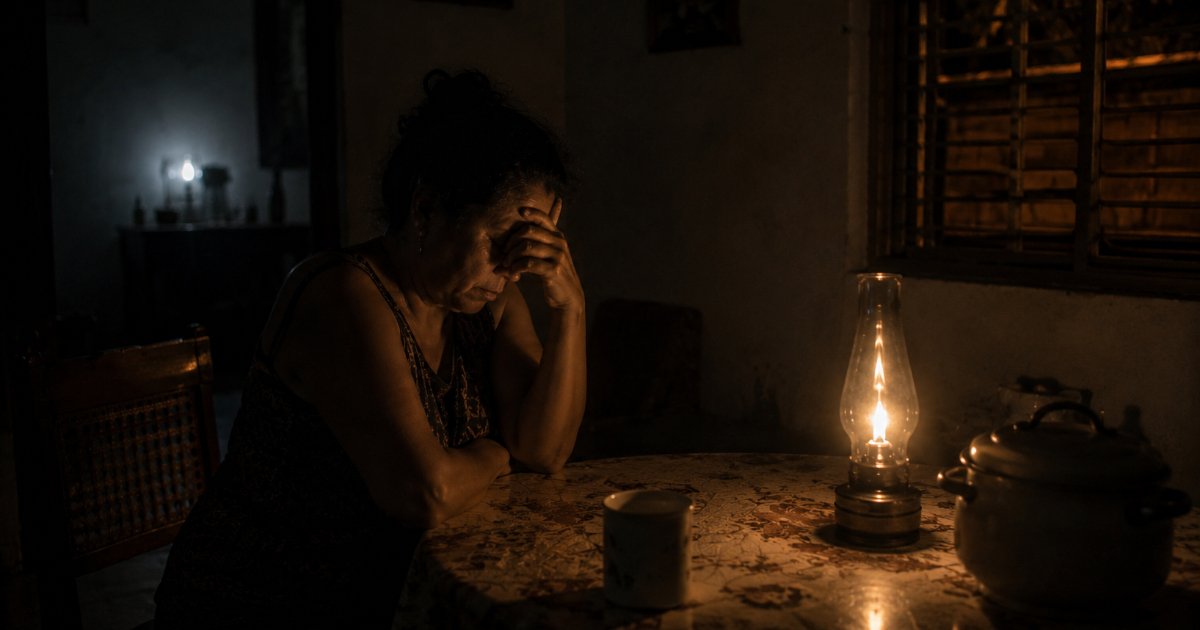
A study published in the scientific journal Social Science & Medicine concludes that prolonged blackouts in Cuba are associated with extremely severe levels of depression, anxiety, and stress among the adult population, turning energy instability into a critical public health issue.
The research, titled "Powerless and pressured: Mental health vulnerabilities in the context of prolonged blackouts in Cuba", was conducted by specialists from Cuba and the United States through an online cross-sectional survey administered between July and November 2025 to 415 Cuban adults.
Researchers used the DASS-21 scale to measure mental health symptoms, a Severity Index of Blackouts, and a Functional Impact Index of Outages, and they applied hierarchical multiple linear regression to assess the associations beyond sociodemographic factors.
"Extremely severe levels of depression, anxiety, and stress predominated across the entire sample," the study's results indicate.
The most significant finding indicates that it is not only the duration or frequency of the outages that adversely affects mental health, but also the disruption they cause in daily life: “Functional impact emerged as the strongest predictor, explaining a substantial additional variance in stress, anxiety, and depression beyond demographic variables and the severity of the blackouts.”
When functional impact is incorporated into the analysis, the associations between the severity of cuts and stress or anxiety are diminished, although they remain significant for depression.
Younger adults showed greater vulnerability to stress and depressive symptoms, according to the study's data.
The study describes how blackouts trigger what researchers call "loss spirals": food deterioration, sleep disturbances, economic strain, and interpersonal conflicts that contribute to chronic stress.
The outages also create a scenario of high demand and low control: Cubans must reorganize their routines, endure extreme heat, secure water and food, and care for dependents, all without the ability to predict or prevent the blackouts.
This scientific context aligns with the testimonies of Cubans who describe the situation as a psychological torture. A 33-year-old Cuban quoted by NBC News summarized it this way: "Beyond the physical exhaustion, it is the psychological exhaustion that overwhelms us. It’s the uncertainty of not knowing when we will have power. Nothing can be planned."
The social psychologist Yadira Albet had already warned in September 2025 that blackouts "generate anxiety, stress, and even chronic depression," while sociologist Elaine Acosta spoke of a possible "mental health epidemic" linked to economic precarity, food shortages, and barriers to accessing specialized care and psychiatric medications.
During the research period, Cuba was experiencing an unprecedented energy crisis: power outages shifted from scheduled cuts of three to six hours a day to unpredictable interruptions lasting more than 12 hours since mid-2024, and from October of that year, multiple network collapses led to outages of up to 24 and 36 hours in various regions.
The power outages have forced the suspension of surgeries, caused failures in diagnostic equipment, and jeopardized intensive care units and pediatric wards, as well as interrupted the supply of drinking water and required schools to close or reduce their hours.
The study concludes that "prolonged blackouts in Cuba are associated with adverse consequences for mental health, particularly when daily functioning is interrupted, highlighting energy instability as a critical public health issue," and it is the first to systematically examine these associations in the Cuban adult population using rigorous quantitative methodology.
Filed under: