
Related videos:
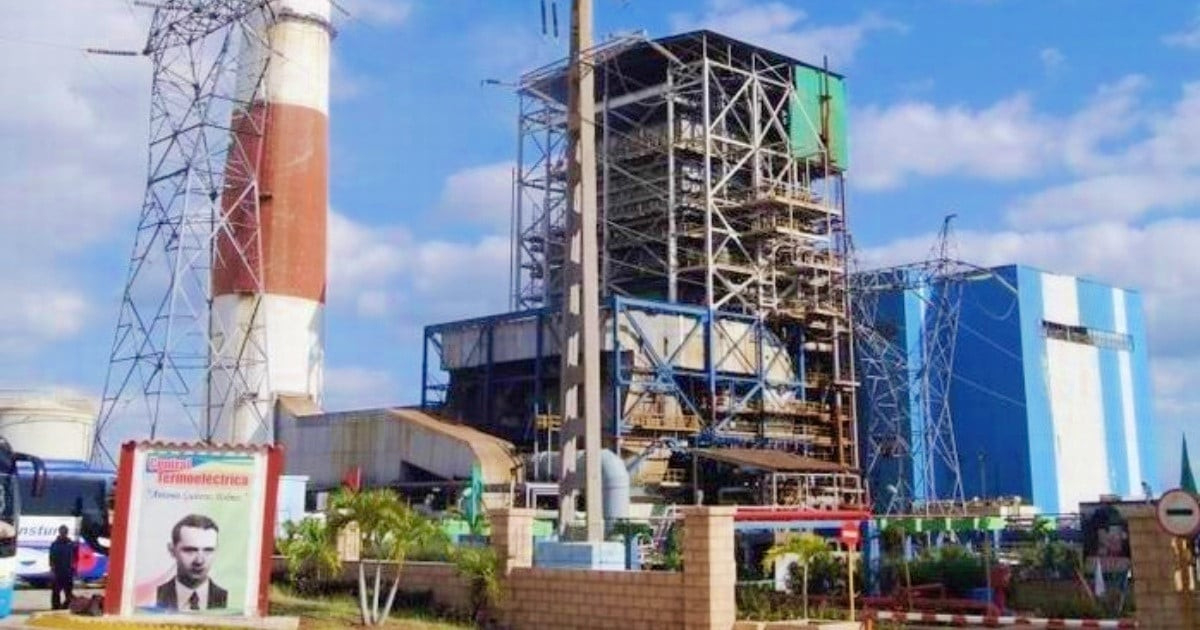
This Monday, inspections began on the boiler of the Antonio Guiteras thermoelectric plant in Matanzas, after the forced cooling of the equipment reduced the time required for access to 30 hours, as reported by journalist José Miguel Solís on his Facebook account.
The pneumatic and hydraulic tests conducted this Monday aim to determine the extent of the malfunction that took the plant of the National Electric System (SEN) offline last Sunday at 4:12 am, when a leak was detected in the economizer.
Consulted specialists lean towards the possibility of failures in the feeder, although the definitive result was expected to be known during the day.
"If the breakdown in the Guiteras boiler is not significant, the block may attempt synchronization within the next 48 hours," Solís specified.
This is the sixth outage of the year in the Matanzas area, set against a backdrop of worsening conditions due to the lack of fuel for distributed generation. Interruptions have exceeded 50 hours, the provincial deficit has approached 200 megawatts, and 76% of the circuits in Matanzas have remained without power.
The impact at the national level is equally devastating.
The Electric Union predicted a shortfall of 2,147 MW for the peak evening hours this Monday, with a capacity of only 1,133 MW compared to an estimated demand of 3,250 MW.
On Sunday, the maximum impact was 2,050 MW at 9:30 PM, with outages lasting for 24 hours. In Havana, the service was interrupted for 23 hours and 11 minutes.
La Guiteras has accumulated at least nine or ten breakdowns so far in 2026.
Only in May, the plant went offline on the fifth due to excessive water consumption in the boiler, on the 14th it caused a record deficit of 2,174 MW that left areas from Ciego de Ávila to Guantánamo without power, and just six days after being synchronized to the system on May 18, it failed again.
The plant manager, Román Pérez Castañeda, denied that the recurring failures are due to poorly executed repairs, and claimed that the failures have occurred in different locations and that the plant only returns to the system when the technical tests yield correct results.
However, the frequency of breakdowns—at least nine in five months—contradicts any narrative of competent technical management.
The reality is that the Guiteras, inaugurated in 1988, has been operating for over 36 years without any major maintenance. The available capacity of the country’s large thermal plants decreased from 2,548 MW in 2022 to 1,993 MW in 2024, a reduction of 22%.
Since December 2025, only one fuel ship would have arrived when the system requires eight per month.
While the popular neighborhoods remain in the dark for most of the day, luxury hotels and government facilities maintain their own electricity through backup generators, an inequality that has sparked growing outrage among the population.
A study published this Monday revealed that blackouts are associated with extremely severe levels of depression, anxiety, and stress among Cubans.
Solís, who has been without electricity for 54 hours while covering the crisis, concluded his report with a warning: "Ah, don't shoot the messenger who has been off for a total of 54 hours."
Filed under: