
Related videos:
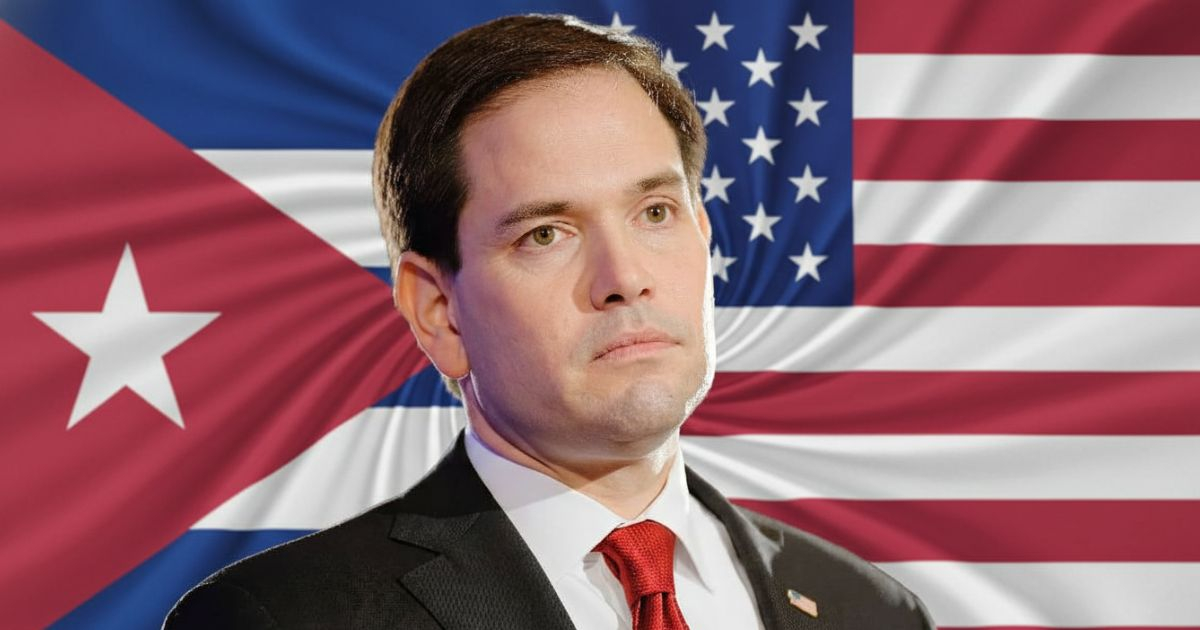
The United States Secretary of State, Marco Rubio, believes that overthrowing the Cuban regime is the central goal of his career and what will define his political legacy, according to an extensive profile published by The Guardian.
The article, written by Andrew Roth from Washington, describes the "maximum pressure" campaign led by Rubio against Havana as the culmination of a personal pursuit spanning decades, driven by his status as the son of Cuban immigrants and by the unprecedented position of influence he holds in the Trump administration.
"All roads have led to Cuba for Rubio," said a person who knows him from his time as a local politician in South Florida.
"He has wanted this for a long time, and now he finally has the authority to make it happen," he emphasized.
Rubio simultaneously holds the positions of Secretary of State and National Security Advisor, an unusual concentration of power that has allowed him to shape U.S. foreign policy towards Latin America.
Juan Sebastián González, former director of the National Security Council for the Western Hemisphere under the Biden administration, was direct in his assessment: "Essentially, Rubio is the believer in the administration, and for a Secretary of State and National Security Advisor who has been excluded from almost all major foreign policy portfolios except for the Americas, this is his legacy."
In a video posted in Spanish on Cuba's Independence Day, Rubio told Cubans that "currently, the only thing standing in the way of a better future is those who control your country."
The U.S. offensive has intensified on multiple fronts.
The aircraft carrier USS Nimitz and its strike group arrived in the Caribbean last Wednesday as a show of force.
Axios reported, citing administration officials, that Cuba had acquired more than 300 military drones and was considering using them against the Guantanamo base, U.S. ships, or targets in Florida.
Rubio stated to the press that Cuba represents an imminent threat to national security: "Havana not only possesses weapons acquired from Russia and China, but it also hosts Russian and Chinese intelligence presence on its territory."
President Trump was equally emphatic from the Oval Office: "Other presidents have looked at this for 50, 60 years... and it seems that I will be the one to do it. I would be glad to do it."
Since January 2026, Washington has imposed over 240 sanctions against Cuba, severely impacting energy imports.
The island is experiencing blackouts of up to 20 hours a day in parts of Havana, and the Cuban Minister of Energy admitted that the country had "absolutely no fuel, no diesel."
Adolfo Franco, a Republican strategist who led the U.S. foreign assistance program to Cuba under the Bush administration, underscored the historical significance of the moment: "He is in a position of influence that no other Cuban-American has ever held. If Cuba survives this period and the system continues, I believe Secretary Rubio would see it as a colossal failure of his term."
However, not everyone shares the enthusiasm. Democratic Senator Chris Murphy, a member of the Foreign Relations Committee, warned about the risks posed by the pressure from the "Cuba hawks" within the administration, and questioned the leaked intelligence as a potential pretext for military intervention.
González, for his part, raised the most disconcerting warning about the upcoming scenario: "The risk right now is not really that the pressure will fail, but that it will succeed and there will be nothing to cushion the fall. There is no plan for what comes next."
Filed under: