
Related videos:
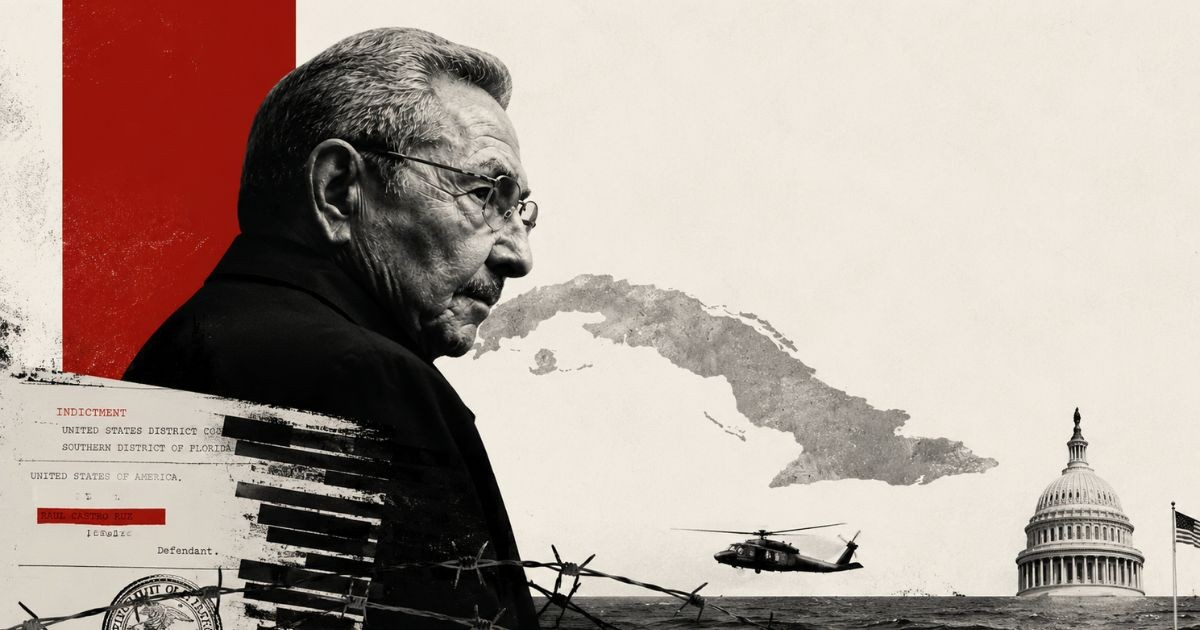
An analysis published by Foreign Policy warns that a military operation to capture the former Cuban leader Raúl Castro "would likely be successful, although it could be more costly than the capture of Maduro and less effective," amid the escalating pressure from the Trump administration against Havana.
The article, authored by William M. LeoGrande, a government professor at American University, and Peter Kornbluh, director of the Cuba Documentation Project at the National Security Archive, analyzes the federal indictment against Castro as another step in Washington's pressure campaign, whose starting point was the capture of Nicolás Maduro by Delta Force on January 3, 2026.
The parallelism between both cases is explicit: Maduro was accused in New York of conspiracy for drug trafficking, while Castro was accused of conspiracy and murder in connection with the downing of two planes from Brothers to the Rescue on February 24, 1996, which resulted in the deaths of four Cuban-Americans.
However, the authors argue that the comparison has decisive limits: Castro, who is about to turn 95 years old, has been out of power for nearly a decade and does not run the country on a day-to-day basis, so "his departure would not destabilize the regime in the same way that the capture of Maduro did in Venezuela."
The analysis documents an unprecedented military and diplomatic escalation. The aircraft carrier USS Nimitz arrived in the Caribbean on May 20 —Cuba's Independence Day— and Southern Command published a video on social media platform X with the description "Lethal. Precise. Ready," showcasing planes, helicopters, tanks, amphibious vehicles, and an aerial photograph of Cuba.
The director of the CIA, John Ratcliffe, visited Havana on May 14 and delivered an ultimatum to Cuban intelligence officials: time is running out for the regime to comply with Washington's demands.
Despite three face-to-face meetings, the diplomatic negotiations have made "no progress," stated the Cuban ambassador to the United States, Lianys Torres Rivera, to the media outlet The Hill.
Rubio demands that Cuba change its form of government and leadership, which Havana rejects as a matter of national sovereignty. "Those are the red lines," responded Torres Rivera.
The authors also dismantle the excuses used by Washington to justify military action. Regarding the leaks to Axios about 300 Cuban military drones supposedly having plans to attack Guantanamo and Key West, they assert that the notion of Cuba initiating a suicidal war against the United States is entirely implausible.
The Cuban Deputy Minister of Foreign Affairs, Carlos Fernández de Cossío, responded to this information: "Like any country, Cuba has the right to defend itself from external aggression. It is called self-defense and is protected by International Law and the UN Charter."
The analysis also rules out the option of a large-scale invasion, comparable to the operation that captured Panamanian President Manuel Noriega in 1989.
That path would make the Trump administration responsible for an occupied Cuba with over 10 million people facing shortages of food, medicine, fuel, and electricity.
The Cuban ambassador to the UN, Ernesto Soberón Guzmán, sought to keep the diplomatic channel open: "Cuba is willing to talk about everything with the United States."
"There are no taboo topics in our conversations, based on reciprocity and equality." When asked about the prospects of a negotiated agreement, Rubio was succinct: "The likelihood of that happening, given who we are dealing with right now, is not high."
Trump, for his part, was more direct on May 21: "During the decades since 1959, many American presidents have considered intervening in Cuba. It seems that I will be the one to do it."
Filed under: