
Related videos:
A Cuban who has been living in Russia for five years obtained citizenship in that country and claims to have fought for three years on various fronts in the war in Ukraine. He sent a letter in which he defends his decision to wear a foreign uniform and firmly rejects the label of "mercenary."
In his letter, he vividly describes the pain of exile, the lonely nights, the cold, and the nostalgia of someone fighting far from their loved ones.
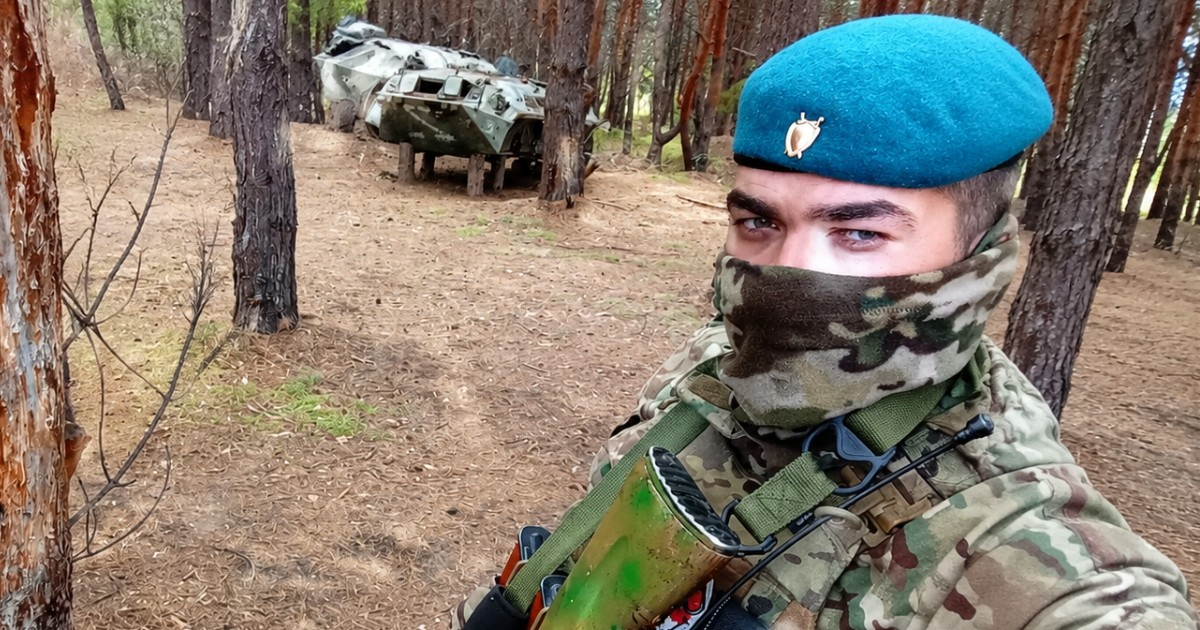
The image accompanying the testimony shows elements consistent with the Russian military environment: a characteristic turquoise blue beret typical of airborne troops (VDV) or special forces, an AK-type rifle with accessories commonly found in the Russian-Ukrainian theater, multicam camouflage, and a Soviet-style BTR armored vehicle in the background.
"Many call mercenary the one who wears a foreign uniform. How easy it is to judge from the comfort of a warm home, with a full belly, surrounded by loved ones. A mercenary is not the man who sells his life to provide bread for his son," writes the author.
Its central argument is that poverty, not ambition or ideology, drove him to the front: "A mercenary is one who fights without a soul. But the man who silently weeps while remembering his family as he carries the weight of a rifle does not fight out of ambition. He fights because poverty left him no other choice."
The combatant also rejects the narrative of exploitation that circulates on social media. "That’s why it hurts me to hear so many lies. They talk without knowing, they judge without experiencing it, and they repeat that we are used here as 'cannon fodder,'" he states, adding that during his three years on the front, he was treated "like one of them" and never felt "abandoned or treated as someone disposable," although he acknowledges having seen comrades fall and feeling "the weight of death very close."
The testimony comes in a context of increasing documentation regarding the presence of Cubans in the Russian ranks.
The Ukrainian project "I Want to Live" published a list of 1,028 identified Cubans in May 2025, while Ukrainian military intelligence raised the total estimate to at least 20,000 recruits.
As of January 2026, the confirmed casualties of Cubans in the war had risen to 93 deceased identified by name, according to the same Ukrainian project.
A report indicated that a Cuban dies on average between 140 and 150 days after signing a contract with the Russian army.
The most documented recruitment pattern includes salary offers ranging from 2,000 to 2,500 dollars a month and the possibility of Russian citizenship. However, in many cases, contracts were signed in Russian without the recruits understanding their content, and the advances received were deducted from travel expenses.
On May 6, the United Kingdom sanctioned Dayana Echemendia Díaz, identified as a Cuban recruiter who used social media to offer fake jobs and send her compatriots to the front under coercion.
The U.S. State Department described the scheme as "human trafficking."
The debate over whether these men are mercenaries, victims of trafficking, or volunteers driven by economic desperation remains open.
The letter from the Cuban-Russian combatant represents a seldom-heard voice in that discussion: that of someone who claims their sacrifice as an act of familial love and concludes with a phrase that encapsulates everything they have experienced: "My greatest hope is not war or recognition... it is to survive, embrace my family, and live in peace with them. That is the only thing that truly matters."
Filed under: