
Related videos:
Russia's war against Ukraine has turned into a deadly trap for the thousands of foreigners recruited by the Kremlin, including dozens of Cubans.
A new report from the Ukrainian center Хочу Жить (I Want to Live), accompanied by a statistical graph, reveals that 42% of mercenaries die within the first four months after signing a contract with the Russian army.
The data, compiled from the analysis of thousands of records of foreign fighters who have fallen in combat, confirm what Kiev has repeatedly denounced: Russia uses recruits from other countries as "cannon fodder", assault troops with no training or adequate protection, sending them to the front on suicide missions.
A life expectancy of four months
The graph released by the Ukrainian center reveals a startling pattern. Deaths spike from the first month of service, peaking in the second month, with over 400 casualties recorded.
In just 120 days, almost half of the mercenaries have died, gone missing, or defected. From the fifth month onward, the number decreases sharply and stabilizes at lower levels, reflecting that few manage to survive more than half a year on the Russian front.
“Mercenaries are used as cannon fodder; they sign a contract, receive a uniform and a rifle (sometimes not even that), and are sent immediately to the front,” the report states.
The publication also warns those considering enlisting in the Russian Armed Forces in search of a “quick paycheck”: “It’s a one-way ticket with no return.”
Cubans among the most vulnerable
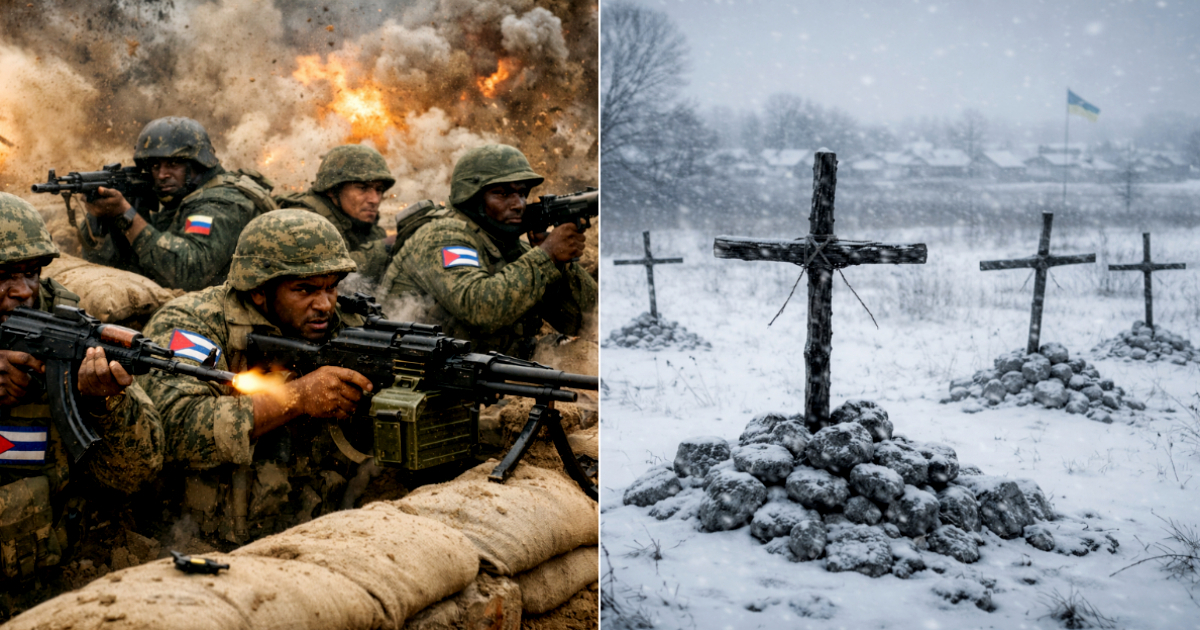
The Ukrainian warning is particularly relevant for Cuba, a country that has seen a surge in cases of citizens being recruited by Russia since 2023.
Recently, the same Ukrainian center released a list of 54 Cubans who died in combat, identified by name, unit, and date of death.
The majority had signed their contracts in 2024 and died just a few months later, confirming exactly the pattern described in the report: an average military lifespan of less than four months.
The case of the Cubans also reveals a double tragedy: the economic and the moral. Many were deceived with promises of salaries in foreign currency or Russian citizenship, and today their families on the island have received neither compensation nor news about the repatriation of the bodies.
The regime in Havana, which did declare an official mourning for the 32 Cubans who died in Venezuela alongside Nicolás Maduro, maintains complete silence regarding the fallen in Ukraine, even denying the existence of recruitment.
A business with death
For Ukraine, the data reflects the complete dehumanization of the Russian military strategy. "No commander cares about the lives of their personnel, much less if they are foreigners," states the statement from the Quiero Vivir center.
The mercenaries, he adds, are used in assault attacks, cleanup operations, or reconnaissance missions with no return.
The report notes that even Russian war correspondents have begun to acknowledge "monstrous" loss figures, exceeding hundreds of thousands of deaths, including thousands of foreigners from poor countries who were lured by "easy money" or forced to go.
In this context, Cuba is portrayed as one of the nations that contributes the most victims among the recruited Latin Americans.
Putin's war, fought ten thousand kilometers away from the island, has already shattered dozens of Cuban families and has created an official silence that weighs as heavily as the deaths themselves.
While Moscow promises money and citizenship, and Havana remains silent, the statistics speak for themselves: four months. That is the average life expectancy of a foreign mercenary in the service of the Russian army.
Filed under: