
Related videos:
Cuba awoke this Tuesday with the National Electric System (SEN) on the brink of collapse, with a mere 1,195 MW available against a demand of 2,740 MW, according to the informative note from the Electric Union dated May 26.
The deficit at 06:00 hours left 1,553 MW affected, and the outlook for the evening is even more bleak: a availability of 1,240 MW is projected against a maximum demand of 3,200 MW, which would result in a deficit of 1,960 MW and an estimated impact of 1,990 MW during peak hours.
Monday was also marked by serious disruptions. The Electric Union acknowledged that "the maximum impact due to generation capacity shortfall yesterday was 2,010 MW at 10:00 PM," with sustained interruptions throughout the 24-hour period.
The 54 photovoltaic solar parks installed on the island contributed 3,237 MWh, with a peak of 466 MW at midday, an insufficient contribution to offset the structural deficit that worsens every night.
Among the main incidents of the system are active failures at the CTE Antonio Guiteras, Unit 2 of the CTE Lidio Ramón Pérez, and Units 3 and 5 of the CTE Antonio Maceo, while Unit 5 of the CTE Mariel, Unit 6 of the CTE Renté, and Unit 5 of the CTE Nuevitas remain under maintenance, with 354 MW out of service due to limitations in thermal generation.
The only addition planned for the nighttime peak is Unit 3 of the Renté CTE, with just 45 MW.
The Antonio Guiteras thermoelectric plant, the most important in the system, has experienced its third breakdown in May: it went offline on May 5, returned on the 18th after four days of repairs, and failed again on May 24 due to a leak in the boiler while generating about 200 MW.
In response to the criticisms, the plant's executive Román Pérez Castañeda denied that the issues were due to poorly executed repairs and attributed them to the accumulated structural deterioration over more than 15 years without adequate investment.
The crisis this Tuesday fits into a pattern of sustained deterioration throughout May. On May 13, a record deficit of 2,153 MW was registered in the National Electric System, and the next day, with the second outage of Guiteras, 70% of the country was left without electricity.
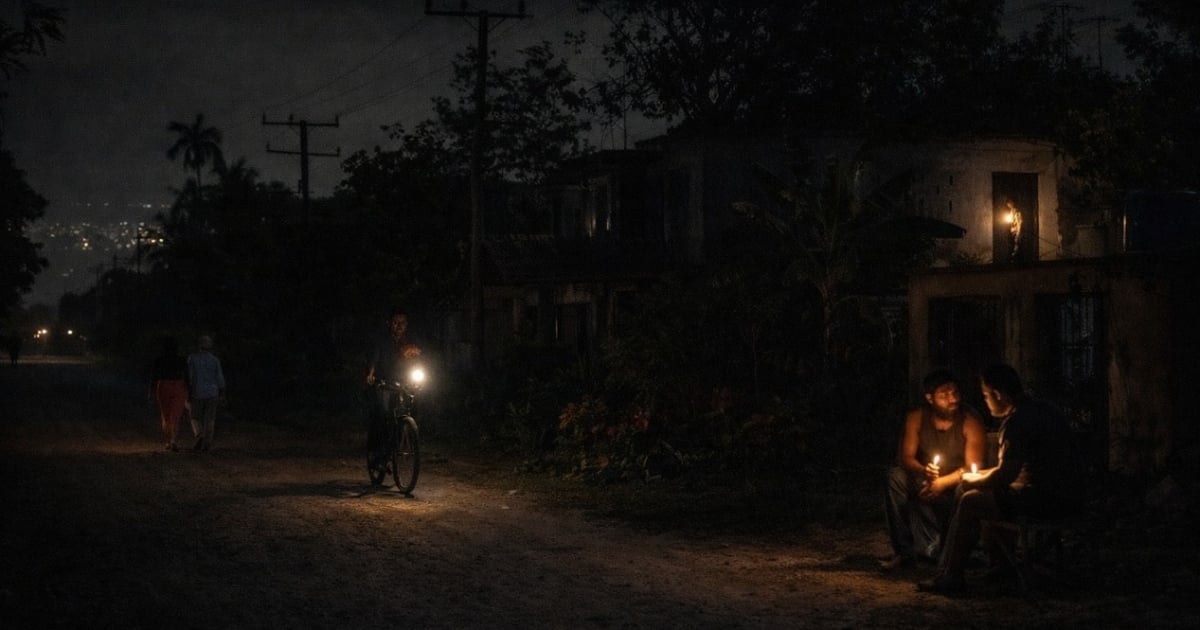
The impact on the population is devastating: power outages lasting up to 20-22 hours daily in Havana, cuts of up to 50 hours in municipalities like Songo-La Maya, and disruptions to water supply, hospitals, schools, and telecommunications.
From May 13 to 21, desperation overflowed into the streets: potbanging, barricades, and bonfires were reported in at least 12 municipalities in Havana, with some episodes ending in repression by the authorities.
In March 2026, the SEN had already experienced at least three total outages, the most prolonged being 29 hours and 29 minutes on March 16, highlighting that the Cuban electrical infrastructure lacks the capacity to recover from a system that has gone decades without the necessary investment.
Filed under: