
Related videos:
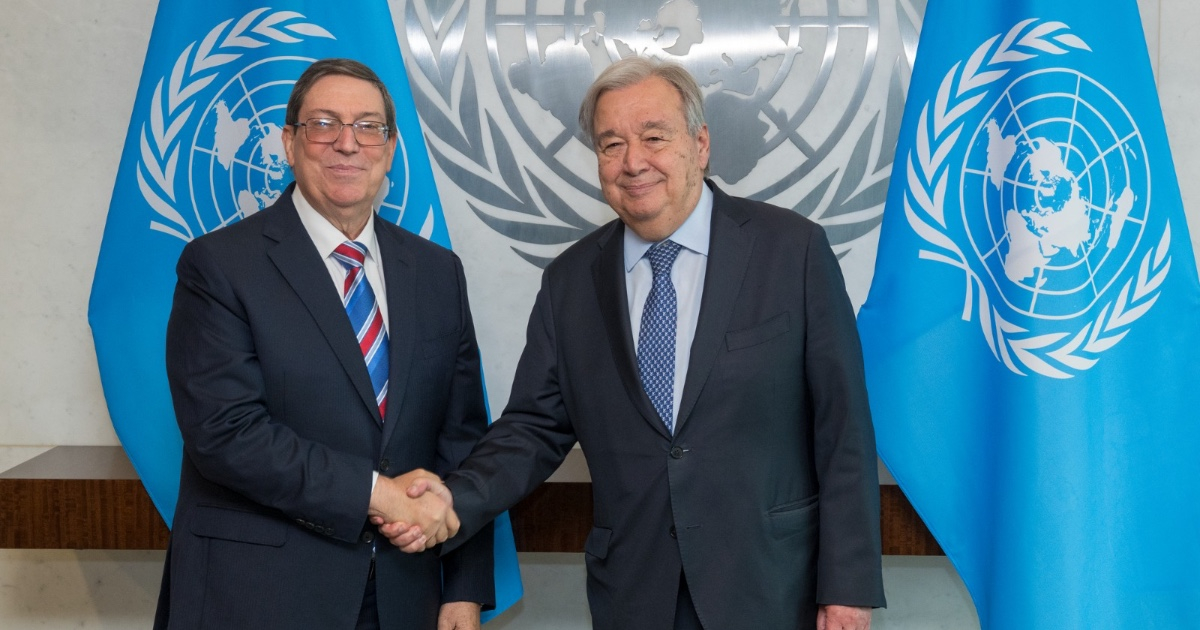
The Cuban Foreign Minister Bruno Rodríguez Parrilla met on Tuesday with the Secretary-General of the United Nations, António Guterres, at the UN headquarters in New York, and requested him to intervene to stop what he described as a military aggression by the U.S. against Cuba.
In a message posted on social media after the meeting, Rodríguez stated: "I requested the UN's assistance to prevent a military aggression by the U.S. against Cuba, which would lead to a bloodbath, and to put an end to threats of the use of force."
The meeting took place as part of the chancellor's involvement in an open debate of the Security Council regarding the purposes and principles of the UN Charter.
Rodríguez also rejected before Guterres the formal accusation presented by the U.S. Department of Justice on May 20 against army general Raúl Castro, calling it an "infamous, fraudulent, and illegal charge."
This accusation charges Castro and five Cuban military pilots with conspiracy to assassinate American citizens, destruction of aircraft, and four counts of homicide for the downing of two planes from the organization Brothers to the Rescue on February 24, 1996, which resulted in the deaths of Armando Alejandre Jr., Carlos Costa, Mario Manuel de la Peña, and Pablo Morales.
One of the accused pilots is already in custody in U.S. territory, according to reports from last week.
The chancellor also informed Guterres about the "serious humanitarian situation faced by the Cuban people, a direct consequence of the extreme intensification of the blockade by the U.S. government, along with additional measures, secondary sanctions, and a brutal energy blockade."
Since January 2026, the Trump administration has imposed more than 240 sanctions against Cuba, which reduced the island's energy imports by between 80% and 90% and caused power outages of up to 20 to 25 hours daily nationwide.
On April 29, the U.S. Senate rejected by 51-47 a resolution to limit any potential unilateral military action by the president against Cuba, leaving that possibility open.
Despite the escalation, Rodríguez reiterated to the highest official of the UN Havana's willingness to continue the dialogue with Washington: "I reiterated, despite this and the inconsistency of the counterpart, Cuba's readiness to continue bilateral conversations with the U.S. without interference in our internal affairs, political system, or elections."
This is not the first time that the chancellor has brought up the argument of a possible military aggression at international forums. On May 14, he requested support from the BRICS in that same context, and on that Tuesday, he spoke with Fox News accusing the U.S. of trying to justify armed action against the island.
The president Miguel Díaz-Canel publicly celebrated Rodríguez's speech before the Security Council on a day when Havana intensified its diplomatic offensive in New York.
Filed under: