
Related videos:
The Democratic representative Nydia Velázquez (New York) and her colleague Gregory Meeks introduced a War Powers Resolution in the House of Representatives to order President Donald Trump to withdraw the Armed Forces from any hostilities against Cuba that have not been authorized by Congress.
The initiative, registered as H. Con. Res. 106 on May 22 and publicly announced this Wednesday, was referred to the House Committee on Foreign Affairs.
"Trump is leading us toward another unauthorized war, this time in Cuba," Velázquez wrote while announcing the measure.
"The Congress must reaffirm its constitutional authority if the President continues down this illegal path," he emphasized.
The text of the resolution, based on section 5(c) of the War Powers Resolution of 1973, orders the president to withdraw armed forces from hostilities against Cuba "unless explicitly authorized by a declaration of war or specific authorization for the use of military force."
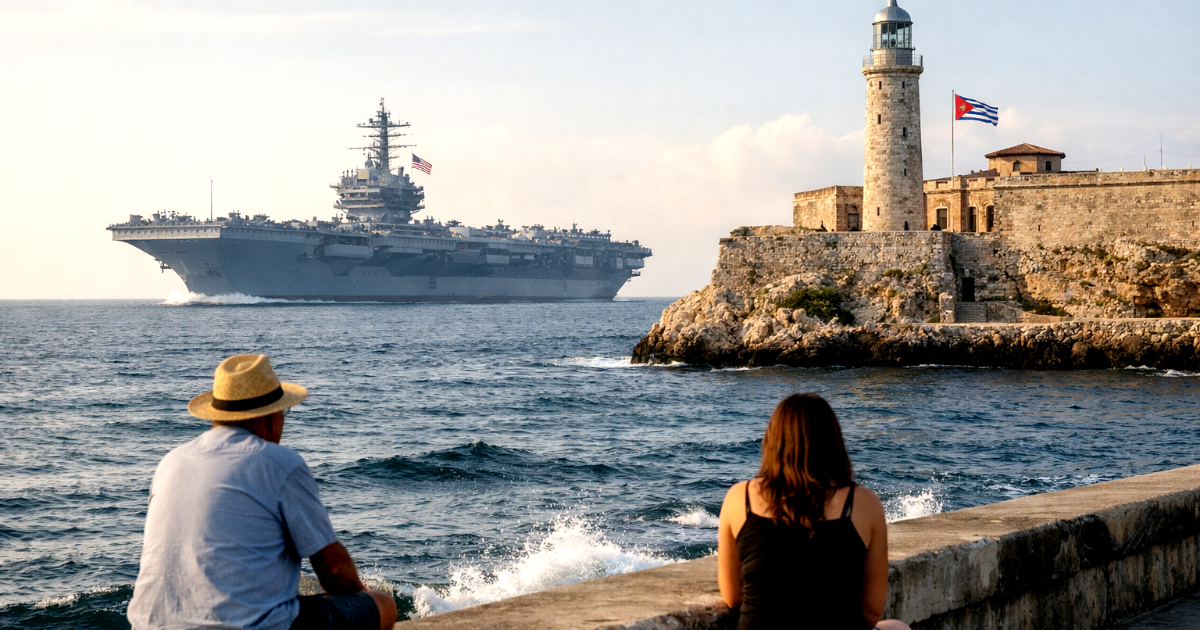
The initiative comes after Politico revealed that the Pentagon has been positioning troops and weapons for months that could support an attack on Cuba, with several warships deployed for nearly 10 months, exceeding the usual period of six to seven months.
The White House has clarified that Trump has not made a final decision regarding military action, but the buildup of signals has raised alarms in Congress.
This is not the first time that Democrats have attempted to invoke the War Powers Act to rein in the president.
The Senate rejected a similar resolution on April 29 led by senators Tim Kaine, Ruben Gallego, and Adam Schiff, with a vote of 51 to 47. Only senators Susan Collins and Rand Paul voted alongside the Democrats.
In the House, Velázquez had already introduced H.J. Res. 153 on March 24, a prior resolution on the same matter. Meeks, along with Pramila Jayapal, introduced the "Prevent an Unconstitutional War in Cuba Act" on March 26, which prohibits the use of federal funds for military operations against Cuba until December 31, 2026, with 14 Democratic co-sponsors.
The new H. Con. Res. 106 represents a second wave of legislative restraint, introduced precisely after the details of the Pentagon's military positioning became known.
Since January 2026, the Trump administration has imposed more than 240 new sanctions against Cuba.
On January 20, he reinstated the island to the list of state sponsors of terrorism, on January 29 he signed Executive Order 14380 declaring a national emergency due to the "Cuban threat," and on May 1 he expanded sanctions with secondary measures against foreign financial institutions that operate with blocked Cuban entities.
U.S. intelligence analyzes how Cuba would respond to a potential attack, as reported by CBS News on May 21, although there is no presidential order to initiate hostilities. The dictator Miguel Díaz-Canel has warned that an attack would lead to a "bloodbath."
Filed under: