
Related videos:
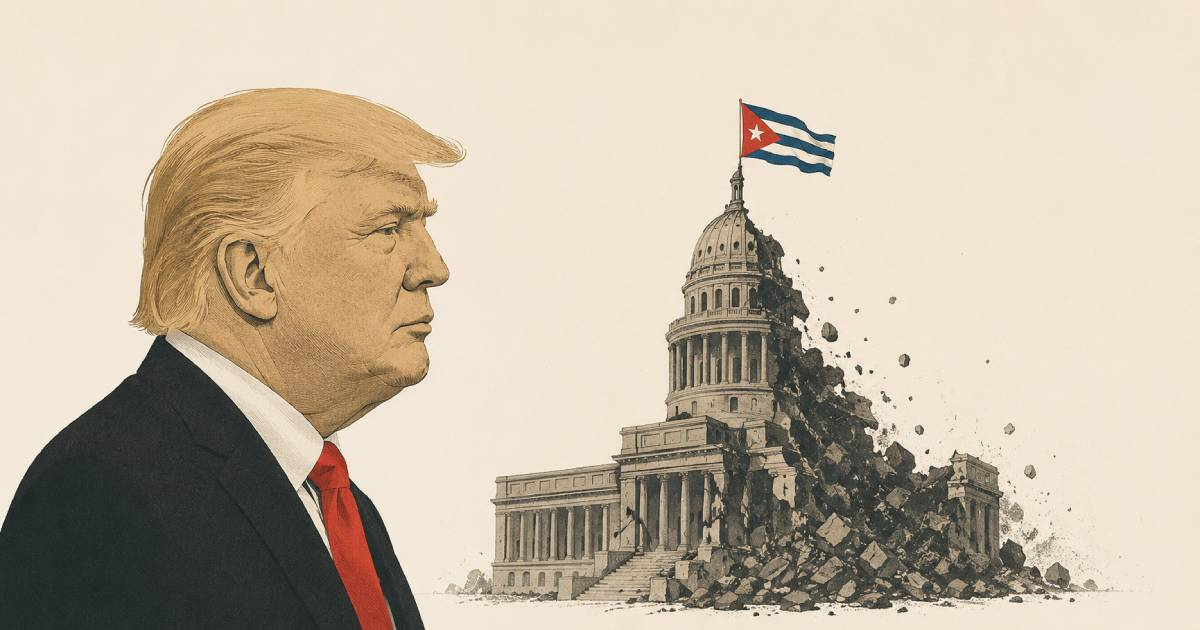
The Trump administration is preparing for a potential collapse of the Cuban government as soon as this summer, and has already conducted military simulation exercises for intervention scenarios on the island, according to Axios citing multiple senior White House officials today.
The strategy is described internally as "accelerationism," a philosophy aimed at hastening the gradual collapse of the regime.
"The best way to describe it is 'accelerationism,'" said a senior administration official. "But we don't want to end the regime just yet. There's a method. It's staged."
The turning point was the capture of Nicolás Maduro on January 3 in Caracas, which ended the free shipments of Venezuelan oil to Cuba and triggered a new economic crisis on the island.
On May 1, Trump signed an executive order imposing secondary sanctions against GAESA, the military-industrial conglomerate that controls a significant portion of the Cuban economy. Foreign companies have until June 5 to sever ties with that entity or face consequences.
The shipping companies CMA CGM and Hapag-Lloyd, along with the Canadian mining company Sherritt International, have already suspended operations in Cuba following the sanctions. It is expected that financial and hotel institutions from Spain, Panama, and Mexico will do the same.
"We have never seen this type of pressure. It's a completely new game," said Max Meizlish, a former official from the Treasury Department specializing in sanctions against Cuba.
Last month, Southern Command conducted a multi-agency simulation exercise to prepare military action plans for Cuba, including the use of drones by the regime and potential scenarios for mass repression.
“All is on the table, but there is no planned or imminent invasion. When the president says it's time to act, we will be ready for anything,” said one of the officials.
Another source warned about the scenario that worries Washington the most: "It's going to be hot. People will be without electricity. Food will spoil without refrigeration. People will get angry. They might take to the streets. And then what happens? I can't imagine the president doing nothing if there is repression."
However, a Trump advisor clarified the boundaries of that stance: "The president doesn't want boots on the ground for more than 48 hours. This could turn into a quagmire."
On May 20, the Department of Justice declassified a federal murder charge against Raúl Castro for the downing of the Brothers to the Rescue planes in 1996, which resulted in the deaths of four individuals. On the same day, Southern Command announced the arrival of the Nimitz aircraft carrier's Strike Group in the Caribbean.
Officials recognize crucial differences with the Venezuelan case: there is no identified successor for Cuba as there was with Delcy Rodríguez in Venezuela, and the embargo has been codified in congressional law since 1962, which prevents Trump from normalizing relations by executive order.
"The problem is that Congress has a say and a vote," pointed out an official, referring to the strong positions of the Cuban-American representatives from Miami.
As a countermeasure, the U.S. announced $100 million in humanitarian aid for Cuba, channeled through the Catholic Church and other organizations, ensuring that not a single dollar reaches the government.
The Cuban Foreign Minister Bruno Rodríguez Parrilla responded to Fox News that Washington and Secretary of State Marco Rubio are manipulating public opinion to justify military intervention.
"Politics is complicated on both sides of the Florida Strait," concluded one of the officials consulted by Axios. "But we have time. The regime does not."
Filed under: