
Related videos:
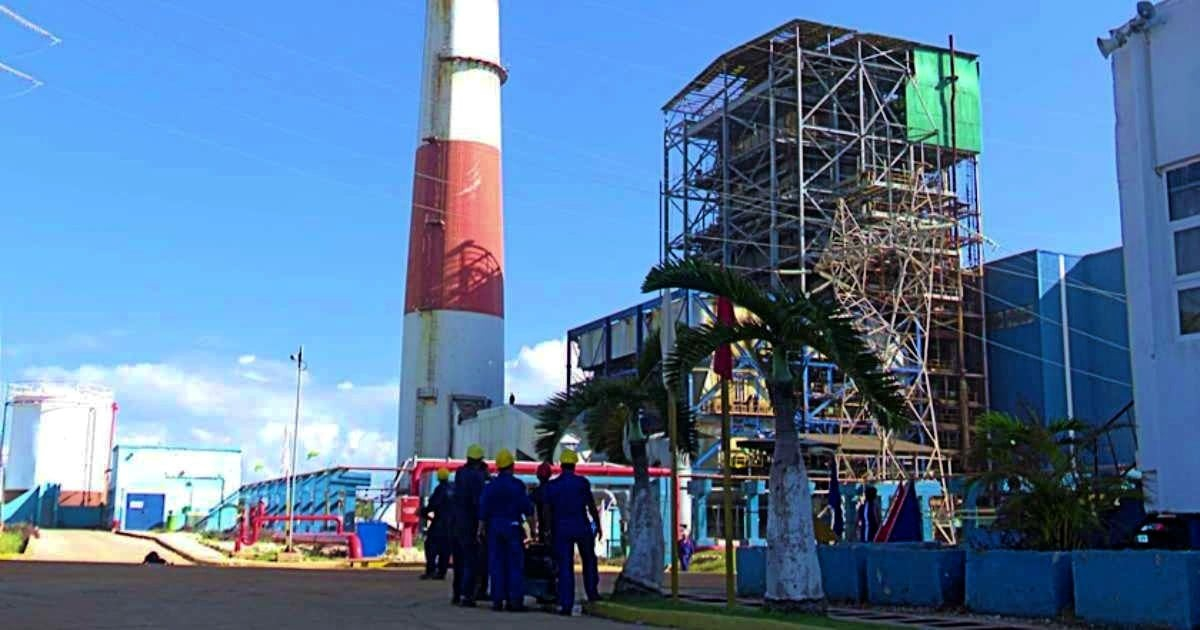
The Antonio Guiteras Thermoelectric Power Station was reconnected this Thursday to the National Electroenergetic System (SEN), according to .
On its official Facebook profile this morning, the UNE stated: "7:48 || The CTE Antonio Guiteras Unit is online."
The plant had gone out of service on May 24 due to a pore in the economizer, a perforation in a boiler tube that forced its shutdown. Just four days later, the unit returns to the system in what marks its tenth reconnection so far in 2026.
La Guiteras, located in Matanzas and inaugurated in 1988, is the largest unit block of the Cuban electrical system, with a nominal capacity of 250 MW, and can contribute between 20% and 25% of the national thermal generation.
Its weight in the SEN is such that each outage immediately worsens the country's electrical deficit. On May 6, an unexpected breakdown at the plant caused a total disconnection of the national system, and on May 14, its shutdown due to a leak in the boiler coincided with the historic record of a deficit of 2,174 MW, affecting nearly 70% of the population.
The SEN continues to be in crisis, with blackouts throughout the day on Wednesday reaching 1,957 MW during peak hours, and sustained outages early Thursday morning.
Although the 54 photovoltaic solar parks contributed 3,357 MWh and a maximum power of 515 MW, the deficit remains significant. At 6:00 a.m., there were 1,476 MW affected. Several thermal power units are either out of service or undergoing maintenance, while 393 MW are offline due to thermal limitations. During peak hours, an impact of up to 1,670 MW is expected, according to the official report.
The pattern of recurring breakdowns has generated deep skepticism among the citizens. Before the breakdown on May 24, the Guiteras had been synchronized on May 18 and lasted barely six days online.
The reaction on social media to the announcement from the Unión Eléctrica was one of widespread disbelief. "Let's see how long the Piteras lasts," wrote one user. Another commented, "Fantastic, they brought the dead back to life for a few days." A third summed up the feelings of many: "Hopefully it will improve conditions for the people in the capital. The rest will continue to endure over 20 hours of blackout daily."
Román Pérez Castañeda, a manager at the plant, denied that the failures are the result of poorly executed repairs, arguing that the problems occur in different locations each time. The regime, for its part, has attributed part of the crisis to the U.S. embargo and the shortage of fuel and spare parts, while experts and independent media point to the structural deterioration of the infrastructure and insufficient maintenance as the main causes.
So far in 2026, the Guiteras has accumulated between nine and ten outages, consolidating itself as the most visible symbol of the fragility of an electrical infrastructure that has gone decades without the necessary investment to meet the country's demand.
Filed under: