
Related videos:
Valentín is 32 years old and had been living in the United States for over two decades when, on October 17, 2025, he was deported to Mexico, a country he had never set foot in.
His story, documented by Human Rights Watch in a report published this Wednesday, accurately illustrates the legal limbo in which a portion of the Cuban diaspora has been trapped under the mass deportation policy of the second Trump administration.
Valentín's case began in 2020 when he received a final deportation order after being convicted of drug possession, for which he served three years in prison.
However, he was not expelled at that time because the Cuban regime refused to accept him. "Cuba did not accept us," he explained.
Instead, he was placed under the immigration supervision of the Immigration and Customs Enforcement (ICE), with the obligation to report periodically, and he was allowed to continue living in Florida with a work permit.
On June 3, 2025, during one of those routine appointments with ICE in Florida, Valentín was arrested.
On July 31 of that year, U.S. authorities put him on a flight to Cuba with more than 130 other people.
Upon landing, Cuban authorities denied entry to him and 15 others from the same flight. "We didn't know why, but they wouldn't let us in," he said.
He was returned to the United States and remained in detention until, months later, he was sent to Mexico as a third country of destination.
Valentín's case is not isolated. According to the Human Rights Watch report on Cubans deported to Mexico, between January 20, 2025, and March 9, 2026, the United States deported nearly 13,000 individuals from third countries to Mexico. Cubans are the largest group, with approximately 4,353 deportations during that period.
A Mexican lawyer familiar with these cases explained to HRW the logic of the Cuban regime: the authorities on the Island do not accept the return of individuals who left the country before 2017.
For the Cuban government, he said, "these people are not Cubans."
Most of the Cubans interviewed by HRW were 60 years old or older and had lived in the United States for decades, predominantly in Florida.
Many had arrived during the Mariel exodus in 1980 or through "el bombo," the immigration lottery of the 1990s.
Almost all of them had permanent legal residency, but they lost it due to criminal convictions, mostly for non-violent offenses.
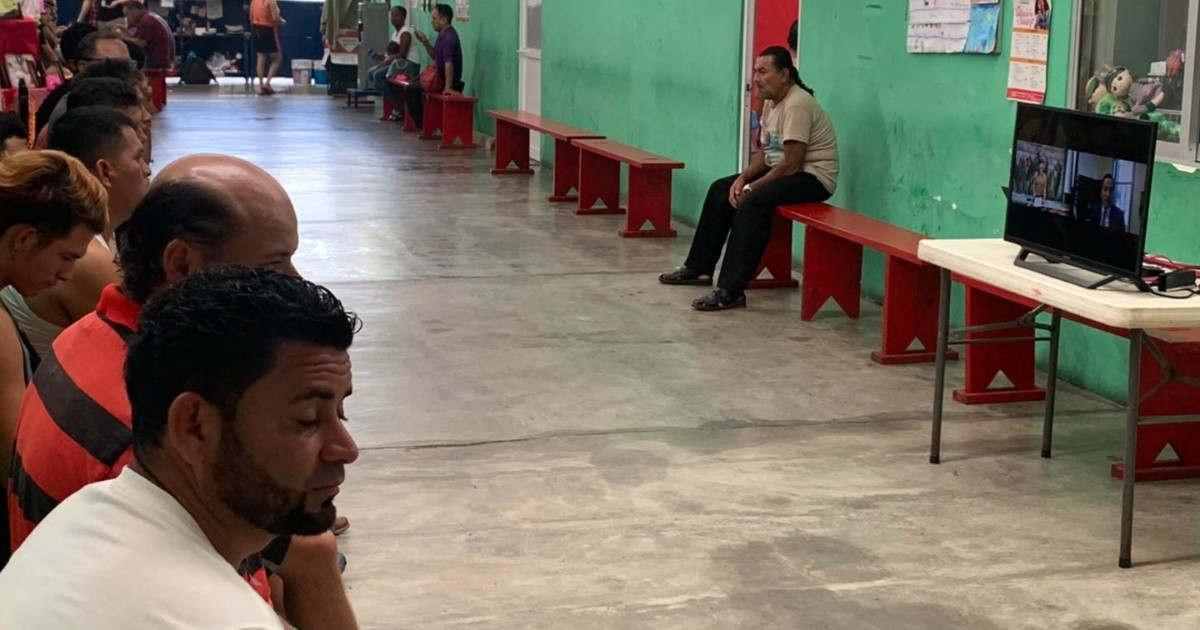
Once in Mexico, these Cubans face a severe limbo: without documents, without work permits, and without governmental support.
Activists estimate that there are about 800 Cubans stranded in Tapachula, Chiapas, and around 3,000 in Villahermosa, Tabasco.
The only way to regularize one's status is to apply for asylum, a process filled with practical obstacles that many cannot overcome.
The situation worsens because Cuba does not accept them from Mexico either, closing off any possible escape.
Like thousands of deported Cubans left stranded without options, Valentín found himself trapped between two governments that reject him and a third that is under no obligation to accept him.
Harold A., another 58-year-old Cuban deported to Mexico in February 2026, summarized the situation starkly: "They leave us here to die. There is no help; we can't work because we don't have papers. They give us nothing, nothing... How are we supposed to eat, to pay rent?"
Filed under: