
Related videos:
A 66-page report published this Wednesday by Human Rights Watch documents the mass deportations of Cubans from the United States to Mexico under the Trump administration, with testimonies describing degrading treatment, complete abandonment, and a legal limbo with no way out.
The report, titled "Casting Us Aside to Die", includes testimonies from 53 nationals from third countries who were deported to Tapachula, Chiapas, and Villahermosa, Tabasco, among them 41 Cuban men.
Most of the Cubans interviewed are 60 years old or older, suffer from chronic illnesses, and had lived in the United States—primarily in Florida—for years or decades after fleeing Cuba due to political repression or lack of economic opportunities.
Many had built businesses, owned their own homes, and left family members in U.S. territory.
None of the interviewees had the opportunity to contest their deportation to Mexico, and the authorities sent them without documentation, money, or personal belongings.
"The Mexican immigration officials treated us like dogs thrown out into the street," declared one of the Cuban deportees interviewed by HRW.
Another Cuban summed up the situation with a devastating phrase: "Here we are imprisoned... We are here to die."
Harold A., a 58-year-old Cuban deported to Mexico, described the daily despair: "They leave us here to die. There is no help. We can't work because we don't have papers. They give us nothing, nothing... How are we supposed to eat, to pay the rent?"
According to the report, between January 20, 2025, and March 9, 2026, the United States deported more than 18,000 nationals from third countries, of which nearly 13,000 —approximately 70%— were sent to Mexico under an unwritten and undisclosed agreement between both governments.
Cubans made up the largest group: 4,353 deportees to Mexico during that time.
Of the total number of Cubans deported, 55% had prior criminal convictions in the United States, 16% had pending charges without convictions, and 26% had no criminal records.
Only 16% had a violent or potentially violent offense as their most serious conviction.
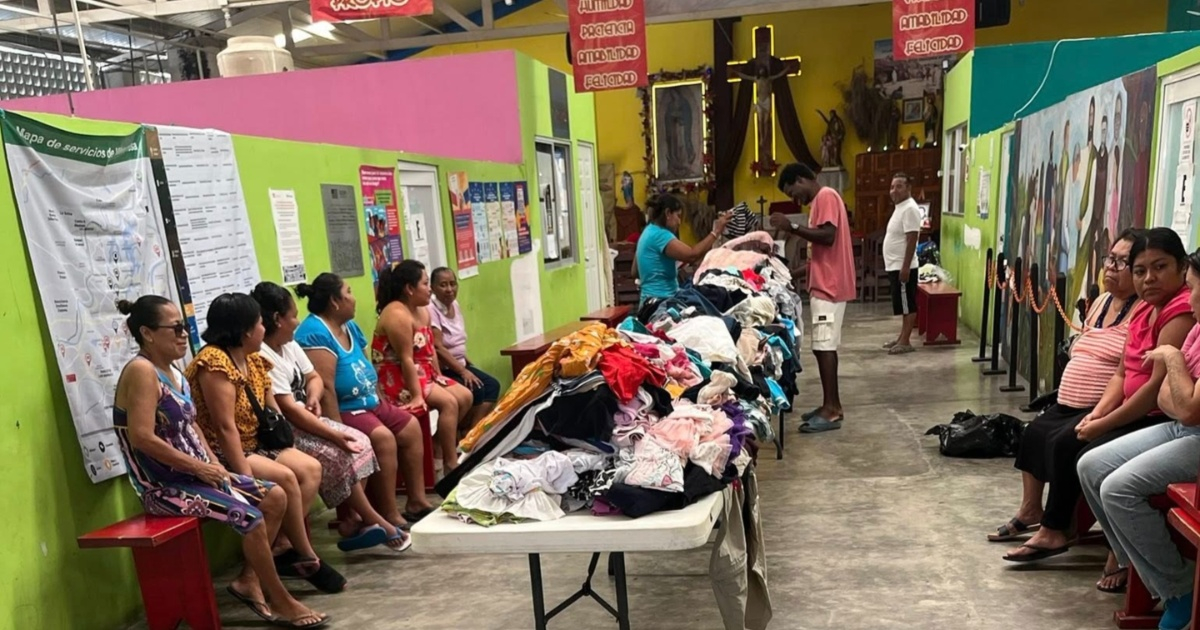
Activists estimate that there are around 800 Cubans stranded in Tapachula and about 3,000 in Villahermosa, cities in southern Mexico with high levels of violence and limited service capacity.
In U.S. detention centers, Cubans reported overcrowding, extreme temperatures, insufficient food, limited medical access, and physical and verbal violence from guards.
Testimonies collected by The Washington Post describe head blows, twisted ankles, and threats to send them to El Salvador or "to Africa" if they resisted.
Already in Mexico, immigration officials simply told them to "leave", sometimes in the middle of the night, without guiding them on where to sleep or how to access basic services.
Some have been forced to live on the streets, in parks, or in front of hospitals, such as the Juan Graham Hospital in Villahermosa.
The legal situation is one of permanent limbo: the Cuban government refuses to take back the deported individuals, and asylum is practically the only legal avenue in Mexico. However, many Cubans who have lived outside the island for decades find it difficult to demonstrate a credible fear of current persecution.
The Mexican Refugee Assistance Agency is overwhelmed, and its procedural requirements make it very difficult to access protection.
This practice of deporting long-term Cuban permanent residents to third countries did not exist before Donald Trump's second term.
Alcira Silva Hava, a researcher at HRW, was straightforward in her accusation: "The Trump administration is using Mexico as a dumping ground for people they cannot deport to their home countries, including many Cubans who have lived in the United States for decades."
In March 2026, federal judge William G. Young questioned the legitimacy of the unwritten agreement with Mexico, after the Department of Homeland Security admitted in court that the Immigration and Customs Enforcement had deported about 6,000 Cubans to Mexico without requiring travel documents.
Silva Hava warned that the Mexican government "does not offer deportees any way to obtain lasting legal status outside the asylum system, leaving many in limbo without shelter, without medication, and at the mercy of criminal organizations."
Filed under: