
Related videos:
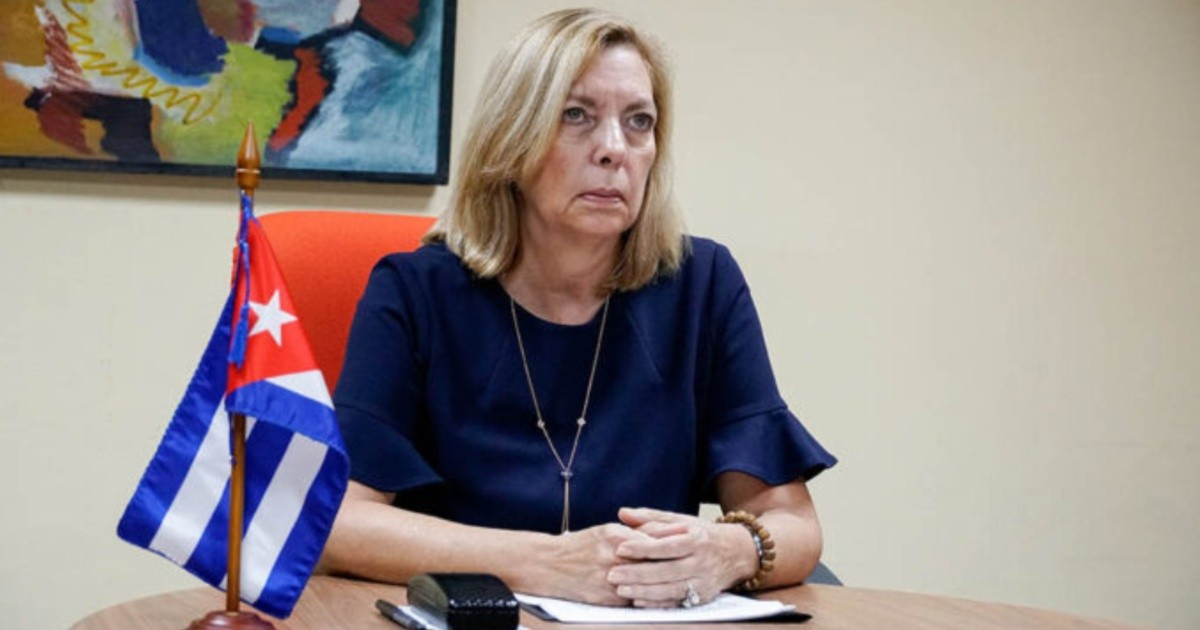
The Deputy Minister of Foreign Affairs of Cuba, Josefina Vidal Ferreiro, stated in an exclusive interview granted to PBS NewsHour this Wednesday that the channel of dialogue between Havana and Washington "is open," although she warned that there are "reasons to doubt the seriousness of the U.S. side."
Vidal acknowledged that the conversations between both governments are conducted "discreetly" and declined to confirm whether they are currently engaged in formal negotiations, but reiterated the Cuban regime's willingness to engage in dialogue: "We have always favored dialogue with the United States and with any other country, because we see it as the only way countries can discuss their differences."
The interview takes place during a time of heightened bilateral tension, with the U.S. increasing surveillance flights around Cuba, an aircraft carrier positioned in the Caribbean, and President Trump reiterating that he can "do whatever he wants" with the island.
Regarding the internal crisis, Vidal provided a devastating description: "Imagine a country that has not received a single drop of oil in five months. We have had to postpone surgeries. This has impacted electricity generation and, consequently, health services, education, and water supply." He described the situation as a "collective punishment" without justification.
This week, Cuba received a shipment of humanitarian aid from China, amid a food and energy crisis that the could lead to a collapse of essential services.
Vidal categorically rejected the Trump administration's accusations that Cuba poses a threat to U.S. national security: "The U.S. government is not telling the truth. American agencies know very well that Cuba is not and has never been a threat." He also denied the existence of intelligence operations from China or Russia originating from Cuban territory.
Regarding the visit of the CIA director, John Ratcliffe, to Havana on May 14 and 15 —the first by a director of that agency to Cuba in decades—, Vidal declined to comment. However, he pointed out that Washington “has never provided any official evidence” to support its accusations and described those claims as “a pretext to justify the escalation.”
In response to the question about a possible U.S. military action, the deputy minister was straightforward: "We take threats from the United States very, very seriously. And we have always been ready to defend our country." She clarified, however, that Cuba "does not seek conflict" and that "there is no reason for Cubans and Americans to die."
Vidal also lashed out at Secretary of State Marco Rubio, son of exiled Cubans and the main architect of the economic pressure against the island: “Marco Rubio doesn’t know Cuba. He has never been to Cuba. He doesn’t understand Cuba. It seems he is not familiar with the history of Cuba.”
Rubio, for his part, stated this week that the U.S. will continue to engage in dialogue with Cuba because "having a failed state 90 miles from our shores is a threat to national security."
Vidal made it clear that Havana is willing to negotiate "on any other topic" with one exception: "Issues related to our internal order are the exclusive competence of the Cuban people and only the Cuban people."
The conversations between Cuba and the U.S. were described by Vidal herself in April as "very preliminary" and lacking a formal structure, which contrasts with the tone of openness she projected in this interview.
Filed under: