
Related videos:
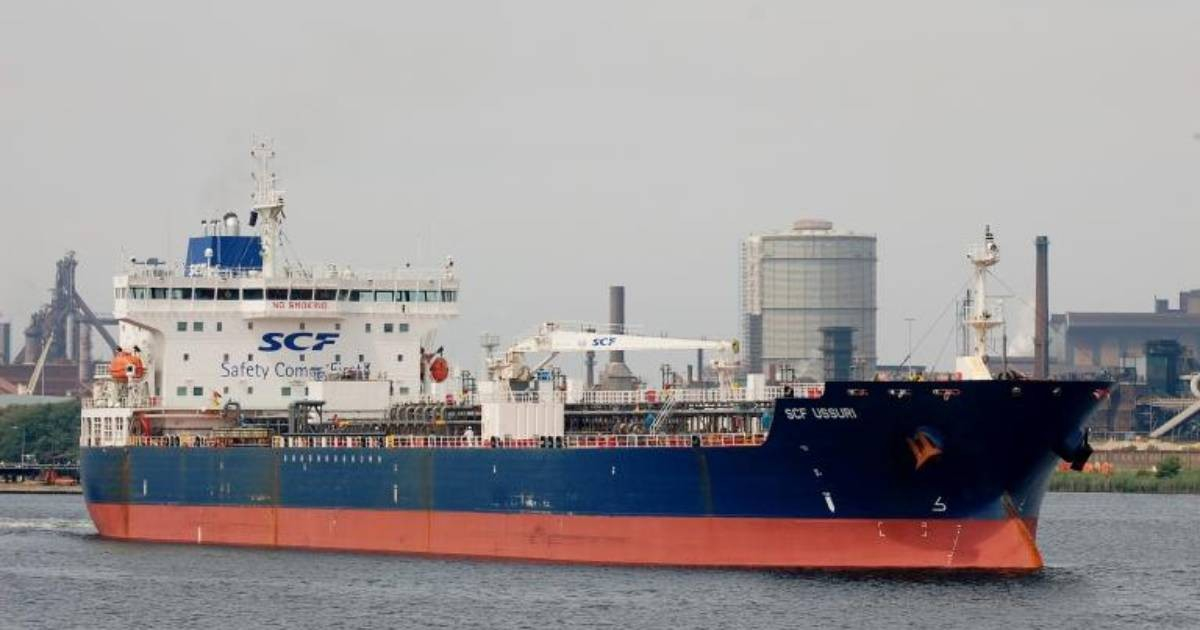
The Russian tanker Universal, which was carrying approximately 270,000 barrels of diesel destined for Cuba, has definitively abandoned its journey to the island and is sailing southeast towards Brazil, according to maritime tracking data published this Wednesday by the energy intelligence company Kpler and cited by Bloomberg.
The destination of the ship, which is under a Russian flag and sanctioned by multiple countries, is now listed as "on charter," a maritime term indicating that the vessel is awaiting instructions and does not have a designated port.
El Universal set sail from the Russian Baltic port of Vistino, in the Leningrad region, on April 6 bound for Cuba, but has spent the last month adrift in the Sargasso Sea, approximately 1,600 kilometers northeast of the island, sailing at minimal speeds without declaring a port of destination.
Last Monday, Kpler's tracking data still listed Cuba as the destination for the vessel. Since then, the course has changed to the south, heading towards Brazil.
According to reports from The Insider cited by The Moscow Times, U.S. authorities did not authorize the tanker to continue its journey to Cuba, which explains the weeks of drifting in the Atlantic.
The vessel is subject to sanctions from the United States, the European Union, the United Kingdom, Switzerland, and Canada, and is linked to Sovcomflot, part of the so-called Russian "shadow fleet."
El Universal crossed the English Channel on April 8, escorted by the frigate Admiral Grigorovich of the Russian Black Sea Fleet, highlighting the strategic significance of the shipping attempt.
The diversion represents a severe blow to Cuba, which is experiencing one of its worst energy crises in decades.
The only shipment of fuel that successfully arrived on the island in 2026 was from the vessel Anatoly Kolodkin, which docked in Matanzas on March 31 with approximately 730,000 barrels of Russian crude. Those reserves were depleted by the end of April.
On May 14, the Cuban Minister of Energy and Mines, Vicente de la O Levy, publicly admitted that the island had "absolutely no fuel, we have absolutely no diesel."
The electricity deficit exceeded 2,000 MW during peak demand hours, with blackouts lasting up to 20-25 hours daily in large areas of the country.
US pressure on Cuba's energy supply has intensified in recent months. The Office of Foreign Assets Control (OFAC) issued a license in March allowing certain transactions with Russian oil, but explicitly excludes Cuba. President Donald Trump also threatened to impose punitive tariffs on any country that sent crude oil to the island.
This is compounded by the cut in Venezuelan supplies since November 2025, following the fall of Nicolás Maduro, and the suspension of shipments from Mexico in January 2026.
The geopolitical context worsened on May 20, when the Trump administration declassified a formal accusation against former Cuban leader Raúl Castro regarding the downing in 1996 of two planes from Brothers to the Rescue, which resulted in the deaths of four people, including three Americans. On that same day, the aircraft carrier USS Nimitz and its strike group were deployed to Cuban waters.
Cuba produces only about 40,000 barrels of oil daily but needs approximately 110,000 barrels each day, and the detour of the Universal leaves the island without clear prospects for short-term energy relief.
Filed under: