
Related videos:
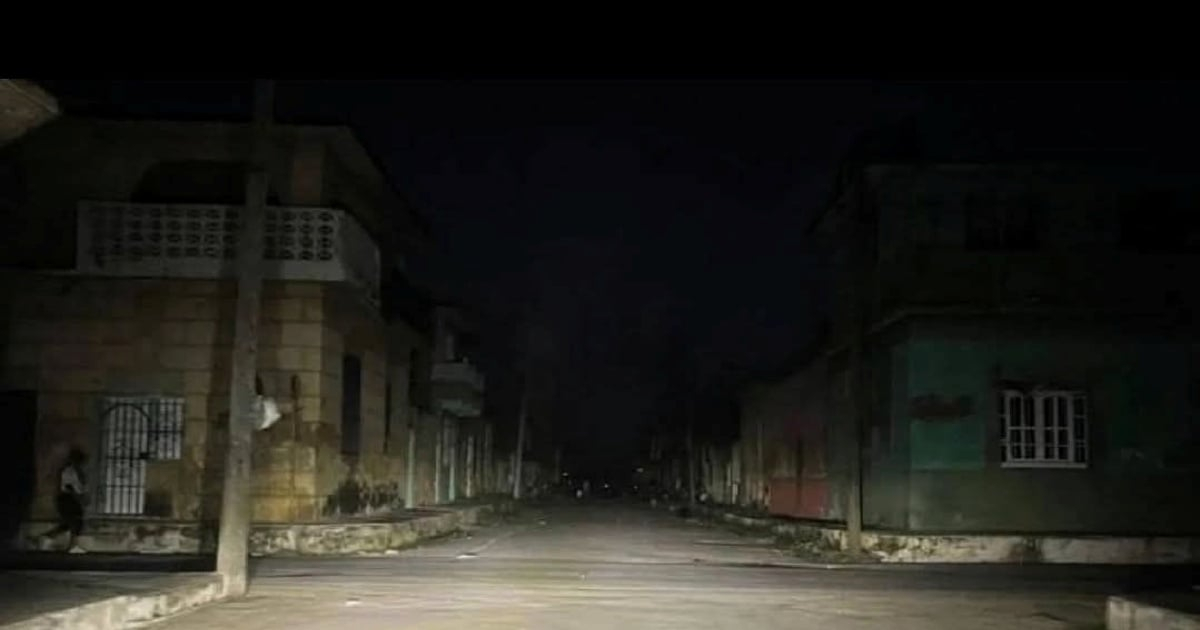
The National Electric System (SEN) of Cuba closed on Wednesday with a maximum impact of 1,957 MW at 9:40 PM, according to the daily report from the Electric Union, with sustained interruptions throughout the 24 hours of the day and into the early hours of Thursday.
This Thursday at 6:00 AM, the situation had not improved: the available capacity of the SEN was only 1,260 MW compared to a demand of 2,740 MW, with 1,476 MW affected. For the noon timeframe, an impact of 1,300 MW was estimated.
The outlook for peak hours this Thursday is similarly grim. The Electric Union projects a availability of 1,460 MW against a demand of 3,100 MW, resulting in a deficit of 1,640 MW and an estimated shortfall of 1,670 MW.
Several thermoelectric units remain out of service. Unit 2 of the Lidio Ramón Pérez Thermoelectric Power Plant and Unit 5 of the Antonio Maceo Thermoelectric Power Plant are out of order, while Unit 5 of the Mariel Thermoelectric Power Plant, Unit 6 of the Renté Thermoelectric Power Plant, and Unit 5 of the Nuevitas Thermoelectric Power Plant are undergoing maintenance. Additionally, there are 393 MW more out of service due to limitations in thermal generation.
The only positive aspect of the day is the reconnection of the Antonio Guiteras thermoelectric plant to the SEN this Thursday at 7:48 AM, four days after going offline due to a leak in the economizer. The plant, inaugurated in 1988 in Matanzas with a nominal capacity of 250 MW, is the largest unit block in the Cuban system and contributes between 20% and 25% of the national thermal generation.
However, its return generates more skepticism than relief. So far in 2026, the Guiteras has accumulated between nine and ten outages from the system. Before the breakdown on May 24, it had been synchronized on May 18 and lasted barely six days online. On May 6, an unexpected malfunction at the plant caused a total disconnection of the national system, and on May 14, its outage coincided with the historic record deficit of 2,174 MW, when only 976 MW were available against a demand of 3,150 MW, leaving nearly 70% of the territory without electricity.
The 54 installed photovoltaic solar parks on the island contributed 3,357 MWh on Wednesday, with a peak power of 515 MW during midday, a figure insufficient to offset the nighttime structural deficit.
The crisis has deep roots. The disruption of fuel supplies from Venezuela since November 2025 and from Mexico virtually since January 2026 left the country without reserves of diesel and fuel oil. Cuba experienced two total collapses of the SEN in March 2026, on the 16th and the 22nd of that month, with the latter being the seventh total disconnection of the system in a year and a half.
The Minister of Energy and Mines, Vicente de la O Levy, acknowledged on May 14 that the situation was "acute, critical, and extremely tense" and that the country had "absolutely no diesel." In some provinces, power outages exceed 20 hours a day, and the minister himself forecasted by the end of 2025: "We are not going to eliminate the power outages."
Filed under: