
Related videos:
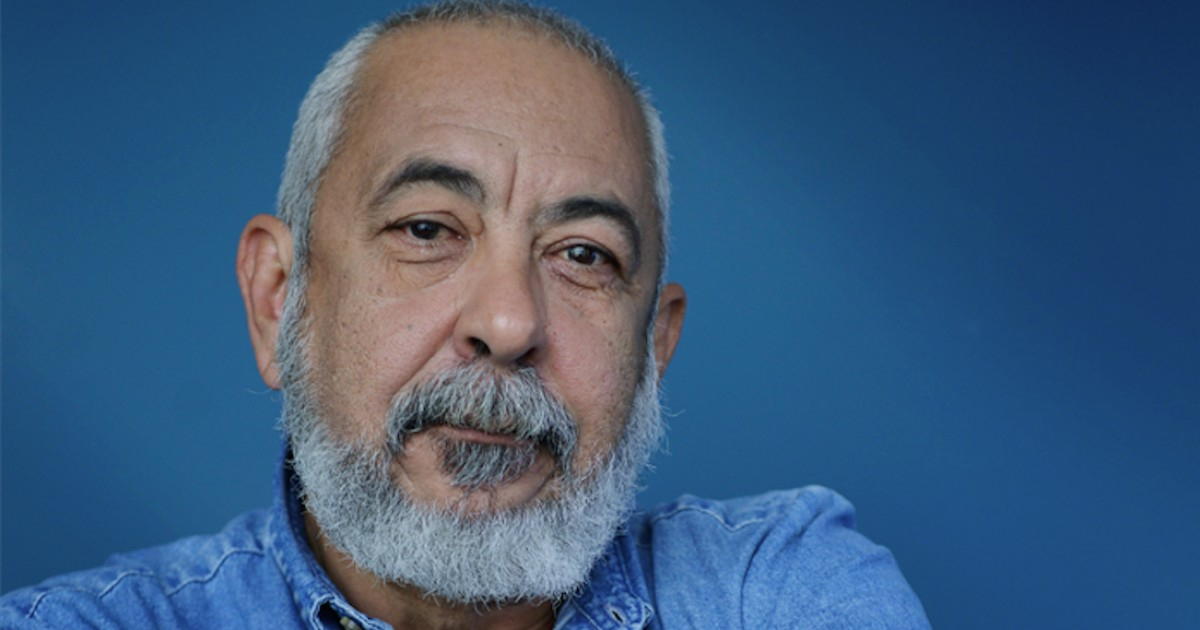
The Cuban writer Leonardo Padura stated this Friday that the crisis in Cuba does not discern economic conditions.
"In Cuba, it doesn’t matter that your economic conditions allow you to have a different relationship with reality. Reality does not knock on the door; it opens and enters your home," she expressed in an interview with AFP.
Padura, at 70 years old, is considered the most widely read living Cuban writer in the world. He gave the interview at the Cervantes Institute in Paris as part of a tour in France to present the French version of his book "Ir a La Habana," published by Tusquets in 2024.
Although at the beginning of the conversation he warned that he did not want to talk about the situation in Cuba—something people have been asking him about since his arrival in France—he ultimately gave in, as if the Cuban reality were imposing itself even in Paris.
Padura considers himself "fortunate" in financial terms, but he admits that he is not immune to power outages: "When there's a blackout, I don't have connections and I might wait a whole day to get internet or mobile data, which is precisely essential for the development of my work."
The fuel shortage is another reality that hits him daily. "I was telling my brother a few days ago: every time we take the car out, it's not that we've made one more trip; it's that we're going to make one less because we don't know when we'll have gasoline again," he said.
To illustrate the chasm between the present and the recent past, Padura drew on a comparison that encapsulates the decay of the island: "Just 10 years ago, what was happening in Cuba? There was a Rolling Stones concert, Obama was visiting Cuba, a baseball game between the Cuban team and the major leagues... It's as if we were two different countries."
Regarding present-day Havana, the author of the Mario Conde series was precise: "There is a bit more deterioration, but essentially the structure of the city and the needs of the people remain the same. Perhaps all of this has accelerated over the last two years since I wrote the book."
The interview comes at a time when Padura has intensified his warnings about Cuba: in May, during a tour of Buenos Aires, he described the country as being at a "breaking point of catastrophe" and emphasized that changes must come from the Cubans themselves, "not because Trump says so."
Despite everything, Padura reaffirmed his decision to continue living on the island with a powerful statement: “I will be here until they throw me out.”
The writer also expressed concern about the possibility of the United States launching a military operation or bombing Cuba under Donald Trump's "maximum pressure" policy. "Hopefully, this will not happen, because the collateral damage could be very painful," he warned.
When asked how he envisions a future Havana, Padura did not hide his uncertainty: "I don't know what Havana might be like tomorrow or the day after tomorrow. Havana is already quite destroyed, but if a few bombs drop, it will be a different Havana as well."
"The future is a huge question mark for everyone in the world, and uncertainty is universal. But in the case of Cuba, it is a very palpable, very painful reality that is right in front of us," he concluded.
Filed under: