
Related videos:
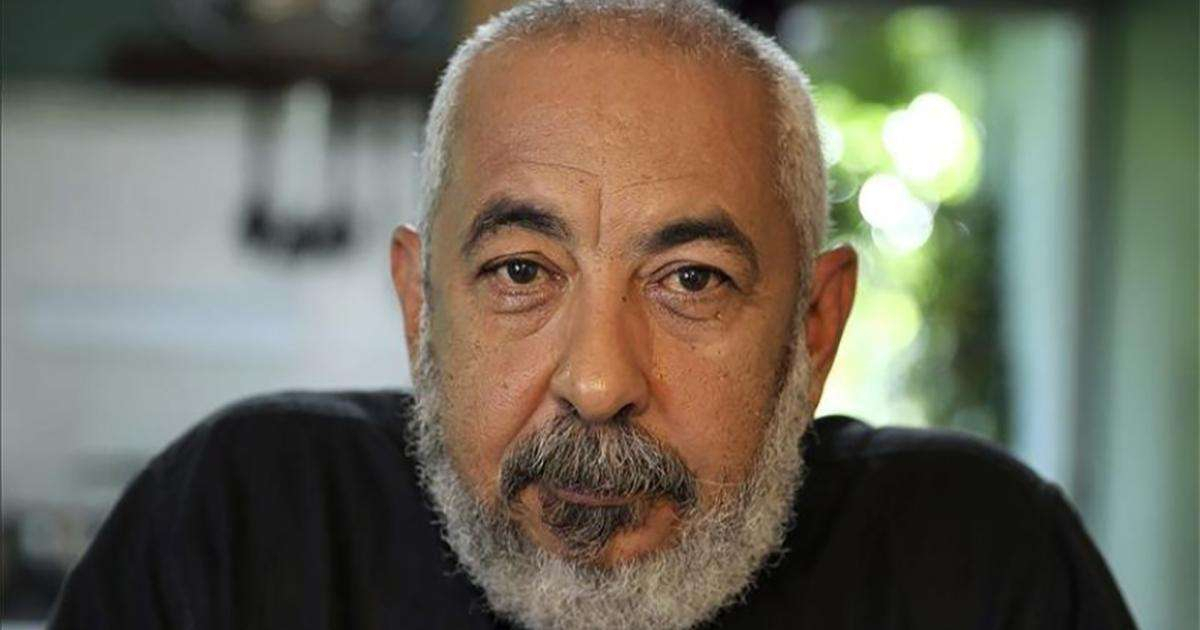
Leonardo Padura made it clear once again that he does not intend to leave Cuba, despite the economic and social deterioration affecting the island. "I will be here until they kick me out," stated the renowned Cuban writer in an interview published this Sunday by the Peruvian newspaper La República, during the presentation in Lima of his latest novel, "Morir en la arena."
The phrase, taken from his essay book Going to Havana (Tusquets, 2024), summarizes the complex and deeply emotional relationship the author has with the country where he was born and to which he remains deeply attached amid blackouts, shortages, and a growing wave of migration.
Padura explained that staying in Cuba is not due to political reasons, but rather to a vital and literary necessity. "Cuban life, the worries, the hopes, the disillusionments, the frustrations, the joys of the people are what nourish me as a writer," he confessed.
"My characters speak in Cuban. I write in Habanero," added the creator of detective Mario Conde, one of the most emblematic characters in contemporary Spanish literature.
The writer acknowledged that after the pandemic, he realized he could work from Spain or Mexico, but he emphasized that living in Cuba still provides him with an "essential sense of belonging" for his work.
On an island marked by mass exodus in recent years, Padura also made a distinction between those who emigrate by personal choice and those who are forced to do so to survive.
“There are people who prefer to do it and there are people who feel compelled to do it, which are two different things,” he pointed out. For a Cuban writer, he added, forced exile is “unnatural.”
The statements come just days after the author warned at the Buenos Aires International Book Fair that Cuba is going through a "critical point of catastrophe" and faces the risk of a humanitarian crisis.
"There must be changes there, not because Trump says so, but because Cubans need social, political, and economic changes of all kinds," he expressed then.
To illustrate the magnitude of the crisis, Padura provided an example that hits directly at the everyday reality of millions of Cubans: "My mother receives a pension of 1,500 Cuban pesos, and 30 eggs cost 3,000."
In the interview with La República, the novelist also spoke about eroticism and desire as a refuge against the harshness of life in Cuba, one of the central themes of "Morir en la arena."
"In the Cuban case, sex has been a release valve for people's daily lives," he asserted.
Padura also recalled a scene that marked him during the long blackouts experienced in many areas of the country, where electricity can be unavailable for up to 16 hours a day. He mentioned seeing a group of women, aged between forty and sixty, dressing in white, putting on makeup, and singing together in the darkness.
"That's called a thirst for beauty," he said. "People have a thirst for beauty even in the toughest moments."
The writer acknowledged that he himself had to invest about 4,000 dollars in solar panels to cope with the blackouts in his home in the Mantilla neighborhood of Havana, although he admitted that most Cubans do not have access to such solutions.
Despite his international prestige, Padura remains practically silenced by the official Cuban cultural apparatus. His books are not published on the island nor are they often mentioned in state media, although his novels circulate widely among Cuban readers in digital copies and pirated editions.
Published in August 2025, “Dying in the Sand” is described by the author himself as his saddest novel. Inspired by a real case of parricide, the work spans more than three decades of Cuban history marked by the Angola war, friendship, love, loss, and the wear and tear of a society engulfed in an ever-deepening crisis.
Filed under: