
Related videos:
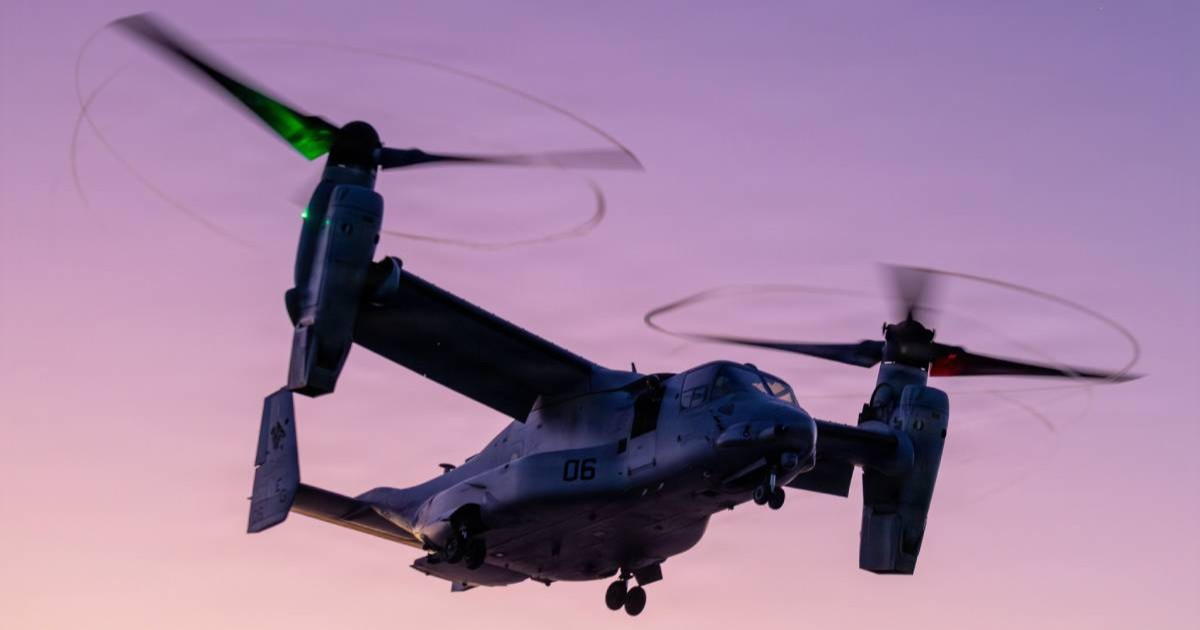
The United States Southern Command published a photograph on Thursday of a MV-22B Osprey from the Marine Corps taking off from the USS Iwo Jima in the Caribbean Sea, in a new demonstration of the sustained U.S. military presence in the region that keeps the Cuban regime on alert.
The image, shared by the official SOUTHCOM account on X, shows the tiltrotor aircraft of the 22nd Marine Expeditionary Unit in mid-flight, with the tactical number "06" visible on the fuselage. The photograph was taken on May 13 during flight operations aboard the amphibious assault ship USS Iwo Jima (LHD-7), while it was cruising through the Caribbean.
According to USNI News, the amphibious group from Iwo Jima and the 22nd Marine Expeditionary Unit were returning home after ten months of deployment that began in August 2025, as part of Operation Southern Spear, whose stated objective is to disrupt drug trafficking and eliminate organizations designated as terrorists in the hemisphere.
The publication is part of an ongoing campaign of show of force by SOUTHCOM in the Caribbean during 2026. On May 20, SOUTHCOM announced the arrival of the USS Nimitz aircraft carrier in the Caribbean to participate in the multinational exercise Southern Seas 2026, the eleventh edition since 2007.
On May 4, U.S. Southern Command carried out a lethal attack against a vessel operated by organizations designated as terrorists, resulting in three fatalities.
A similar attack had occurred on February 13, also resulting in three deaths. In April, SOUTHCOM and the Fourth Fleet conducted the FLEX2026 exercise in Key West, utilizing artificial intelligence, drones, and unmanned systems.
Cuba, although it is not the declared objective of the operation, falls within the immediate operational radius of all these maneuvers.
The U.S. has accumulated more than 150 hours of aerial surveillance around the island since February 4, 2026, with over 20 reconnaissance missions using P-8A Poseidon aircraft, RC-135V Rivet Joint, and MQ-4C Triton drones, some flights occurring within 64 km of the Cuban coast.
The geopolitical context is highly tense. Russia accused Washington of preparing a military intervention against Cuba and compared the situation to the operation in Venezuela in January 2026. However, the Russian ambassador in Havana, Víktor Koronelli, ruled out evacuating Russian citizens and stated that evacuation "is not on the agenda."
Moscow and Havana are negotiating new military cooperation under an intergovernmental agreement signed in March 2025 and ratified by Putin in October of that year, which adds an additional dimension to the tension in the region.
The president Donald Trump downplayed the deployment on May 21 by denying that the USS Nimitz was meant to intimidate Cuba and stating, "We are going to help them."
The total cost of Operation Southern Spear is estimated to be at least 4.7 billion dollars for the Caribbean theater, Venezuela, and the Eastern Pacific, according to estimates from the inspector general, highlighting the scale of the U.S. military commitment in a region where Cuba plays a central role in the strategic debate.
Filed under: