
Related videos:
U.S. military aircraft have accumulated over 150 hours of surveillance and intelligence flights around Cuba since February 4, 2026, according to a report from the Wall Street Journal (WSJ) featuring tracking maps published last Friday.
The available flight position data allows tracking of more than 20 reconnaissance missions, most of which are launched from a naval station in Jacksonville, Florida.
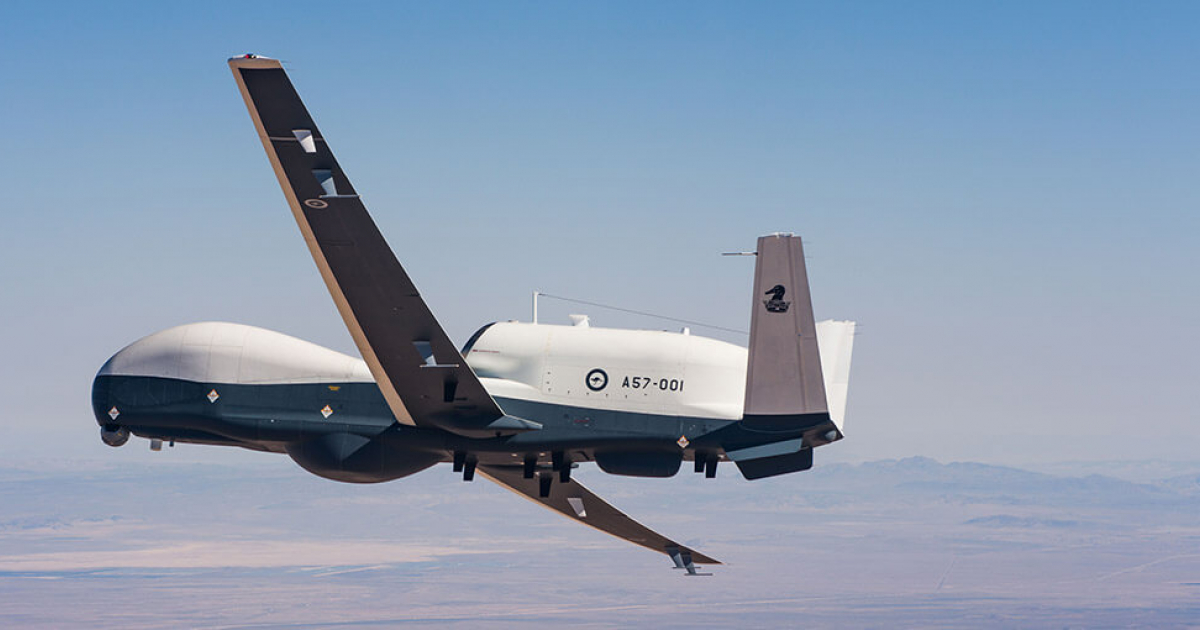
The aircraft used include the P-8A Poseidon maritime patrol plane, the RC-135V Rivet Joint signals intelligence aircraft, and the MQ-4C Triton high-altitude drone, the same one that had already flown over the southern coast of Cuba in April at about 49,000 feet, passing near Pinar del Río, Santiago de Cuba, and Havana.
Some flights were conducted less than 64 kilometers from the Cuban coast, within the range to gather intelligence, and are primarily concentrated in the areas of Havana and Santiago de Cuba.
The WSJ frames these operations within the context of the growing pressure from the Trump administration on the Cuban regime, citing two key elements: Trump’s suggestion to arrange a "friendly takeover" of Cuba and the recent federal prosecution against former president Raúl Castro for the shootdown of Brothers to the Rescue planes in 1996, charges declassified on May 20.
What stands out most to experts is not the frequency of the flights, but their deliberate visibility.
The former naval commander José Adán Gutiérrez explained to the New York Times: "When we prepare operations, we operate entirely in the dark; we do not turn on the radar to announce our arrival. The fact that these flights have been made public deliberately basically indicates that there is a message."
Brian Latell, former CIA analyst for Cuba, stated that he does not remember such a reconnaissance deployment even during the Cold War.
A U.S. military official clarified to the New York Times that, unlike the situation prior to the operation in Venezuela that captured Maduro, these flights aim to reinforce political and economic pressure, not to foreshadow a military operation.
However, the pattern is identical to that which preceded both that operation in Venezuela and previous intelligence attacks prior to joint actions with Israel against Iran, which keeps the uncertainty about Washington's true intentions.
The response from the Cuban regime has been one of institutional rejection. The Deputy Foreign Minister Carlos Fernández de Cossío described the situation as a "cold-blooded calculated communications strategy" and warned that those who participate would be "accomplices of the eventual bloodbath."
Last Friday, the Cuban Civil Aviation Institute published an infographic claiming absolute air sovereignty and invoking Article 1 of the Chicago Convention of 1944.
Flights are taking place amid the most intense escalation between the U.S. and Cuba since the Missile Crisis of 1962: the Trump administration has imposed over 240 sanctions against Cuba since January 2026, blocked oil shipments to the island since February—leading to blackouts of up to 30 hours a day—and deployed the USS Nimitz strike group to the Caribbean on May 20 as part of the Southern Seas 2026 exercise, with an estimated cost of 3 billion dollars.
Renee Novakoff, former Deputy Director of Defense Intelligence, summarized the situation to the New York Times: "Normally, we don't do many of the things that are happening. That's why this is a big problem."
Filed under: