
Related videos:
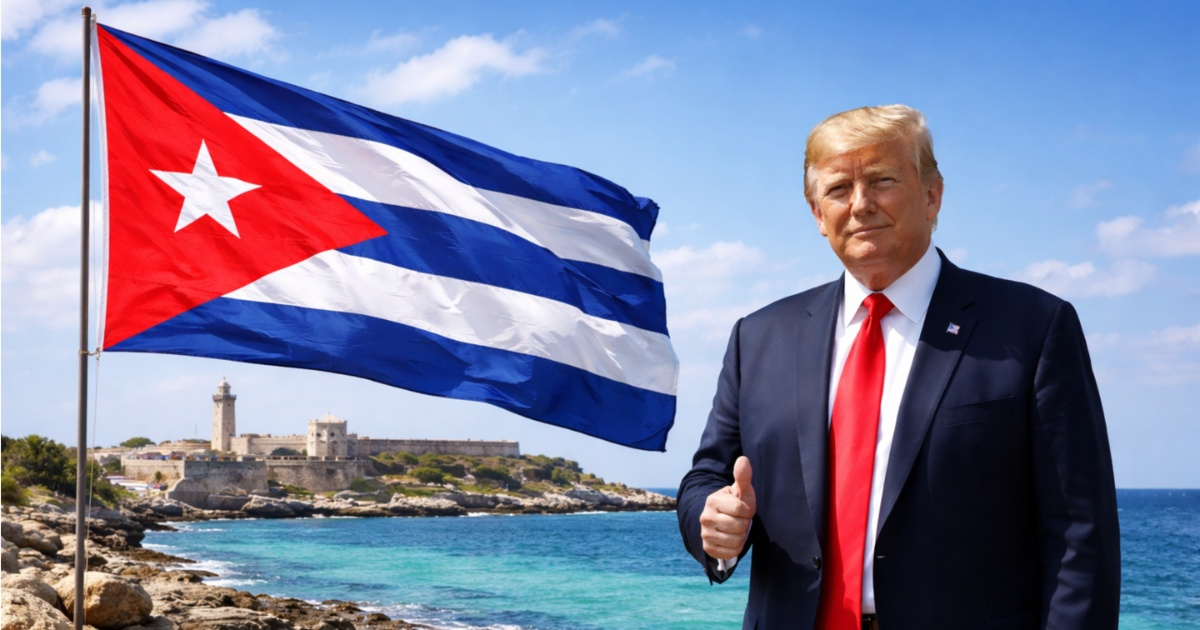
The Cuban poet, improviser, and researcher Juan Carlos García Guridi published yesterday on his Facebook profile a humorous décima about the Cuban crisis that is already circulating enthusiastically among nationals both on and off the island, and whose final verses say it all: «and if Donald Trump doesn’t come / I’m going to go look for him».
The stanza begins with the quotation from Professor Espinosa—a popular humorous poet whose phrase "Don't laugh, this is serious..." is used precisely to introduce tragicomic situations—which from the very first line signals to the reader that something is approaching that lies between laughter and tears.
García Guridi, born in Batabanó in 1968 and one of the most active cultivators and researchers of the décima in Cuba, presents in his piece a dilemma that brilliantly encapsulates the state of mind of a significant portion of the population: "I don't know whether to choose / Christ or the aircraft carrier."
The reference to the aircraft carrier is not arbitrary. On May 5, Donald Trump stated in an interview that the U.S. could position the USS Abraham Lincoln just a few meters off the Cuban coast and that it would take the island "almost immediately" once military operations in Iran were completed.
Those statements, although lacking official military confirmation, were enough to ignite the imagination —and humor— of Cubans. Last Wednesday, a report from Politico claimed that the Pentagon would have troops and equipment ready in the Caribbean, waiting only for Trump’s final approval.
Previously, on May 20th, the birthday of the Cuban Republic, the United States Southern Command (SOUTHCOM) announced the arrival of the USS Nimitz aircraft carrier strike group to the Caribbean. On the same day, Secretary of State Marco Rubio addressed the Cuban people, outlining the Cuba that could exist once the tyranny is overthrown.
The poet is well aware of this context: he absorbs it, processes it, and returns it in ten octosyllabic verses with the cadence of someone who has been improvising and writing about the reality of the island for decades, in that versatile and marvelous stanza known as the décima. "But we must come to reason: / something has to happen...! / I can assure you, / life does not stop," he writes, before the punchline that has become a phrase of the moment.
The backdrop that fuels the espinela is as real as it is exhausting. Cuba is facing a historic electrical crisis with blackouts of over 20 hours in many provinces, generation deficits that have exceeded 2,000 MW and a government that has admitted that 2026 will remain a challenging year for energy. As early as last December, the Electric Union had forecast blackouts that would affect up to 61% of the country simultaneously. The reality in the following months has been much worse.
The comments on García Guridi’s post came quickly, resonating with the same conspiratorial tone. "Christ and the aircraft carrier are on the same side; you won’t have to choose," wrote one user, effortlessly resolving the theological-geopolitical dilemma of the poem. Another immediately joined the adventure: "I’m signing up for the expedition to go after the aircraft carrier. Nothing can be worse than it already is. The night won’t last forever."
There were those who offered their logistical services: "If you need a navigator, just let me know." And there was someone even more direct: "That's right, brother, we’ll find him no matter what, count on me." Someone even issued a weather warning: "Be careful, he might get scared of the blackouts," referring to the possibility that the aircraft carrier could arrive to find the island in the dark.
Amid the laughter, there was also room for anger. "Those responsible for our misfortune either don't know or truly don't want to act and aren't interested: to the dump, that's where they've taken Cuba," wrote another commentator. And another concluded with a phrase that captures the collective uncertainty: "We no longer know what or when or who. Only the certainty that 'something' will happen."
García Guridi's décima is part of a long Cuban tradition of using humor and poetry as forms of resistance in the face of adversity. The fact that in 2026 the most celebrated verse from the island comes from a poet who threatens to go seek out Trump in person says a lot about the level of despair — and ingenuity — that still survives on the island.
Filed under: