
Related videos:
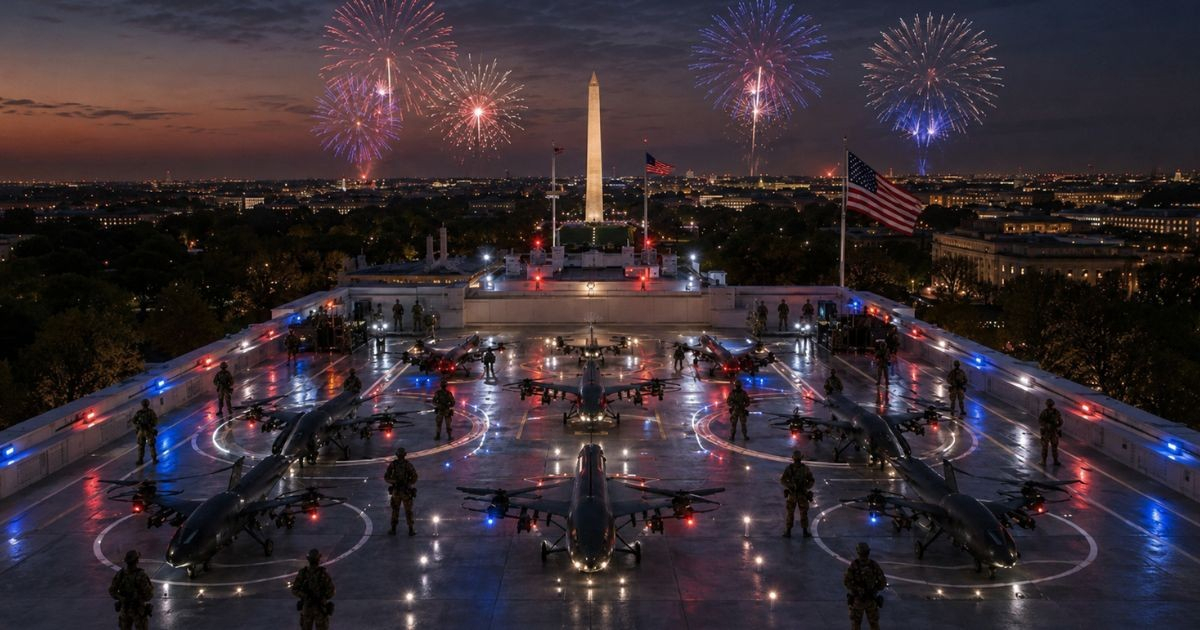
President Donald Trump posted this Sunday on his social media platform Truth Social a message in which he firmly defends the construction of a drone port —called DronePort— on the roof of the new ballroom of the White House, and demands that the lawsuit hindering the project be dismissed immediately.
"DronePort in the White House ballroom will perhaps be the most sophisticated in the world. It will safeguard our nation's capital, Washington D.C., for a long time to come," Trump wrote in his post, in which he also criticized federal judge Richard Leon, the main judicial obstacle to the project."
"With the arrival of highly sophisticated and powerful modern weaponry, we can no longer defend Washington D.C. with just rifles and pistols," the president argued to justify the need for the infrastructure.
Trump directly threatened the magistrate: "Judge Richard Leon must stop playing with the security of the United States. If something happens, he will be held responsible for the death and destruction caused to our country."
The president also accused Leon of allowing "Top Secret" information to be revealed in the context of the litigation and described the plaintiff as a "serial litigant" whose only argument is that her "walks" will be disrupted by the new structure.
"A woman who has absolutely no procedural legitimacy," he declared.
The project, valued at approximately 400 million dollars with private financing, includes a building of over 8,300 m² that would extend about six floors underground.
According to documents from the Department of Justice, the roof would be "hermetically sealed" and would include a drone port, sniper stations, heavy steel, missile-resistant columns, bulletproof and blast-resistant glass, bomb shelters, and high-security military facilities.
The origin of the legal conflict dates back to the demolition of the East Wing of the White House, carried out between October and December 2025 without the authorization of Congress.
The National Trust for Historic Preservation filed a lawsuit in December of that year, alleging that Trump exceeded his authority.
Judge Leon ordered the work to be halted in March 2026, stating that the president acts as an "administrator" and not as the owner of the White House.
However, a federal appeals court allowed the construction to temporarily continue on April 12, 2026, by a vote of two to one, while the case proceeds.
The security context reinforces the arguments of the White House. On May 23, a 21-year-old man identified as Nasire Best opened fire at a Secret Service checkpoint at the intersection of 17th Street and Pennsylvania Avenue, died following the exchange of gunfire, and left a bystander injured.
The Department of Justice presented its national security arguments less than 24 hours after that incident.
Previously, on May 4, there were also gunshots near the White House that triggered an emergency operation by the Secret Service.
The case has a key hearing scheduled for June 5, 2026, on which date Judge Leon will rule on the future of the most controversial project of Trump's second term.
Filed under: