
Related videos:
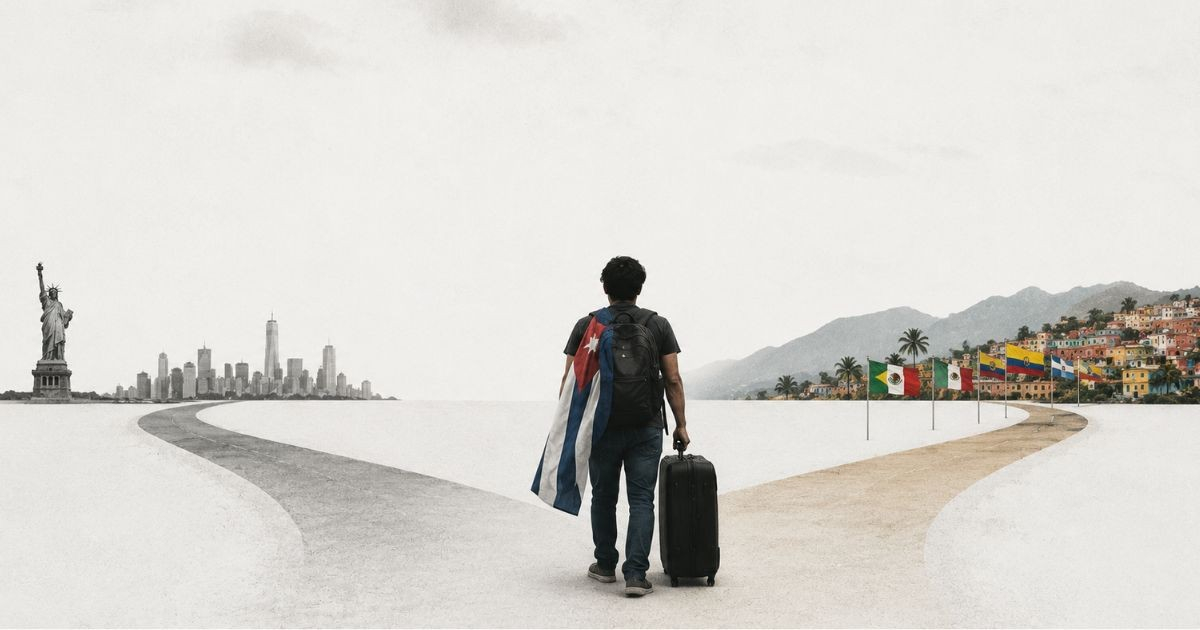
An analysis published by Foreign Policy documents a historic shift in Cuban migration: for the first time in decades, the majority of Cubans fleeing the island are heading not to the United States but to countries in Latin America, primarily Brazil, Mexico, and Uruguay.
The change is a direct consequence of the "maximum pressure" campaign by the Trump administration, which has closed off nearly all legal entry routes to the United States for Cubans, while the humanitarian situation on the island deteriorates at an accelerated pace due to 67 years of communist dictatorship.
Since Trump returned to power in January 2025, his administration included Cuba on a list of 39 countries with travel restrictions and on another list of 75 countries with an indefinite freeze on visa processing, ended the humanitarian parole program, and halted the bilateral migration talks that were regularly held under Biden.
The outcome at the U.S. border has been drastic: irregular encounters with Cuban migrants decreased by 99% compared to similar periods under Biden, dropping from over 200,000 annually in peak years to just 32,661 in fiscal year 2025.
However, Cubans have not stopped emigrating. They have simply changed their destination.
In Brazil, asylum applications from Cubans nearly doubled, from 22,288 in 2024 to 41,919 in 2025, making Cubans 55% of all asylum seekers in the country and the largest nationality group among applicants.
A report from the International Organization for Migration published in March 2026 confirmed that the net regular migration from Cuba to Brazil nearly tripled between 2024 and 2025, with no negative monthly balances recorded throughout the entire year.
The main route goes through Guyana—where Cubans do not need a visa—and then crosses into the Brazilian state of Roraima, continuing on to São Paulo and Paraná in search of work.
In Mexico, Cubans went from representing 23% of the humanitarian visitor cards issued between January and November 2024 to 78% between January and July 2025, a figure that analysts themselves describe as "numbers that Mexico has never experienced before."
In Uruguay, the National Directorate of Migration recorded Cubans as the largest foreign nationality applying for residency in 2025. Spain also reported a sustained increase in Cuban arrivals, both for asylum and under the Democratic Memory Law of 2022.
The energy crisis in Cuba fuels this exodus: inflation is skyrocketing, basic goods are scarce, and fuel has run out, while the island's aging electrical grid is on the brink of collapse. Since 2021, between one and two million Cubans have left the island according to most estimates.
The migratory shift also has geopolitical implications. The main recipient countries—Brazil, Mexico, and Uruguay—are governed by leftist presidents who have public disputes with Washington, which gives them a considerable negotiating leverage against the United States.
The analysis from Foreign Policy warns that this displacement could complicate Trump's hemispheric strategy, as these countries have fewer incentives to participate in safe third country agreements or deportation flights, which are cornerstones of the administration's immigration framework.
"The exiles in Miami live in a country already inclined toward regime change in Cuba," conclude the authors Gil Guerra and Diana Roy. "The new diaspora is settling in countries whose alignment with Washington is conditional, negotiable, and increasingly strained."
Filed under: