
Related videos:
President Donald Trump has been asking advisors and allies in private for months whether Vice President JD Vance "has what it takes to go all the way," and he often responds that he is not sure, according to an extensive report from the New York Times published this Saturday, based on interviews with more than a dozen people close to the White House.
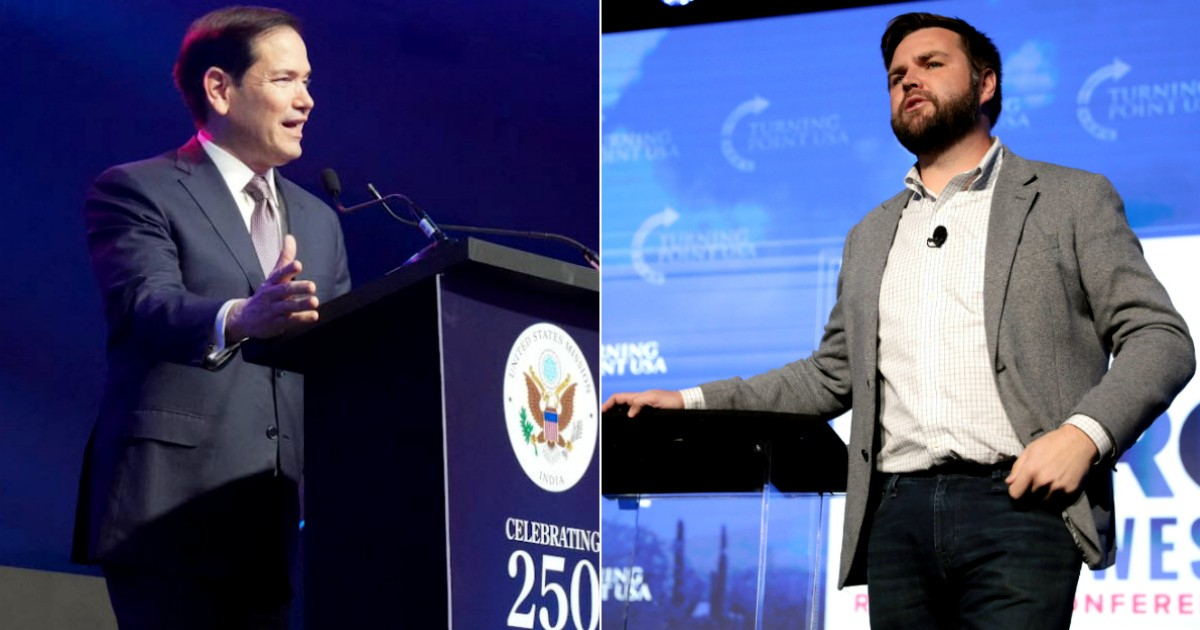
The dilemma between Vance and Secretary of State Marco Rubio has become one of the most closely watched indicators of the future of the Republican Party as it approaches the 2028 elections.
In early May, during a dinner in the Rose Garden of the White House, Trump directly asked his guests: “Who likes JD Vance?” and “Who likes Marco Rubio?”, making it clear that he did not support either.
In an interview with Fortune magazine in the Oval Office this month, the president was explicit about the consequences of a poor choice: "Whoever gets this will be very important. And if you choose the wrong person: a disaster."
Trump, who will turn 80 next month, has a complex relationship with Vance, who is 41. He involves him in important decisions and acknowledges his loyalty, but he also criticizes him in private: he reproaches him for never winning a tough election without his help and questions his initial opposition to the war with Iran, telling him directly, "I'm more of a pacifist than you are, but I had to do it."
In November 2025, during a breakfast with Republican senators, Trump loudly asked why Vance was not more deferential, like the officials of Chinese President Xi Jinping: "Why don't you behave that way? JD interrupts the discussions!".
The war with Iran has complicated Vance's position as a natural favorite: he initially opposed the conflict, but has publicly defended Trump's decision, placing him in an uncomfortable position with the anti-interventionist base of the MAGA movement.
Marjorie Taylor Greene was adamant: "He is no longer in a position to cling to his former reputation. There is nothing that can protect him."
In the domestic arena, Vance has also failed to translate his influence into concrete victories. He did not convince Indiana's Republican lawmakers to redraw the state's electoral maps, and his support for Viktor Orbán in Hungary did not prevent the Hungarian prime minister's defeat.
The Republican state representative Ed Clere summed it up: "He came away empty-handed in Indiana just as he did in Hungary."
Rubio, on the other hand, has gained significant ground thanks to his closeness with Trump: he frequently travels on Air Force One and has built a personal bond during weekends in Florida, an advantage that Vance, due to protocol, cannot match.
The polls show a growing closeness between the two. According to data from Emerson College in May 2026, Vance receives 36% compared to 35% for Rubio among Republican voters for 2028, nearly tied. In February, Vance had 52% and Rubio only 20%.
Despite everything, Vance retains strengths: 75% of Republican voters view him favorably according to Pew, and he serves as the finance chair of the Republican National Committee, with direct access to the party's major donors.
In August 2025, Trump stated that Vance was "the most likely" to be his political heir, but since then he has multiplied his praises for Rubio. The question of who will inherit the MAGA movement remains unanswered, and the president himself seems intent on keeping it open.
Filed under: