
Related videos:
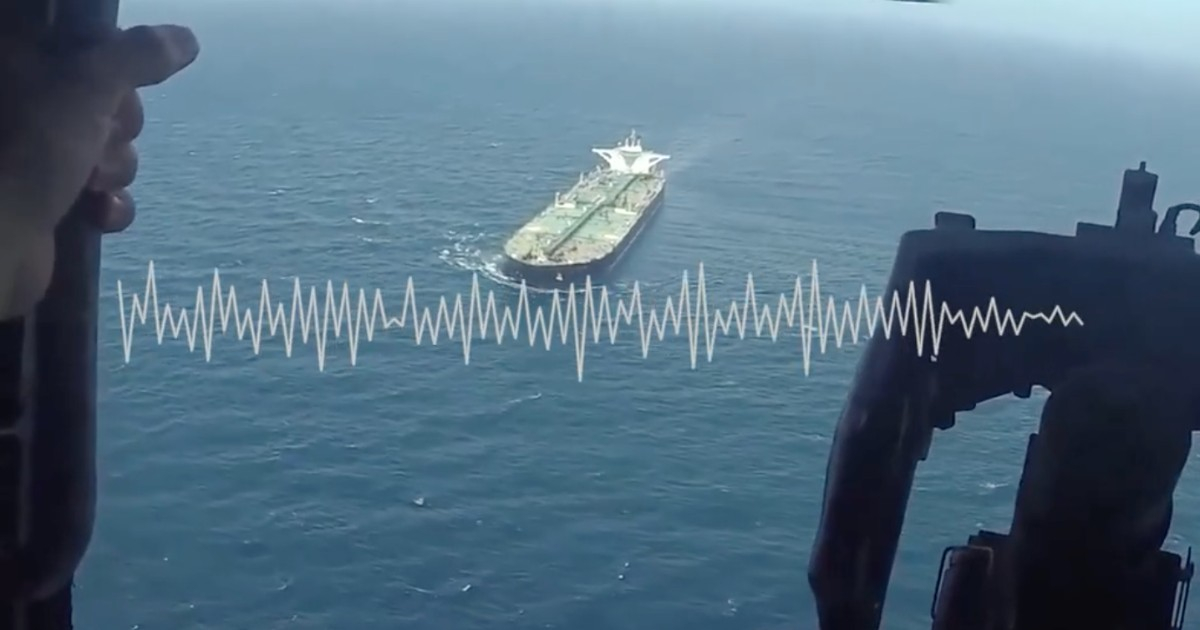
An aircraft from the United States Central Command (CENTCOM) fired a Hellfire missile at the engine room of the commercial vessel M/V Lian Star, flying the flag of Gambia, in the Gulf of Oman, after the ship ignored more than 20 warnings on Thursday and continued its course toward an Iranian port in violation of the naval blockade imposed by Washington.
According to the official statement from CENTCOM published this Saturday, U.S. forces detected the Lian Star navigating through international waters bound for Iran and repeatedly notified it that it was violating the blockade.
On Thursday, in response to the crew's refusal to comply with orders, a military aircraft disabled the ship with a direct hit to its engine room, leaving it without propulsion capability.
"An American aircraft disabled the ship by firing a Hellfire missile at the engine room after the crew of the Lian Star failed to comply with the orders received," CENTCOM noted in its statement from Tampa, Florida.
The incident raises the total number of commercial vessels rendered inoperative by the U.S. to five since the blockade began, while another 116 have been diverted from their course to enforce the measure.
The naval blockade was ordered by President Donald Trump on April 12 and went into effect the next day, in the context of the armed conflict between the U.S. and Israel against Iran.
The operation deployed more than a dozen warships, over 100 aircraft, and around 10,000 personnel in the Gulf of Oman and the Strait of Hormuz, with the aim of preventing maritime traffic to and from Iranian ports.
Iran classified the blockade as "illegal and criminal," according to Iranian spokesman Ismail Baghaeí, and responded by closing the strategic Strait of Hormuz starting March 4, through which approximately 20% of the world's oil passes, leaving hundreds of ships stranded in the Persian Gulf.
The escalation of the operation has been gradual: as of May 11, 61 ships had been diverted and four immobilized; by the end of last Thursday, the figures had risen to 116 diverted and five rendered useless, with the Lian Star being the latest recorded case.
The attack occurs at a time of heightened diplomatic tension. Negotiators from the U.S. and Iran are said to have reached a preliminary agreement to extend the ceasefire for 60 days and to initiate formal discussions regarding Iran's nuclear program, although Trump had not formally approved it as of May 28.
Trump has demanded that Iran either surrender or destroy its highly enriched uranium under international supervision, ruling out any oversight by Russia or China, and described the ceasefire as "incredibly fragile" on May 19.
The Pentagon warned this Friday that it is ready to resume attacks against Iran if negotiations fail, highlighting the coercive nature of the blockade as a tool of diplomatic pressure while the ceasefire remains technically in effect.
Filed under: