
Related videos:
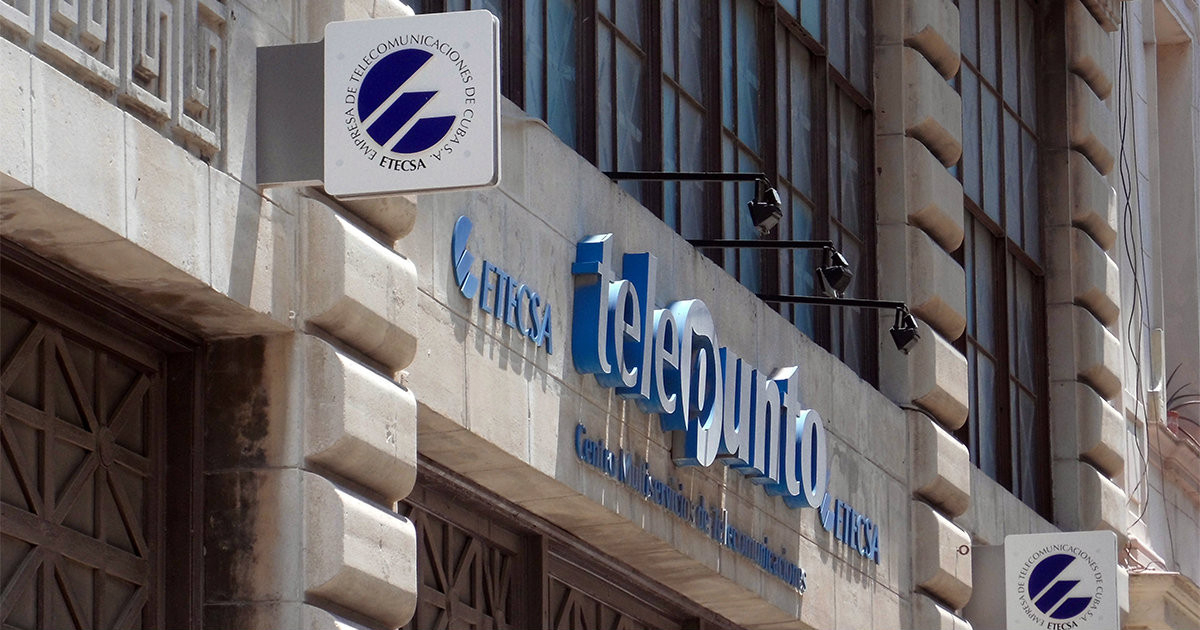
A year after the state-owned and sole telecommunications company in Cuba, Etecsa, implemented its controversial rate hike, which limited top-ups in Cuban pesos to 360 Cuban pesos per month and created plans in dollars of up to 35 dollars, Cubans have found that the connection has worsened rather than improved, and that the millions collected have not resulted in any visible improvements.
"Every day the connection worsens. Even with electricity, there is no connectivity. To make matters worse, with the terrible connection, the 4.5 G (the basic plan of 360 CUP) can run out in a couple of hours without achieving the much-needed connection," emphasized engineer and entrepreneur Yulieta Hernández Díaz this Saturday on her Facebook profile.
The measure came into effect on May 30, 2025, with the official reasoning of generating foreign currency to support and modernize telecommunications infrastructure.
The Prime Minister Manuel Marrero Cruz reported to the National Assembly that in just 46 days, the state telecommunications monopoly raised more than 24 million 839 thousand dollars, averaging 540,000 dollars daily, while promising to reinvest them in infrastructure.
One year later, there is no evidence of those improvements. According to the Speedtest Global Index from May, Cuba records only 7.21 Mbps in speed, placing it last in Latin America and among the countries with the slowest internet in the world.
The energy crisis worsens the situation. In April, following the sixth total blackout in a year and a half, internet traffic in Cuba fell by 65%, with provinces reporting speeds below 2 Mbps and Havana dropping below 1 Mbps in some cases.
Etecsa itself acknowledged in December that its backup batteries only allow for a few hours of operation during outages.
To make matters worse, in January the company introduced new international roaming rates of up to three dollars per minute for calls, one dollar per SMS, and one dollar per megabyte of data.
Citizens also report that the basic package of 4.5 GB, which costs 360 CUP, runs out in a few hours without achieving a stable connection.
A user described the situation in detail: "I use almost a gigabyte daily without having downloaded or viewed much... adding it all up, it doesn't even reach the consumption that my mobile data counter shows. In the end, after four days, Etecsa sends me the message: 'You have consumed most of your data package.'"
Another citizen estimated that if around 46 million dollars were raised in the first 45 days, the projection for the following 12 to 14 months would exceed 320 million: "And????," he asked, without receiving an answer.
La percepción generalizada es que el tarifazo nunca tuvo como objetivo mejorar el servicio. "El objetivo no era que mejorara, era simplemente desconectar al cubano de las redes porque la verdad la tenemos por horas", escribió una ciudadana.
Another summed up the situation bluntly: "Internet is another luxury. Like electricity, water, food, and medicine."
The measure also affects students and teachers in hybrid learning, remote workers, and those who rely on connectivity to access basic services.
A resident of Madruga, Mayabeque, reported this month that when the electricity goes out, the internet connection and mobile and landline services also cease, leaving the community unable to call for firefighters, police, or an ambulance.
The regime ruled out reversing the rate hike from the outset. The ruler Miguel Díaz-Canel rejected any rollback, and an internal source from Etecsa confirmed that "the decision was made at the national level."
Meanwhile, the Etecsa monopoly has been extended until 2036, closing off any possibility of competition for Cuban users.
Filed under: