
Related videos:
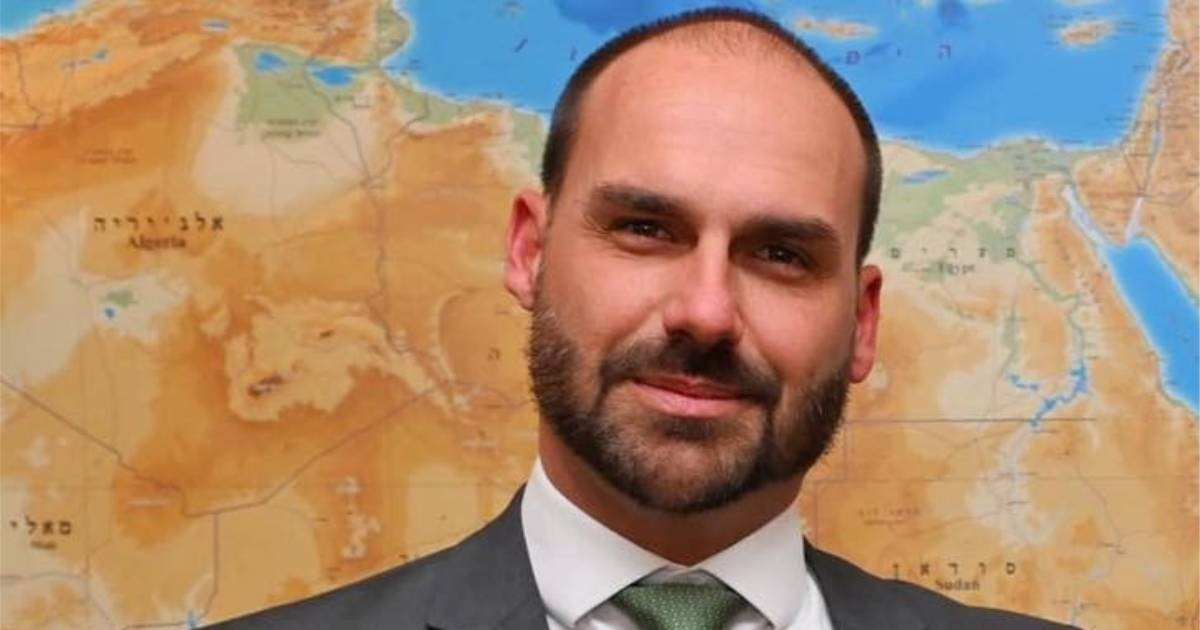
Eduardo Bolsonaro, son of former Brazilian president Jair Bolsonaro, posted a message on his X account this Monday in which he claims that "Brazil, Peru, Colombia, and Cuba have great potential to become right-wing governments soon."
The message arrives in a context marked by the profound regional reconfiguration that followed the capture of Nicolás Maduro on January 3 during an operation authorized by U.S. President Donald Trump in Venezuela, an event that heightened tensions between Washington and the allied governments of the Latin American leftist axis and strengthened the rhetoric of conservative sectors speaking about a new correlation of forces in the region.
The tweet was a response to a post from the account @visegrad24, which highlighted the surprising victory of the pro-Trump candidate Abelardo de la Espriella in the first round of Colombia's presidential elections and projected that "the South American right could continue with Brazil, Cuba, Venezuela."
Bolsonaro's message included a map of Latin America with countries colored in blue to identify those on the right and in red for those on the left, visually reinforcing his reading of a regional conservative wave.
The immediate trigger was the result of the first round of the Colombian elections held this Monday. De la Espriella, a 47-year-old criminal lawyer who describes himself as the "greatest enemy of communism," obtained 43.62% of the votes — 9,791,468 votes — with 95.12% of the polling places counted, according to the National Registry.
His opponent in the runoff on June 21 will be Iván Cepeda, supported by President Gustavo Petro, who came in second with 41.13% of the votes.
The inclusion of Cuba in Bolsonaro's tweet reflects its symbolic use as an emblem of Latin American socialism by the regional right, although in practice, there are no signs of an imminent political transition on the island.
However, the island is experiencing one of the most complex moments in recent decades. In addition to the profound economic crisis, characterized by shortages of food, medicine, fuel, and widespread blackouts, there is a growing deterioration of its international standing.
The CEPAL projects an economic contraction of -6.5% for Cuba in 2026, following a decline of -3.8% in 2025, placing the country among the worst-performing economies in Latin America.
Diplomatic isolation has also deepened. Cuba was excluded from the X Summit of the Americas, which was set to take place in 2025, and several Latin American governments broke the traditional support bloc for Havana at the United Nations. Argentina and Paraguay voted against the resolution favorable to the Cuban regime, while Ecuador and Costa Rica chose to abstain.
From Washington, the signals have become increasingly aggressive. Mauricio Claver-Carone, Trump's special envoy for Latin America, stated in February 2025 that a political transition in Cuba was "inevitable" and even "likely imminent." Months later, Trump himself revealed that four Latin American leaders requested him to "take care of Cuba", although he avoided identifying which leaders he was referring to.
The narrative of a right-wing advance in the region has gained momentum following José Antonio Kast's victory in Chile, the political consolidation of Javier Milei in Argentina, and the strengthening of conservative candidates in Colombia, Peru, and Brazil. Various analysts have also pointed out that Trump's political influence is once again playing an important role in several electoral processes across Latin America.
Nevertheless, experts from the Real Instituto Elcano warn that the so-called "turn to the right" is neither uniform nor irreversible. Brazil stands out as one of the main tests for this theory, as the presidential elections on October 4th could once again redefine the ideological balance of the region.
Filed under: