
Related videos:
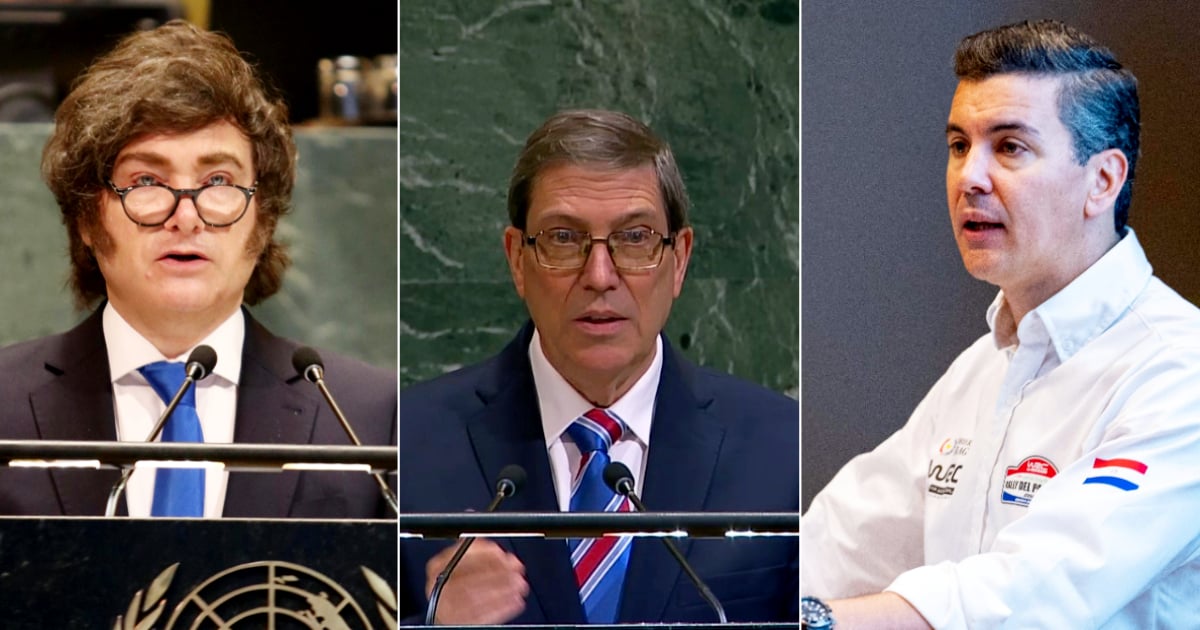
For the first time since the annual United Nations vote against the U.S. embargo began, two Latin American countries—Argentina and Paraguay—voted against Cuba, while Ecuador and Costa Rica abstained, thus breaking the historic regional consensus that had served as a diplomatic shield for the Havana regime for more than three decades.
The result of the 2025 vote —165 votes in favor, 7 against, and 12 abstentions— confirmed a shift in the political climate in Latin America, where the automatic support for Cuba is beginning to diminish as the region moves towards more liberal, democratic governments that are critical of authoritarianism.
A result that marks an era
According to official data from the United Nations, the seven votes against came from Argentina, Hungary, Israel, the United States, North Macedonia, Paraguay, and Ukraine.
The 12 abstentions included Poland, Romania, Bosnia-Herzegovina, Costa Rica, Ecuador, Estonia, Morocco, Albania, Lithuania, Moldova, the Czech Republic, and Latvia.
This marks the lowest global support for Cuba in more than a decade, and the first time that Latin America has openly shown cracks in the traditional Cuban narrative of the "genocidal blockade."
Argentina and Paraguay: A Break with the Past
The most striking case was that of Argentina, whose government led by Javier Milei marked a radical shift in foreign policy.
Milei, who took office in December 2023, has aligned his diplomacy with the United States, Israel, and the European Union, openly advocating for the values of liberal democracy and a market economy.
The Argentine Foreign Ministry justified its vote against the Cuban resolution at the United Nations as a stance consistent with Milei's government's foreign policy, which is focused on the defense of democracy, individual freedoms, and human rights.
The shift marks a break from the diplomatic line maintained by the Kirchnerist and Peronist governments over the past two decades, which had a close relationship with the regimes in Havana, Caracas, and Managua, framed within the so-called axis of "21st-century socialism."
In Paraguay, the government of Santiago Peña also marked a shift in foreign policy.
After years of diplomatic nuances regarding Cuba – some involving close relationships – Asunción voted against the resolution presented by Havana, in line with its support for representative democracies and the respect for human rights in the region.
The decision has been interpreted as a symbolic gesture within a transforming regional context, where several Latin American governments are beginning to distance themselves from the old ideological alignments of the 20th century and prioritize cooperation with the Western liberal democracies.
Ecuador and Costa Rica: Strategic Abstention
In the block of 12 abstentions, two Latin American countries stood out: Ecuador and Costa Rica.
The Ecuadorian president Daniel Noboa, in office since November 2023, has sought to reposition the country as a reliable partner of the United States and Europe, following years of diplomatic ambiguity under correísmo.
His abstention reflects an attempt to balance economic pragmatism with democratic principles, avoiding a direct break with Havana while clearly demonstrating his distance from Castroism.
Costa Rica, for its part, maintained a stance consistent with its democratic tradition. San José does not typically confront Cuba directly, but it also does not support its positions in international forums. Its abstention was interpreted as a message of discontent with the lack of freedoms on the island, without dramatizing the gesture with a negative vote.
A regional change is underway
The 2025 election takes place at a time of political realignment in Latin America, where several countries have shifted towards more critical positions against authoritarian regimes.
In Bolivia, the interim transitional government following the MAS defeat in the September elections has announced a change in direction, although the newly elected president has yet to take office. Analysts anticipate that the future administration will adopt a more moderate line and be less dependent on Havana and Caracas.
In Chile, although the government of Gabriel Boric maintains a leftist rhetoric, it has distanced itself from the Cuban, Venezuelan, and Nicaraguan repression, aware of the political cost of associating with dictatorships in a global context where democracy is once again a banner of legitimacy.
Overall, the region shows a clear loss of political affinity with Castroism, partly due to the discrediting of its allied models (Venezuela and Nicaragua), which are increasingly isolated and under international sanctions. Excluding both allied regimes, only the governments of Mexico, Colombia, and Brazil maintain close relations with the dictatorship in Havana.
Cuba, alone and without a narrative
The erosion of support from Latin America occurs as Cuba experiences its worst economic crisis since the 1990s.
With rampant inflation, daily blackouts, and unprecedented emigration—over 650,000 Cubans have left the island since 2021—the discourse of the "blockade" no longer convinces even its former allies.
The revelations about the $18 billion in assets of GAESA, the military conglomerate that controls over 70% of the Cuban economy, have highlighted the contradiction between the narrative of suffocation and the accumulation of wealth by the military elite.
Meanwhile, reports of Cuban mercenaries recruited by Russia to fight in Ukraine have further eroded the regime's image before European countries and Western allies.
End of a diplomatic era
For decades, Cuba was a regional symbol of resistance and sovereignty. But in 2025, its victim narrative loses ground against the evidence of a repressive system, impoverished and sustained by military interests and authoritarian alliances.
The UN results signal the beginning of a new phase in Latin America, where diplomacy is no longer driven by revolutionary nostalgia, but by the defense of democratic principles and national interests.
The consensus has broken. And this time, Cuba's isolation was not solely caused by Washington; the Trump administration found support among the very neighbors in the region.
Filed under: