
Related videos:
The Cuban regime reacted harshly this Tuesday to the exclusion of Cuba, along with Venezuela and Nicaragua, from the 10th Summit of the Americas, scheduled to take place on December 4 and 5 in Punta Cana, Dominican Republic.
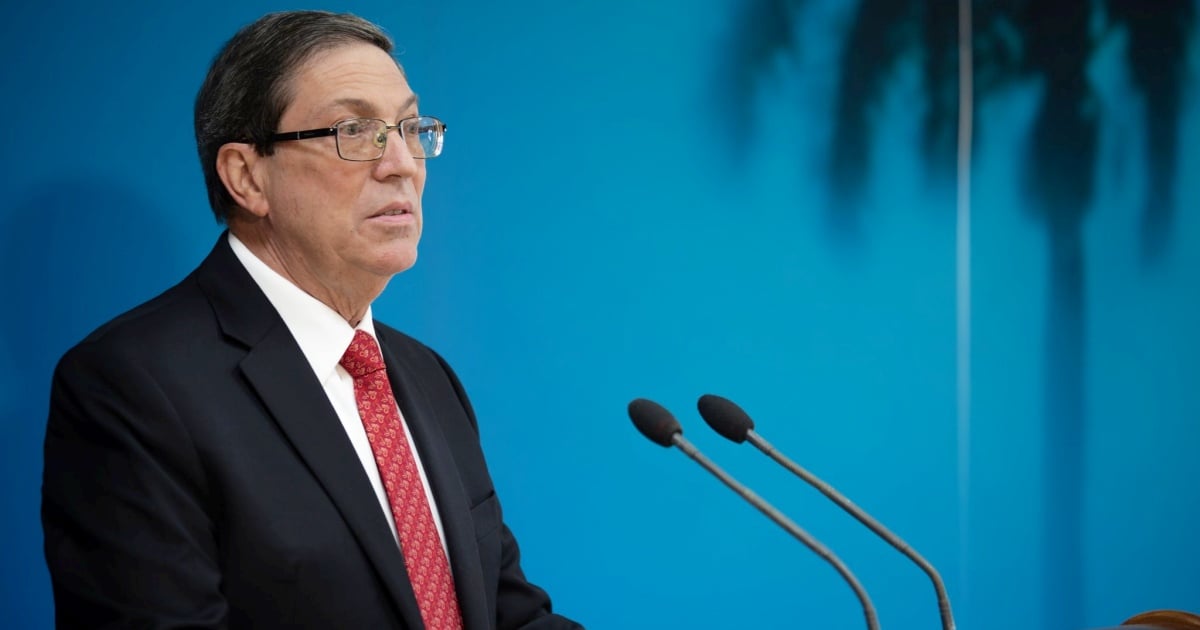
Through a statement issued by the Ministry of Foreign Affairs (MINREX), Havana accused Washington of imposing its will in the hemisphere through "brutal pressures" and denounced the "surrender" of the Dominican Government, host of the event.
"The Ministry of Foreign Affairs of Cuba expresses its deep concern and rejection of the decision imposed by the government of the United States on the Dominican Republic to exclude three countries, including Cuba, from the X Summit of the Americas," part of the statement reads.
The document, issued on September 30, states that this exclusion “constitutes an obvious capitulation to the brutal unilateral pressures of the U.S. Secretary of State,” and represents a historical setback in the hemispheric forums which, according to the regime, seek a more equitable relationship among the countries of the continent.
Old enemies, old doctrines
With a belligerent tone and a rhetoric rooted in the ideological conflicts of the Cold War, the statement denounces that the measure to exclude Cuba, Venezuela, and Nicaragua “would solidify the historical regression in this summit system.”
The document also notes that exclusion would render "a respectful and productive exchange between Latin America and the Caribbean and the imperialist power that is once again employing the 'gunboat diplomacy' and the Monroe Doctrine against our region" unfeasible.
In that regard, the official text not only reiterates its attack on the United States as a "greedy and expansionist neighbor," but also questions the credibility and legitimacy of the summit itself.
If this line is maintained - the regime asserts - "subordination and submission" will prevail, which constitutes an "outright challenge to the Proclamation of Latin America and the Caribbean as a Zone of Peace."
"Submission or aggression"
The Cuban Foreign Ministry also quotes the leader Miguel Díaz-Canel, who stated in February of this year:
"Today, that government of the United States intends to define the options for the countries in the region, which are: either to submit ourselves or be subject to aggression."
From the regime's perspective, Cuba's exclusion is not only a response to an ideological offensive, but also denies the progress made at previous summits—such as the one in Panama in 2015—where Cuba participated officially for the first time.
“This exclusion would ignore the progress achieved in previous Summits, where Cuba's participation was a milestone”, stated the MINREX.
The statement also recalled the "almost unanimous" protest from the region during the failed Summit of Los Angeles in 2022, when several heads of state and government were absent in rejection of the exclusionary policy promoted by Washington.
The regime insisted on delegitimizing the Punta Cana meeting, claiming that “a Summit of the Americas built on exclusion and coercion is doomed to fail.”
He also added that it is impossible to seriously discuss a “political dialogue” between Our America and the United States “on the basis of censorship and exclusion, inequity and abuse.”
Despite its attacks, the regime positioned the rhetoric of “dialogue” as a repeated offer: “We reiterate our willingness for respectful and constructive dialogue, under conditions of sovereign equality and without exclusions.”
However, regional isolation is evident.
Reaction of Díaz-Canel and Marrero
On the social network X, both Miguel Díaz-Canel and Manuel Marrero expressed their rejection of the exclusion succinctly and in line with the script of the MINREX communiqué.
"We reject the decision imposed by the U.S. government on the Dominican Republic to exclude three countries, including #Cuba, from the X Summit of the Americas. We reaffirm our willingness for respectful and constructive dialogue, on the basis of sovereign equality and without exclusions," said Díaz-Canel.
"The imperialist power is once again using the 'gunboat diplomacy' and the Monroe Doctrine against the region," asserted Cuban Prime Minister Manuel Marrero.
The other version: What do the Dominican Republic and the U.S. say?
Hours before the Cuban statement, the Dominican Foreign Ministry had officially confirmed the non-invitation to the three authoritarian regimes, arguing that their absence would promote "greater attendance and ensure the development of the meeting."
Additionally, it was noted that none of the three participated in the previous edition.
The Dominican Foreign Minister, Roberto Álvarez, defended that the Summit will be a key space to promote regional cooperation and overcome the political polarization that has hindered progress.
The motto for this edition will be "Building a safe hemisphere of shared prosperity."
For its part, Washington maintains the argument that participation in the Summits of the Americas is conditioned on a commitment to democracy.
In 2022, the White House advisor for Latin America, Juan González, said it bluntly:
"How can we invite a country when they are putting people in jail just for singing and asking for food?"
A new isolation?
The official rhetoric from Havana insists on the right to participate on equal terms, yet the facts seem to demonstrate the opposite: democracies across the continent continue to distance themselves from regimes such as those in Cuba, Nicaragua, or Venezuela, whose legitimacy is widely questioned.
Despite its protests, Cuba faces an inescapable reality: its exclusion from the Punta Cana Summit confirms the continuity of a hemispheric political line that leaves it out, while its regional isolation consolidates - beyond mere rhetoric.
Frequently Asked Questions about Cuba's Exclusion from the 10th Summit of the Americas
Why was Cuba excluded from the X Summit of the Americas?
Cuba was excluded from the X Summit of the Americas due to its lack of commitment to democracy and human rights. The Dominican Republic, as the host country, together with the United States, justified the decision by stating that participation in the summit is contingent upon respect for democratic principles. This exclusion aims to ensure broader representation and prevent political polarization in the hemisphere.
How has the Cuban regime reacted to its exclusion from the summit?
The Cuban regime has reacted with strong criticism towards the United States and the Dominican Republic. Through a statement from the Ministry of Foreign Affairs, Cuba accused Washington of imposing its will through unilateral pressures and described the exclusion as a historic setback. Furthermore, the regime has insisted that this measure hinders a respectful and productive exchange in the region.
What is the position of the Dominican Republic regarding the exclusion of Cuba?
The Dominican Republic justified the exclusion of Cuba as a necessary measure for the success of the meeting. The Dominican government emphasized that the decision aims to ensure broader representation and prevent political polarization at the summit. Despite the exclusion, the Dominican Republic maintains active and cordial diplomatic relations with Cuba, indicating that the decision does not affect bilateral ties.
What impact does this exclusion have on Cuba's relations with other countries on the continent?
The exclusion of Cuba from the summit reinforces its isolation in the region and creates a divide between continental democracies and authoritarian regimes like the Cuban one. This measure highlights the commitment of countries in the region to democratic values, leaving Cuba, along with Venezuela and Nicaragua, outside forums where the future of the continent is discussed. The decision also underscores the tensions between Havana and Washington, as well as with other countries that support the exclusion.
Filed under: