
Related videos:
Elisa Brito Fernández, a Cuban mother from Las Tunas, published a heartbreaking testimony on Facebook about her emigration with her two young children, in which she denounces the Cuban regime for forcing millions of families to leave the island.
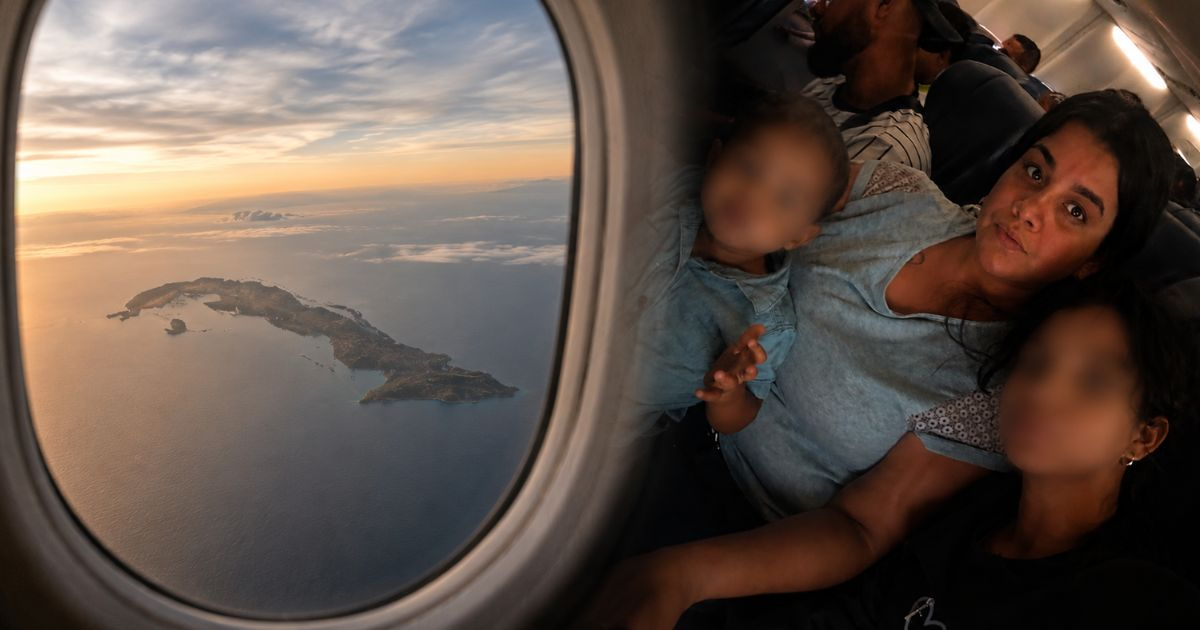
The text, accompanied by a photograph taken inside the plane that was taking them out of Cuba, accurately describes the pattern that has become commonplace on the island: families selling everything they have to afford a journey they see as the only possible way out.
"Today it was my turn. Just like it has been for thousands of Cubans who sell even the last spoon in their house to leave, clinging to the hope of giving their children a better future," Elisa wrote.
The author recounts that she thought she was prepared for the moment, but reality overwhelmed her: "When the plane took off, I felt that a part of my soul was left behind in that land that I love so much."
His definition of emigration summarizes the pain of an entire generation: "Emigrating is not getting on a plane; it's tearing out your roots with your hands."
Elisa describes how her baby, too small to understand what is happening, will not remember the horse rides with his grandfather Tite, the nights when his grandmother would soothe him to sleep and prepare his milk, nor the moments when he shared "a little piece of egg as if it were the greatest treasure in the world."
Her oldest daughter also cried, but for different reasons: "She didn't cry because she doesn't want a better future. She cried because she left her childhood in Cuba. She left her friends, her games, her endless laughter."
Regarding the flavors that her daughter left behind —the little bit of beans her grandmother used to make for her— Elisa writes one of the most poignant phrases in the text: "Because there are flavors that do not come from food, they come from love."
The tunera mother does not hide her exhaustion or her anger: "I love Cuba with all my heart, but we are tired. Tired of surviving when we should be living."
And he issues a direct warning to those he considers responsible: "No one should tell me that everything is fine when millions have left and millions more dream of leaving."
El testimony of Elisa is framed within an unprecedented demographic crisis in Cuba.
According to official figures from the National Office of Statistics and Information, the resident population of the island decreased from 11.18 million in 2020 to 9.74 million in 2024, a loss of over 1.43 million inhabitants.
Only in 2022 and 2023, more than a million Cubans left the country, the largest migration wave recorded in the island's recent history. In 2024, the official net external migration was -251,221 people.
Economist Juan Carlos Albizu-Campos estimates that between 2020 and 2024, 24% of the Cuban population emigrated.
Similar testimonies to Elisa's have circulated on social media throughout 2025 and 2026, reflecting a collective state of exhaustion and bottled-up anger.
Farewells of mothers leaving their children in Cuba, grandparents raising alone while their children seek a future abroad, and children saying goodbye to their friends before boarding a plane represent the most human face of this exodus.
Elisa closed her post with a phrase that encapsulates both the denunciation and hope: "Because behind every Cuban who leaves, there is a story that bleeds. And mine bleeds today too."
Filed under: