
Related videos:
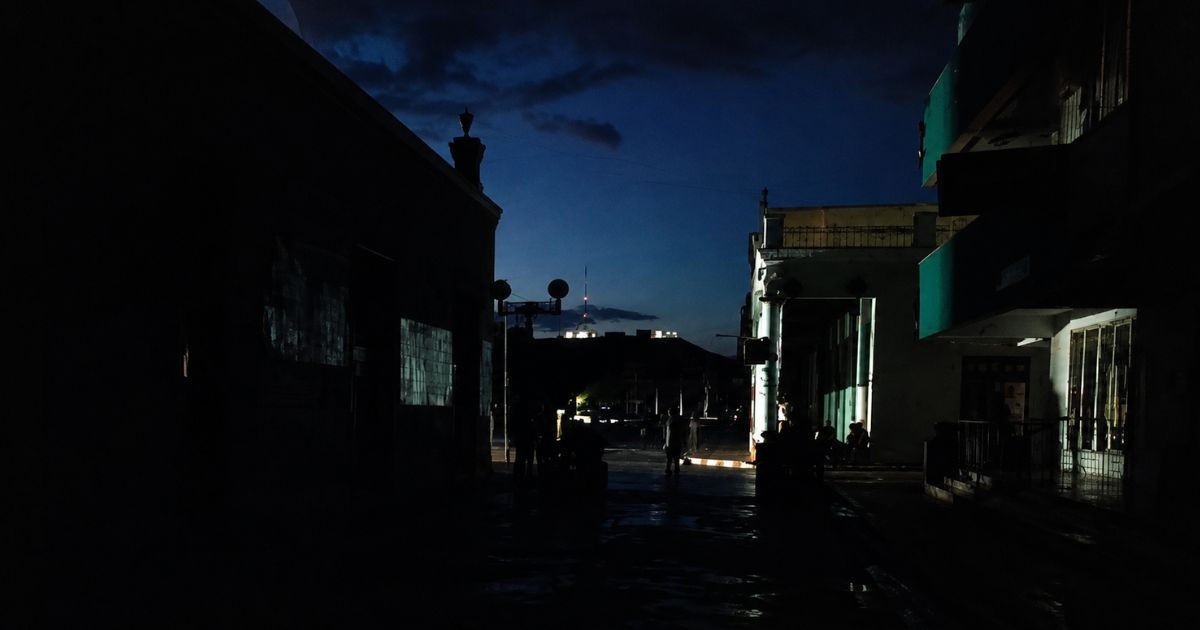
The Electric Company of Holguín published and then deleted a statement on its official Telegram channel in which it openly acknowledged that the population of the province will receive an average of just three hours of electricity per day, while tourism continues to receive a priority allocation from the limited available supply.
The document, captured before its deletion, details that the National Cargo Office assigned Holguín a load of 60 MW, plus the consumption of the Nickel Industry.
Of that figure, 35 MW are allocated to what are known as "vital objectives" —hospitals, water pumping, the electric company itself, and communications— and 3 MW to tourism. Only 22 MW remain for the rotation of all residential and commercial circuits in the province.
The statement was deleted from the Telegram channel less than 24 hours after its publication, following an avalanche of criticism and comments from the people of Holguín. The screenshot, however, continued to circulate on social media and documents what the regime attempted to conceal.
The official text states that the scheme aims to "provide service to customers with the greatest duration of impact," but the reality it describes is striking: the entire residential population of Holguín rotates through less than half of the energy allocated to "vital objectives," while tourism—source of foreign currency for the regime—receives its share before anything is left for households.
Holguín is home to the tourist hub of Guardalavaca, with hotels in Guardalavaca, Esmeralda, and Pesquero, one of the most important in the country. The allocation of 3 MW to the tourism sector in an official document confirms, in figures, what the Cuban population has been denouncing for years: that the regime prioritizes foreign exchange over the basic needs of its citizens.
The situation is not new in the province. In March, the Electric Company of Holguín had already announced a rotation scheme that promised only three hours of electricity per shift, without specifying times.
In April, the power outages reached 18 hours a day, and by the end of May, the province was described as one of the most affected in the country, experiencing blackouts of over 24 consecutive hours.
The collapse extends throughout eastern Cuba. The director of the Santiago de Cuba Electric Company, Lester Salvador Cedeño, admitted last Saturday that power outages in that province exceed 20 hours a day: “We often cannot provide even two hours of service”, he stated.
Nationally, on May 14, a record deficit of 2,174 MW was recorded, with only 976 MW available against a demand of 3,150 MW. The Antonio Guiteras Thermal Power Plant, one of the most powerful in the country, went offline again last Sunday, just two days after being reconnected, accumulating at least nine or ten breakdowns so far in 2026.
The pattern of publishing and then deleting uncomfortable information follows a logic familiar to Cuban institutions: when public reaction exceeds official channels, the regime removes the message, but screenshots preserve the evidence of what was attempted to be silenced.
Filed under: