
Related videos:
The increasing pressure from the United States against Cuban medical missions abroad is accelerating the withdrawal of healthcare professionals from Venezuela, a phenomenon that highlights the weakening of one of the pillars of the alliance between Havana and Caracas.
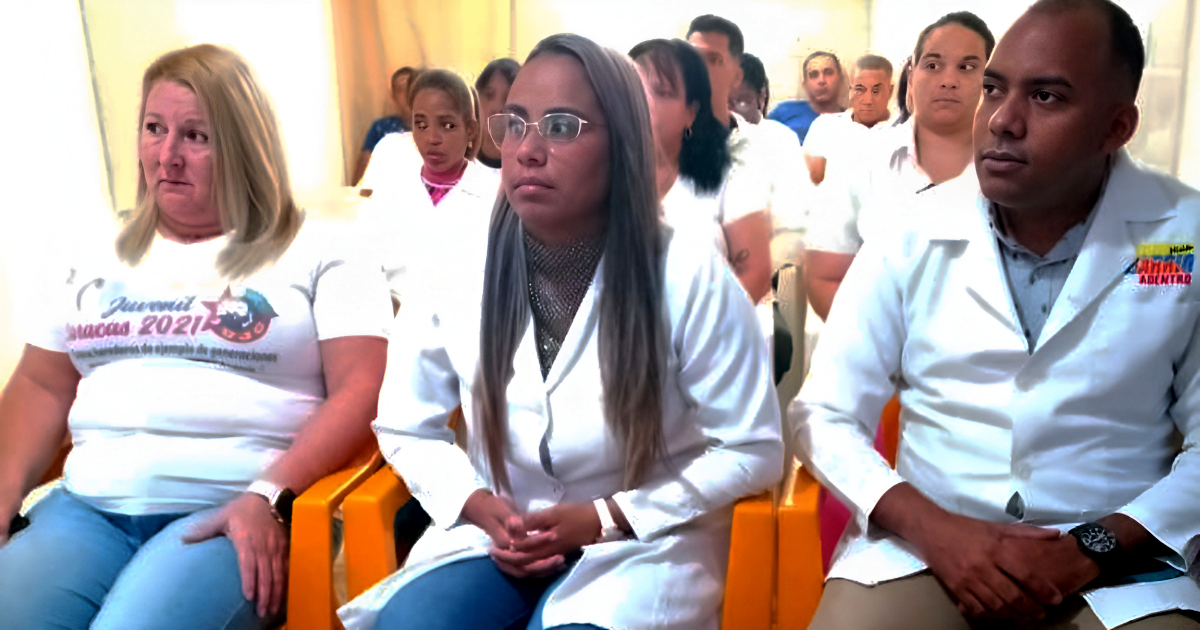
Cuban doctors specializing in pediatrics, gynecology, obstetrics, traumatology, ophthalmology, and other fields have begun to leave health centers within the Barrio Adentro network, the program created by Hugo Chávez in 2003 that symbolized the close cooperation between the two dictatorships for over two decades.
The departure of these professionals coincides with the Trump administration's offensive against Cuban medical missions, which Washington considers a form of labor exploitation used by the regime to generate billions of dollars in annual revenue.
Until the end of 2025, around 13,000 Cuban healthcare workers remained in Venezuela, the largest medical mission deployed by Havana abroad. According to Bloomberg, the gradual reduction of this contingent represents a blow to the Venezuelan healthcare system, which has been affected for years by the emigration of local doctors, lack of investments, and the deterioration of hospitals and care centers.
For years, medical missions became one of the most lucrative businesses for the Cuban regime. The contracting countries paid billions of dollars for the services of the professionals sent abroad, but the doctors only received a small portion of that money.
The bulk of the revenue was managed by the Cuban Medical Services Marketing Agency S.A., a state entity linked to the business framework controlled by the Armed Forces and the GAESA conglomerate.
Numerous cooperators reported that, in addition to retaining the bulk of their salaries, the Cuban state imposed restrictions on their mobility and closely monitored their activities during missions, factors that have led several governments and international organizations to question the voluntary nature of these programs.
Now, at facilities such as the Salvador Allende Integral Diagnostic Center in Caracas, there are already reports of suspended consultations, a lack of specialists, and medical equipment out of service. Patients seeking care are being referred to other centers that face similar limitations.
The health crisis is unfolding alongside the rapid dismantling of the historic strategic relationship between Cuba and Venezuela. For over two decades, both governments maintained a cooperation scheme whereby Caracas supplied subsidized oil to the island in exchange for professional services, primarily in the fields of health, education, and security.
According to estimates from specialized organizations, Venezuela transferred tens of billions of dollars to Cuba in oil subsidies, investments, and financial assistance since the beginning of this alliance in the early part of the century. This is in addition to the billions paid for medical services, which were pocketed by the Cuban regime, that appropriated 85% of the salaries of professionals.
Now, the reduction of energy shipments and U.S. diplomatic pressure on countries that hire Cuban medical brigades threaten one of the main sources of foreign currency for the Cuban regime.
In light of this situation, the authorities in Havana are exploring ways to retain their professionals abroad. Among the measures being considered is to allow doctors to keep up to 95% of the income generated by their work, compared to the significantly lower percentage they currently receive.
However, experts believe that the issue goes beyond salary conditions and is related to the new geopolitical context that Cuba is facing, characterized by a tightening of U.S. sanctions and the international scrutiny of working conditions in medical missions.
Meanwhile, Venezuelan authorities are trying to fill the gap by rapidly graduating new community doctors and rehabilitating some healthcare facilities. However, specialists warn that these efforts will hardly make up for the loss of thousands of experienced professionals in the short term.
The withdrawal of Cuban doctors also symbolizes the retreat of Havana's influence in Venezuela. What was presented for years as a model of political and ideological integration between the two countries is now facing a rapid transformation under the pressure from Washington and amid deep changes in the regional landscape.
According to Bloomberg, for millions of Venezuelans who depended on these services, the immediate consequence is more tangible: fewer doctors available, longer waiting times, and greater difficulties accessing healthcare in a system that was already at its breaking point.
Filed under: