
Related videos:
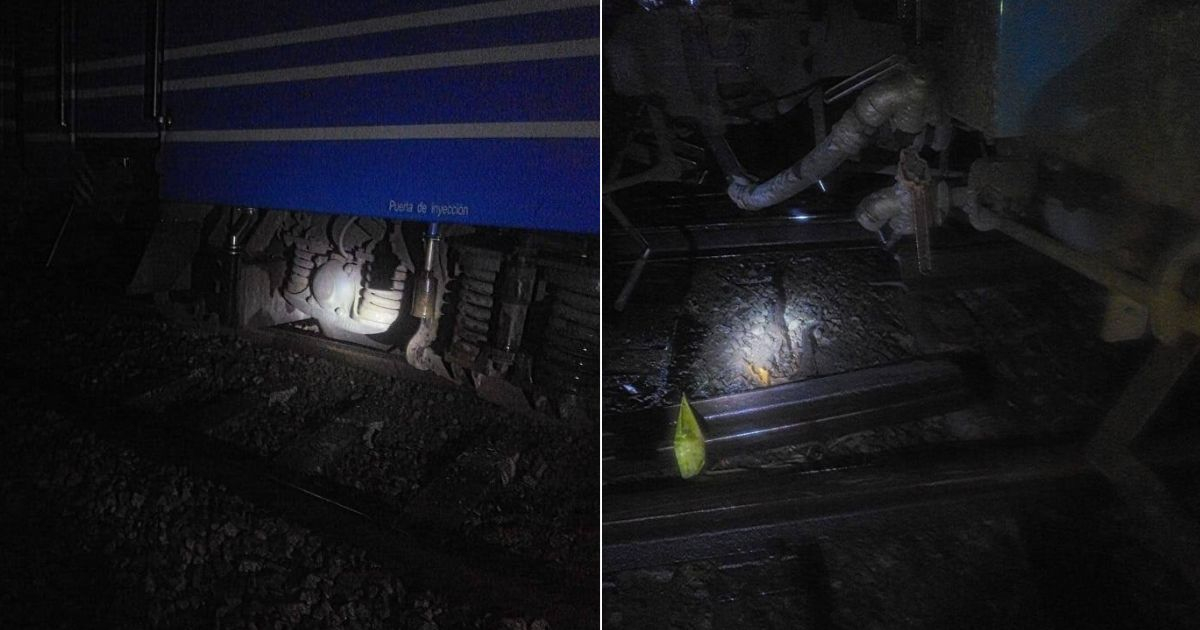
The passenger train number 13, coming from Santiago de Cuba en route to Havana, a derailment this evening in the province of Las Tunas at kilometer 669 of the central line, near the terminal of the town of Omaja, in the Majibacoa municipality, to the east of the province.
On board the convoy were approximately 900 people including passengers and crew. According to the report from Periódico Las Tunas Cuba, no injuries were reported: "No injuries have been reported among the 900 people, including passengers and crew, traveling on the train."
The highest authorities of the eastern region immediately went to the scene of the incident to coordinate the necessary actions, ensure the safety of the passengers, and organize the evacuation of all occupants of the convoy.
At the close of this report, efforts were ongoing to assess the material damages, and the causes of the derailment remained under investigation.
The news was published as "developing" by the Periódico Las Tunas Cuba, so updates are expected regarding the final status of the evacuated passengers and the cause of the accident.
The incident occurred in the evening, as indicated by the image of the train car published alongside the official report, which adds an additional challenge to the evacuation efforts in a rural area of eastern Cuba.
The accident is part of a sustained pattern of derailments on the Cuban Central Line.
The province of Las Tunas has been the scene of at least three of these incidents in less than two years: in Jobabo in August 2024, when the Manzanillo–Havana train derailed with no injuries or significant damage; in Bartle in October 2025, with 577 passengers on board and no injuries; and now in Omaja, Majibacoa municipality.
The Santiago de Cuba–Havana train itself was involved in two incidents of prolonged delays in Camagüey in January 2026, when passengers waited for hours without official explanations, and in February 2026, allegedly because the locomotive was in the workshop, which highlights the deteriorated condition of the rolling stock on that route.
In May 2025, the Holguín–Havana train derailed in Camagüey, resulting in 18 injuries with no fatalities, marking one of the most serious accidents in recent times. Months later, in November 2025, another train derailed on the Havana–Sancti Spíritus route, adding a new chapter to the series of accidents.
Cuban Railways acknowledged in its 2025 road safety report at least nine impacts on rail safety, attributed to loose cattle on the tracks, technical deficiencies in the infrastructure, and operational negligence, a figure that already represented a reduction compared to the 20 incidents recorded in 2024.
The Cuban railway system has suffered decades of deterioration due to lack of investment, poor maintenance, and scarcity of spare parts, a direct consequence of the economic collapse caused by 67 years of communist dictatorship.
The capacity of train number 13—about 900 people, including passengers and crew—reflects that it is one of the most in-demand railway services in the country, connecting the two most important cities on the Island.
Filed under: