
Related videos:
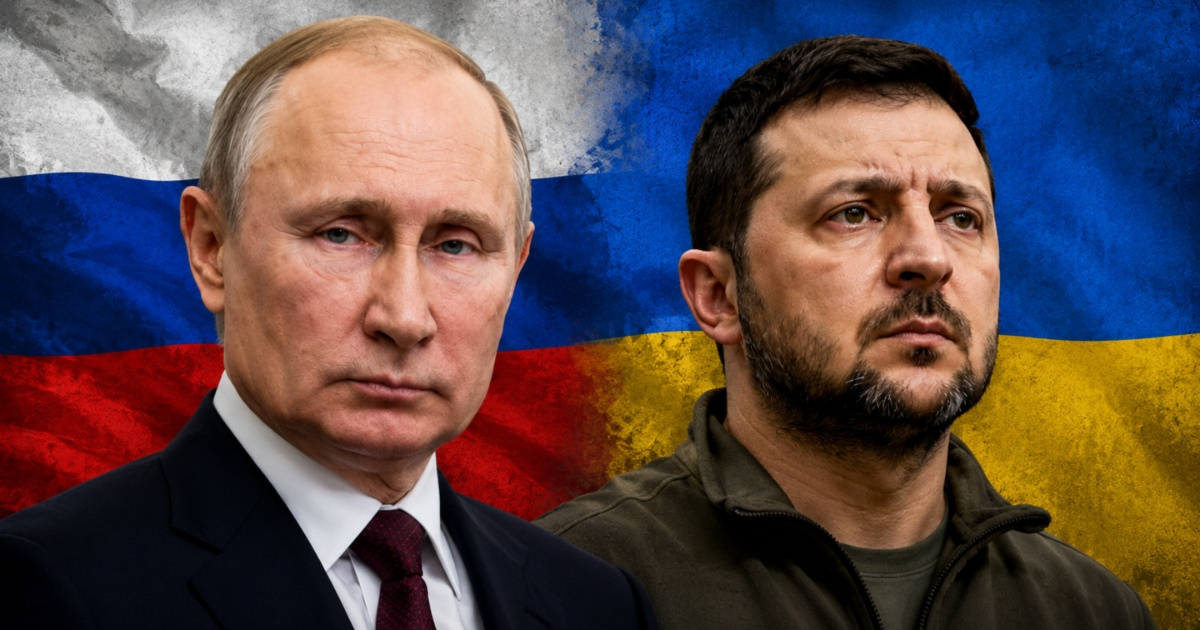
The Russian president Vladímir Putin unequivocally rejected this Friday the proposal from Ukrainian leader Volodímir Zelenski to hold direct negotiations in a neutral third country to end the war, and ordered the Russian Army to continue advancing in Ukraine.
"For now, I don't see any sense in it," declared Putin during the plenary session of the St. Petersburg International Economic Forum, where he also described the letter-writing style chosen by Zelenski to propose the initiative as "rude."
The Ukrainian proposal had arrived on Thursday night in the form of an open letter, in which Zelensky requested a face-to-face meeting between the two leaders and offered a complete ceasefire as a basis for negotiation on neutral territory.
The rejection this Friday comes a day after Putin had already ruled out any ceasefire during a meeting with representatives from the world's major news agencies, also held as part of the forum at the Konstantin Palace in Saint Petersburg.
On that occasion, the Russian leader was equally emphatic: "To begin negotiations, there is no need to cease military actions," arguing that the Russian Army is advancing on all fronts and that it is Ukraine that needs the truce.
Putin estimated the recently occupied territories by his forces at 2,500 square kilometers and estimated the monthly Ukrainian casualties at 40,000, the same figure that Western intelligence attributes to the Russian troops.
The leader reiterated that Russia is only willing to negotiate based on the agreements explored at the Anchorage summit with Donald Trump in August 2025, which include the demand for Ukraine to withdraw its troops from Donbas, a condition that Kiev rejects as a red line.
“Better to stop the war by accepting the compromises discussed in Anchorage,” insisted Putin, who also called on the European Union to stop supplying arms to Kiev and to pressure Zelensky to accept those terms.
The Russian leader went further by questioning the true willingness for peace of the Ukrainian authorities: "If peace is achieved, political struggles, the struggle for power in Kiev, and the economic situation will intensify. My impression is that, in reality, the authorities are not interested in a genuine cessation of military actions."
The immediate context of the rejection is particularly tense: on Thursday, a day before the plenary session, Ukraine attacked the oil terminal and naval base in Kronstadt, on the outskirts of St. Petersburg, the very city where the forum was taking place.
Putin's statements come at a time when, according to polls cited by EFE, the Russian leader is experiencing his largest drop in popularity since the beginning of the war in 2022, attributed to internet outages, economic contraction, and public fatigue with the prolonged conflict.
On May 26, U.S. Secretary of State Marco Rubio had already warned that the war needs to come to an end, noting that the conflict "has lasted longer than World War II." The three-day truce agreed upon in May, announced by Trump and linked to Russia's Victory Day, proved fragile and was marked by mutual accusations of violations, although it included an exchange of 1,000 prisoners from each side.
Filed under: